Table of Contents
Flood damage insurance for vehicles is one of the most misunderstood parts of an auto policy. Many drivers assume their homeowners policy or a federal flood policy will pay for a waterlogged car. It will not. In most cases, the only protection that applies is the comprehensive portion of your auto insurance. Comprehensive is optional in every state, so roughly 20 percent of U.
S. drivers carry no flood protection at all. That gap matters more each year. CarFax reported that tropical storms damaged about 45,000 vehicles between June and August 2025 alone. Understanding how flood damage insurance actually works before a storm arrives can be the difference between a covered claim and a total financial loss.
What Comprehensive Coverage Actually Pays For
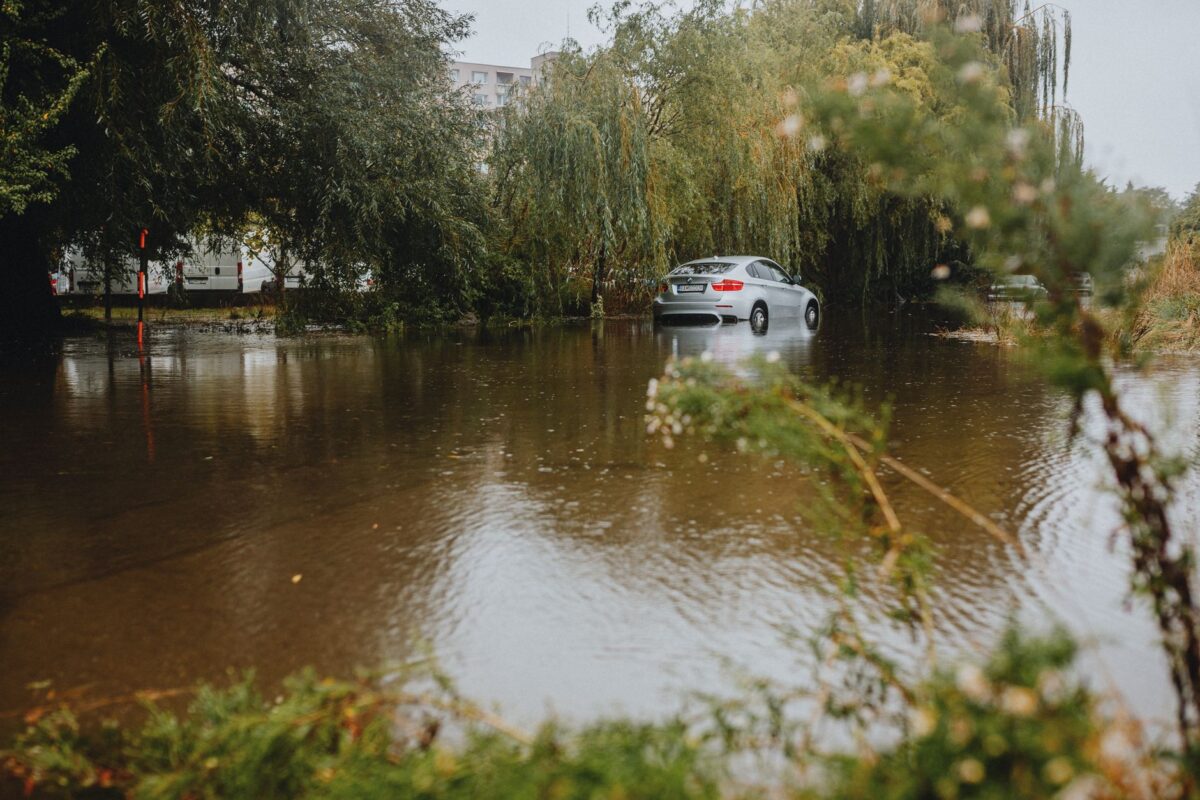
Comprehensive coverage is sometimes called “other than collision” coverage. According to the Insurance Information Institute, it pays for damage not caused by a crash. That includes theft, fire, hail, falling objects, animal strikes, and flooding. Storm surge damage from a hurricane is included. Rising creek water, flash floods, and street flooding are all covered events under a standard policy.
The coverage is optional with a standard auto policy. However, about 80 percent of American drivers choose to carry it. If you finance or lease your vehicle, your lender almost certainly requires it. Lenders typically mandate “full coverage,” which means both comprehensive and collision together. Drivers who own their cars outright are the ones most likely to drop it and get caught without flood damage insurance.
One important detail surprises many claimants. It does not matter whether the flood was a declared federal disaster. It also does not matter whether you live in a designated flood zone. If you had comprehensive coverage in force at the time of the loss, the claim is valid. As a result, flood damage insurance under an auto policy is far broader in geography than federal flood programs. FEMA data shows that a large share of flood claims come from outside high-risk mapped zones.
How Flood Damage Insurance Claims Are Priced and Settled
Water and cars do not mix well. Insurers often declare a vehicle a total loss when repair costs exceed roughly 75 to 80 percent of its actual cash value. Saltwater intrusion and any water that reaches the dashboard or seat cushions usually triggers that threshold immediately. Electrical systems, airbag modules, and hybrid battery packs corrode unpredictably after submersion.
When a car is totaled, your insurer pays actual cash value, or ACV. ACV reflects what the vehicle was worth on the open market the day before the flood. It is not the purchase price and not the replacement cost of a new model. Your deductible is subtracted from that payout. Comprehensive deductibles typically range from $100 to $1,000, with $250, $500, and $1,000 being the most common selections.
| Coverage Type | Covers Vehicle Flood Damage? | Typical Deductible |
|---|---|---|
| Comprehensive auto | Yes | $250–$1,000 |
| Collision auto | No | $500–$1,000 |
| Liability only | No | N/A |
| NFIP flood policy | No — buildings and contents only | $1,000+ |
| Homeowners policy | No — excludes vehicles | Varies |
Here is the gap that hurts. If you owe more on your loan than the ACV payout, you must cover the difference yourself. Gap insurance closes that shortfall. It typically costs $20 to $60 per year when added to an auto policy. For example, a driver who owes $28,000 on a car valued at $23,000 would face a $5,000 shortfall without it.
Why Federal Flood Programs Will Not Help Your Car
The National Flood Insurance Program is administered by FEMA. It insures buildings and personal contents inside those buildings. It does not insure vehicles under any circumstance. A car parked in a flooded garage is excluded even though the garage itself is covered.
NFIP policies also carry a standard 30-day waiting period before coverage begins. There are narrow exceptions tied to mortgage closings, flood map changes, and post-wildfire purchases. Auto flood damage insurance generally has no comparable waiting period. However, insurers routinely impose binding restrictions during active storm watches. Once a named storm is forecast for your area, most carriers freeze new comprehensive policies and coverage increases in that region.
FEMA disaster assistance is not a substitute either. FEMA may provide limited help repairing or replacing a vehicle after a declared disaster. That aid is capped, need-based, and only available when the vehicle is uninsured and required for daily transportation. It is designed as a safety net, not a replacement for flood damage insurance.
Steps to Take Before and After a Flood
Act before the water rises. Pull your declarations page and confirm comprehensive coverage appears by name. Check your deductible amount. Add gap coverage if your loan balance exceeds the car’s market value. Photograph your vehicle inside and out once a year for baseline documentation.
When a storm is forecast, move the vehicle to higher ground early. Parking garages above street level and inland lots work well. Never drive through standing water. Just 12 inches of moving water can float most passenger cars, according to FEMA. Twenty-four inches will carry away most SUVs and trucks.
After flooding, do not start the engine. Cranking a submerged engine can turn a repairable claim into catastrophic internal damage that insurers may dispute. Photograph the waterline on the door panels, the interior carpet, and the engine bay. Note the date and time. File your claim immediately, because carriers process claims roughly in the order received after a major event.
Then keep records of everything. Save rental car receipts if you carry rental reimbursement coverage, which typically pays $30 to $50 per day. Request the adjuster’s valuation report in writing and compare it against local listings for the same year, mileage, and trim. You can dispute a low ACV offer with comparable sale data. Most states also allow you to invoke an appraisal clause if you and the insurer cannot agree.
📋 Get Free Insurance Guides
Free · No spam · Unsubscribe anytime
Finally, protect yourself as a buyer. CarFax estimates that 482,000 water-damaged vehicles were back on the road in 2025. Flood-titled cars are frequently laundered across state lines and resold. Run any used vehicle through the free NICB VINCheck tool and the National Motor Vehicle Title Information System before purchase.
Frequently Asked Questions
Will filing a flood claim raise my car insurance rates?
Comprehensive claims are considered not-at-fault, so they typically affect your premium less than an at-fault collision. However, rates in an entire region often rise after a major flood event. Some carriers also reduce claim-free discounts after any paid claim.
Does liability-only insurance cover flood damage?
No. Liability covers injuries and property damage you cause to other people, not damage to your own vehicle. Without comprehensive coverage, you have no flood damage insurance and would pay the full replacement cost yourself.
How long do I have to file a flood claim on my car?
Most policies require notice “promptly” or within a reasonable time, and many states set a two-year outer limit. In practice, file within days. Delay makes it harder to prove the water damage came from the storm rather than gradual corrosion.
Can I keep my car after the insurer declares it a total loss?
In most cases, yes. The insurer deducts the salvage value from your payout and issues a salvage or flood title. Be aware that flood damage insurance will typically not be available again on a branded-title vehicle.
Compare Insurance Rates
Ready to see if you could be paying less? Compare quotes from top insurers in your area. Getting multiple quotes is the most effective way to find a better rate.
(paid link)
Official Sources & Resources
For verified information on auto insurance regulations and consumer protection:
- NAIC (National Association of Insurance Commissioners): naic.org
- Insurance Information Institute: iii.org
- Federal Trade Commission — Auto Insurance: consumer.ftc.gov
- USA.gov — Car Insurance: usa.gov/car-insurance
Content last reviewed July 2026. If you notice any outdated information, please contact us.