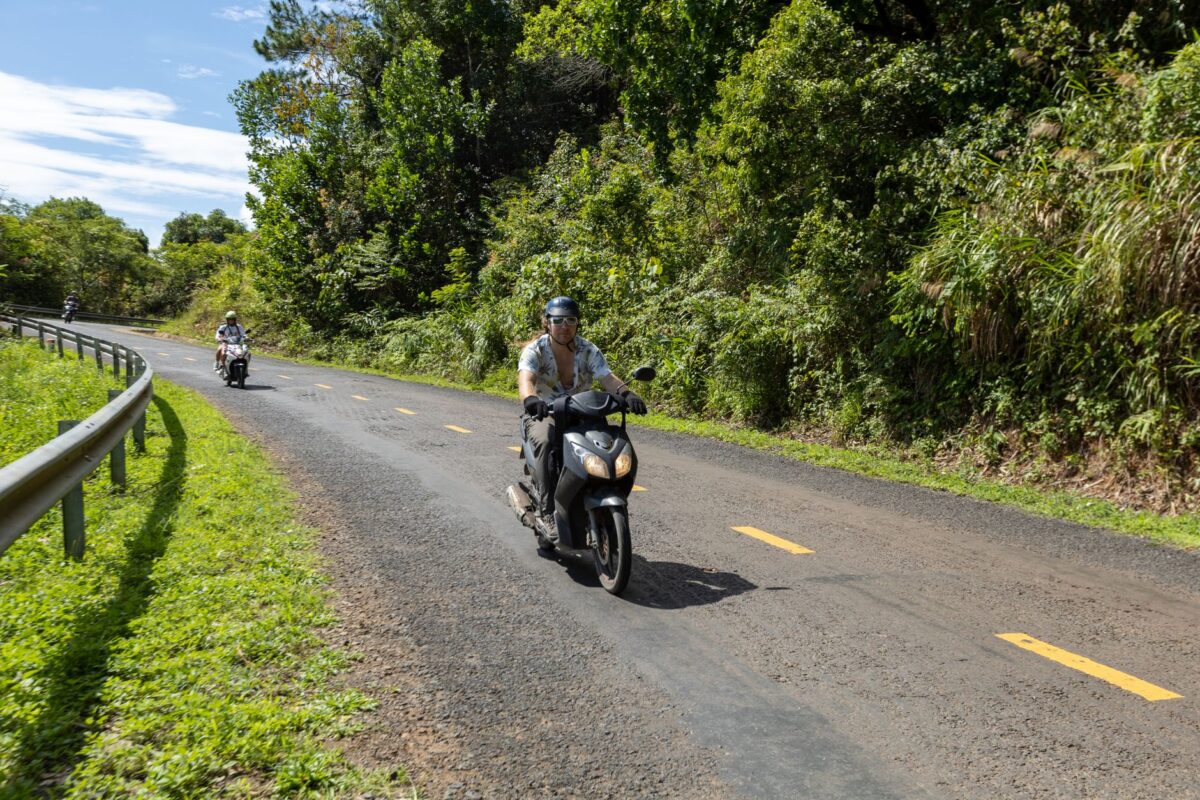
Moped scooter insurance is the specialty policy that covers a low-displacement two-wheeler on public roads. It sits in an odd gap. Your bike is too small for a standard motorcycle policy at some carriers. However, it is far too fast for a homeowners policy to touch. Roughly 30 states now require liability coverage on any moped or scooter above 50cc, and several require it below that line too. Riders get burned when they assume a 49cc machine is exempt everywhere. It is not. A scooter classified as a moped in Texas can be a full motorcycle in California, with all the coverage duties that follow.
What Moped Scooter Insurance Actually Covers
The core of any moped scooter insurance policy is split liability. Bodily injury pays for people you hurt. Property damage pays for what you hit. Typical state floors run $15,000 per person and $30,000 per accident, plus $5,000 to $25,000 in property damage. Those numbers evaporate fast. A scooter that slides into a parked pickup can eat $12,000 in bumper and quarter-panel work alone. For example, New Jersey’s 2026 motorized-bicycle law locked in 15/30/5 as the new statutory minimum for anything capable of 20 mph or more.
Beyond liability, the useful pieces are comprehensive and collision. Comprehensive matters more on a scooter than on a car. Scooters are stolen at high rates because two people can lift one into a van. Collision covers your own bike after a spill. Deductibles usually run $250, $500, or $1,000. On a $2,400 scooter, a $1,000 deductible leaves you little real recovery. Choose $250 if the bike is worth under $4,000.
Two riders’ coverages deserve attention. Uninsured and underinsured motorist coverage pays your medical bills when the driver who turned across your path has no policy. Scooter riders lose these arguments constantly. In most cases, guaranteed accessory coverage is also bundled in. Progressive includes $3,000 of accessory protection with comprehensive and collision, covering helmets, protective jackets, top cases, and custom bars. That matters when a $600 helmet and $500 jacket are destroyed in one slide.
What It Costs in 2026
Moped scooter insurance is cheap relative to almost anything else you insure. Liability-only on a 50cc scooter typically runs $100 to $350 per year in 2026. National averages cluster around $150 to $300. Dairyland advertises scooter and moped coverage starting near $7 per month. Full coverage, meaning liability plus comprehensive and collision, generally runs $200 to $500 annually. Larger scooters change the math. A 300cc maxi-scooter is underwritten like a midsize motorcycle, and premiums frequently pass $900 per year for a rider under 25.
Three things move the price most. Engine displacement is first. Crossing 50cc, then 150cc, then 250cc each triggers a rating jump. Location is second and it is severe. Urban theft rates and state minimum limits both feed into it, so a Miami or Newark ZIP can double a rural quote. Riding record is third. A single at-fault claim typically adds 20 to 40 percent for three years.
Because state minimums vary so widely, no single national premium figure will match your quote. Check your state guide for the exact required limits before you shop. Some riders also see seasonal pricing. Northern carriers sometimes offer lay-up periods, which strip liability during winter storage while keeping comprehensive active. As a result, a Minnesota rider may pay for only seven months of full protection.
Who Needs Moped Scooter Insurance
If your scooter has a license plate, you almost certainly need moped scooter insurance. Registration and insurance travel together in most states. The clearest trigger is a machine over 50cc or one capable of more than 30 mph. Those two thresholds appear in statute after statute. Anything above them is usually classified as a motorcycle, not a moped, and full motorcycle financial-responsibility rules attach.
The exempt group is narrower than riders hope. Massachusetts does not mandate moped insurance. Montana, Kansas, and South Dakota also leave many 49cc machines uninsured by law. However, exempt does not mean protected. You still owe every dollar of damage you cause. A rider without moped scooter insurance who injures a pedestrian faces personal liability with no ceiling. Lenders add another layer. Any financed scooter will have full coverage required by the contract, regardless of state law.
Some riders genuinely can skip a policy. A sub-750-watt electric bike with pedals is not a moped in most states. A pit scooter ridden only on private land needs no road policy. Riders in that second group should still confirm homeowners coverage applies off-premises. It often does not.
Common Exclusions and Mistakes
The most expensive gap in moped scooter insurance is commercial use. Standard personal policies exclude delivery work outright. If you carry food for a delivery app, your personal policy will likely deny the claim entirely. That includes the drive back with an empty bag. Riders need a commercial or hire-and-reward endorsement instead. Gig platforms often provide contingent liability only while a delivery is active, and that coverage rarely repairs your own scooter.
Passenger injuries are the second surprise. Many scooters are not legally rated for two riders. Carrying a passenger on a single-seat machine can void liability for that passenger’s injuries. Medical payments coverage, typically $1,000 to $10,000, is the usual fix, but it must be added deliberately. It is not automatic on a bare-minimum policy.
📋 Get Free Insurance Guides
Free · No spam · Unsubscribe anytime
Three smaller traps recur. Rental scooters abroad are almost never covered by a domestic moped scooter insurance policy. Unlicensed operation voids most claims, and several states require a specific moped endorsement rather than a plain driver’s license. Finally, theft claims fail when the scooter was stored outside an insured structure and the policy limited comprehensive to enclosed storage. Read that clause before you park it on the sidewalk.
How to Get the Best Rate
Start with carriers that actually specialize in two wheels. Progressive, Dairyland, Markel, GEICO, and Foremost all write moped scooter insurance directly. Specialty motorcycle underwriters usually beat a car insurer’s bolt-on scooter product on both price and claims handling. Get three quotes minimum. Spreads of 40 percent between carriers on identical coverage are routine on small displacement bikes.
Then stack the discounts. A state-approved rider safety course typically cuts 10 to 15 percent and is often free through the MSF or a state program. Multi-vehicle discounts apply if you also insure a car or a second bike. Homeowner status, paid-in-full payment, and paperless billing each shave a few percent. Dairyland extends discounts to members of the Harley Owners Group and similar clubs, and it adds a loyalty credit after renewal.
Timing matters more than riders expect. Quote 10 to 14 days before your renewal date rather than on the day it lapses. Carriers penalize coverage gaps hard, and even a two-day lapse can raise a new quote by 15 percent. For example, a rider who lets moped scooter insurance expire over winter and rebuys in April usually pays a lapse surcharge for a full term. Keep a cheap comprehensive-only policy active instead. It typically costs under $60 for the off-season and preserves continuous coverage credit.
Frequently Asked Questions
Does my car insurance cover my scooter?
No. Auto policies exclude two-wheeled vehicles almost universally. You need a separate moped scooter insurance policy or a motorcycle policy. However, your auto carrier may write that separate policy and apply a multi-vehicle discount. Your car’s uninsured motorist coverage also will not follow you onto the scooter in most states, which is a common and costly assumption.
Is a 49cc scooter really exempt from insurance?
Sometimes, but only in a handful of states such as Massachusetts, Montana, Kansas, and South Dakota. Most states still require liability at 49cc if the scooter is street-registered. Check your state guide for the current threshold, since several legislatures tightened these rules in 2026. Exempt status also never protects you from being sued personally for damages.
Will moped scooter insurance cover food delivery?
Not on a personal policy. Commercial use is a standard exclusion, and carriers deny these claims routinely. You need a hire-and-reward or commercial endorsement, which typically costs two to four times a personal premium. Delivery app coverage is usually contingent, applies only during an active order, and rarely pays to repair your own scooter after a crash.
Does the new 2026 New Jersey e-bike law affect scooter riders?
Yes, if your machine reaches 20 mph or more. As of July 19, 2026, those motorized bicycles must be registered and carry liability limits of $15,000 per person, $30,000 per accident, and $5,000 property damage. Low-speed e-bikes must register but need no insurance. Other states are watching this model closely.
Compare Motorcycle Insurance Rates
Rates for motorcycle insurance vary widely between carriers, and the specialists often beat the big
national names. Comparing several quotes is the single most reliable way to pay less.
(paid link)
Official Sources & Resources
For verified information relevant to riders:
- Motorcycle Safety Foundation (MSF): msf-usa.org
- NAIC (National Association of Insurance Commissioners): naic.org
- Insurance Information Institute: iii.org
- AM Best – Insurer Financial Strength: ambest.com
Content last reviewed July 2026. If you notice any outdated information, please contact us.