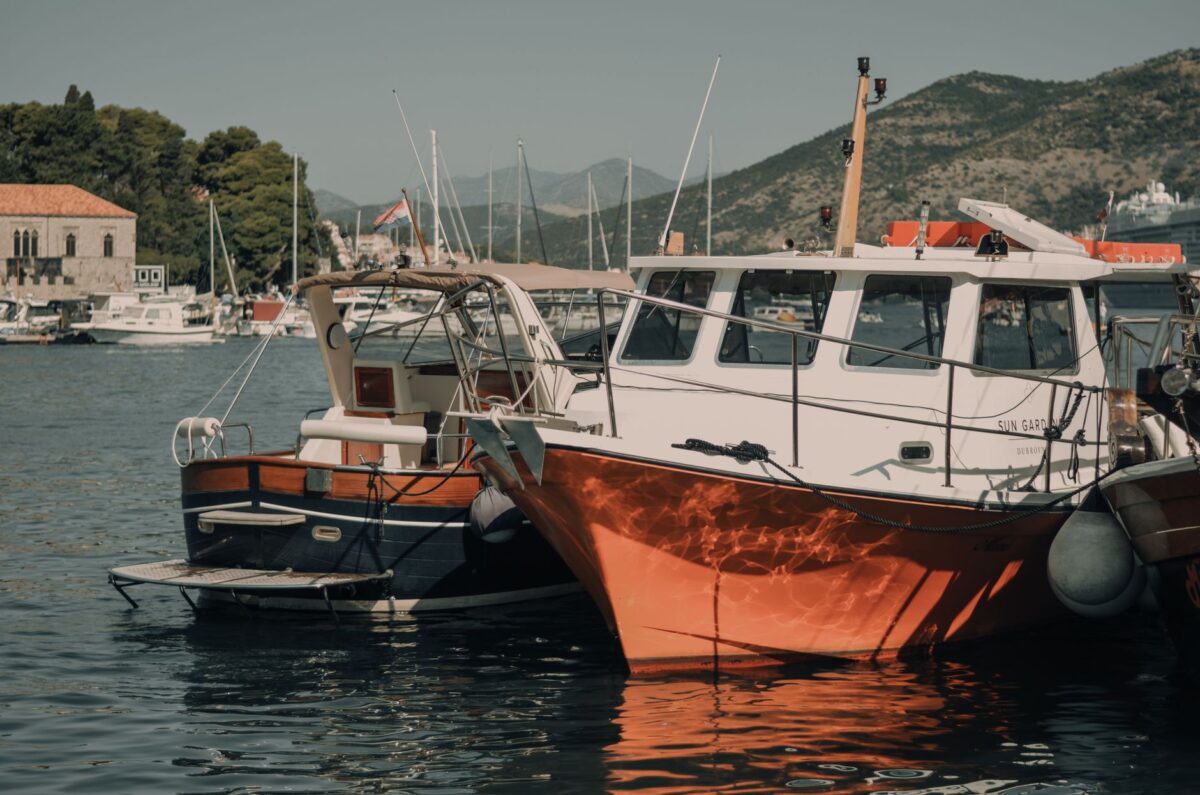
Fishing boat insurance is a marine policy built around the way anglers actually use their boats. It covers the hull and outboard, but it also covers the things that make a fishing rig expensive: rods, reels, tackle, trolling motors, and multiple graph units on the bow and console. A modern bass boat with two 12-inch sonar screens and a $4,000 trolling motor can carry $15,000 in electronics alone. A standard homeowners policy will not touch that. Neither will a bare-bones boat policy with a $500 personal effects limit. If you fish tournaments, the gap gets worse, because many personal-use policies treat prize-money events as commercial use and deny the claim outright.
What Fishing Boat Insurance Actually Covers
The core of any fishing boat insurance policy is physical damage to the hull, motor, and trailer, plus liability. Liability limits typically start at $100,000 and run to $500,000 or $1 million. Physical damage is written either as agreed value or actual cash value. Agreed value pays the number on the declarations page with no depreciation. Actual cash value subtracts depreciation, which hurts most on outboards and electronics. For example, a seven-year-old 250-horsepower outboard may be valued far below what a replacement costs in 2026.
The angler-specific piece is a separate endorsement. BoatUS sells the ANGLER endorsement, which raises fishing gear limits, adds automatic tournament coverage, and reimburses entry fees when a covered claim keeps you off the water. Markel includes tournament fee reimbursement with its fishing boat coverage and sells optional fishing equipment coverage on a replacement-cost basis. Charter Lakes writes an Anglers Choice policy that explicitly defines tournament use as covered use of the vessel. Progressive insures tournament fishing as well, unless fishing is your primary occupation.
Gear limits vary widely by carrier. Base policies often include only $1,000 in equipment coverage. Endorsed policies commonly run $5,000 to $14,000, and tournament-focused programs will write up to $25,000. In most cases the endorsement also covers portable items: handheld GPS, cameras, phones, and rain gear. Towing matters too. Most fishing boat insurance policies now bundle on-water towing, and BoatUS adds on-road towing for the trailer.
What It Costs in 2026
Boat premiums generally run 1% to 5% of insured value per year. Fishing boat insurance sits in the middle of that band. A $20,000 aluminum or entry-level bass boat commonly costs $250 to $400 a year. A $60,000 rig with a 250 outboard typically runs $600 to $1,000. A $100,000-plus tournament boat with full electronics often costs $1,500 or more. Texas brokers currently quote bass boats at roughly $400 to $1,200 annually, or about $33 to $100 a month.
Several factors move the number. High horsepower raises it. Tournament participation raises it, because carriers price run-to-the-spot speeds and heavier annual hours. Agreed value costs roughly 10% to 15% more than actual cash value. Operator age and prior claims matter. So does storage: a boat kept on a lift in a hurricane county prices very differently from one in a garage in Missouri. Rates vary sharply by state, so check your state guide rather than assuming a national average applies to you.
Coastal boaters face a second cost layer. Named storm deductibles in Florida, Louisiana, and the Carolinas commonly run 5% to 10% of insured value. On a $75,000 boat, that is $3,750 to $7,500 out of pocket after a hurricane. However, deductible choice cuts premium meaningfully. Moving from a $500 to a $2,500 all-other-perils deductible typically saves 15% to 25%. As a result, many anglers raise the deductible and put the savings toward higher gear limits.
Who Needs Fishing Boat Insurance
Anyone with a financed fishing boat needs it, because lenders require physical damage coverage with the lienholder listed. Marinas and many ramps and lake associations also require proof of liability. Tournament organizations set their own floors. Many events require $300,000 to $500,000 in liability, and some require documentation at registration. Showing up with a policy that excludes tournament use can get you turned away at the gate.
You clearly need dedicated fishing boat insurance if your electronics and gear exceed a few thousand dollars, if you fish for prize money, if you run a boat over 25 horsepower on public water, or if you trailer long distances to fish. Guides and charter operators need something different again. A personal policy will not cover paid trips, and a claim during a guided trip can be denied even when the accident looks unrelated to guiding. Guides need a commercial watercraft policy.
Some owners can reasonably skip a standalone policy. A small jon boat with a tiller kicker, owned outright and worth under about $3,000, is often covered adequately as watercraft on a homeowners policy. Homeowners forms typically cap watercraft physical damage near $1,500 and limit horsepower, so check the actual language. Kayak and canoe anglers usually only need liability, which the homeowners policy typically already provides.
Common Exclusions and Mistakes
Mechanical breakdown is the single largest category of denied marine claims. A blown powerhead from internal failure, worn bearings, or a bad impeller is excluded on virtually every policy. Insurers pay for sudden external causes: a submerged log, a collision, a fire, theft. They do not pay for the outboard simply wearing out. Some carriers sell a mechanical breakdown endorsement, but it comes with age limits and maintenance conditions. Failure to winterize, or failure to flush after saltwater use, is a common and defensible reason for denial.
The commercial-use trap catches tournament anglers most often. Because a prize-money event generates income, many personal policies classify it as commercial use. If you hit a rock during a competition day, the carrier can decline. Telling your agent in advance and getting tournament use added in writing solves this. Do not assume verbal confirmation counts. Ask which form number or endorsement adds it.
📋 Get Free Insurance Guides
Free · No spam · Unsubscribe anytime
Two more gaps surprise people. First, trailers are not always automatically insured. Coverage depends on whether the trailer is scheduled on the policy, and trailer wear and tear is excluded regardless. Second, navigational territory. Most fishing boat insurance policies limit you to inland waters or a set distance offshore, often 25 to 75 miles. Run past that line, and the claim can be voided. Check the territory clause before an offshore trip.
How to Get the Best Rate
Start with a specialty marine agency rather than a general agent. Programs like BoatUS, Markel, Global Marine, SkiSafe, and Charter Lakes were built for anglers and price gear endorsements more accurately. Get at least three quotes and compare on identical terms: same liability limit, same deductible, agreed value versus actual cash value, and the same fishing equipment sublimit. A cheaper premium with a $1,000 gear limit is not actually cheaper.
Take the discounts. Completing a boating safety course from the USCG Auxiliary or a state agency commonly earns 5% to 10%. Multi-policy bundling with home and auto is often another 5% to 15%. Diesel engines, newer hulls, and having no claims in three to five years all help. Many carriers offer layup credits for the months your boat is out of the water. For example, a six-month winter layup in a northern state can cut the annual premium noticeably.
Timing matters too. Quote in winter, not the week before your first tournament, so you have time to compare endorsement language. Inventory your gear now: photograph each rod, reel, and graph, and save receipts and serial numbers. Adjusters pay faster with documentation. Finally, review the policy annually. Electronics values change quickly, and a fishing boat insurance policy written three years ago may badly under-insure the gear currently sitting on your deck.
Frequently Asked Questions
Does fishing boat insurance cover my rods, reels, and electronics?
Only up to the limit you buy. Base policies often include just $1,000 in equipment coverage, which will not replace two sonar units. Endorsed policies commonly run $5,000 to $14,000, and tournament programs write up to $25,000. Ask whether the gear is paid at replacement cost or depreciated actual cash value, because that difference is often thousands of dollars.
Will my policy pay if I damage the boat during a tournament?
Not automatically. Many personal-use policies treat prize-money events as commercial use and exclude them. You need tournament use added in writing, either through an endorsement like the BoatUS ANGLER form or a carrier whose policy defines tournament use as covered. Confirm it before entry day. Carriers like Progressive cover tournaments unless fishing is your primary occupation.
Is my trolling motor covered if it hits a stump?
Usually yes, because that is sudden accidental damage from an external cause. However, payment depends on your valuation basis. Actual cash value depreciates a four-year-old trolling motor substantially. Motors that fail internally from worn brushes or water intrusion fall under the mechanical breakdown exclusion instead, and those claims are typically denied without a breakdown endorsement.
Do I need separate coverage if I guide part-time?
Yes. A personal fishing boat insurance policy excludes paid trips, and carriers can deny a claim that occurs on a guiding day even if guiding did not cause it. Part-time guides need a commercial watercraft policy with charter liability. Charter Lakes and similar marine agencies write guide-specific programs, and rates reflect passenger counts and trip volume.
Compare Boat Insurance Rates
Rates for boat insurance vary widely between carriers, and the specialists often beat the big
national names. Comparing several quotes is the single most reliable way to pay less.
(paid link)
Official Sources & Resources
For verified information relevant to boat owners:
- U.S. Coast Guard Boating Safety Division: uscgboating.org
- NAIC (National Association of Insurance Commissioners): naic.org
- Insurance Information Institute: iii.org
- AM Best – Insurer Financial Strength: ambest.com
Content last reviewed July 2026. If you notice any outdated information, please contact us.