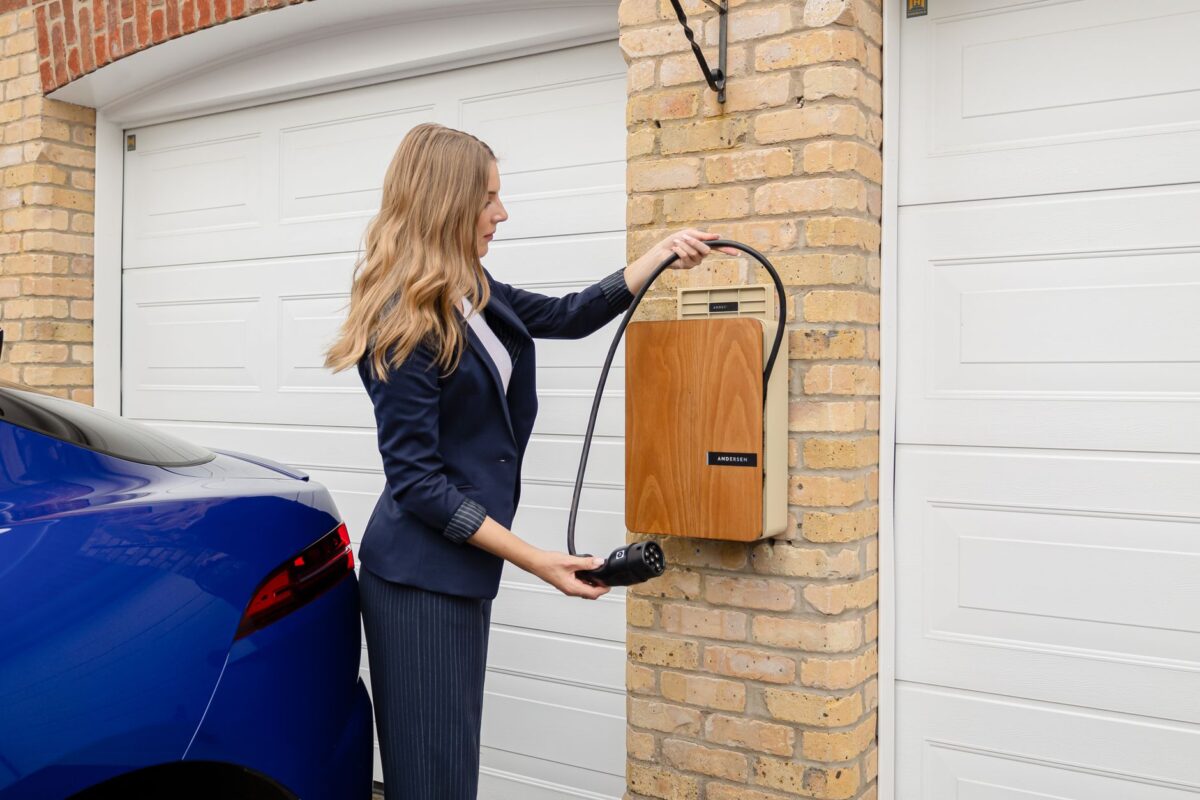
Home charger cost is the total price of putting a Level 2 charging station in your own garage or driveway. It covers the wallbox itself, the electrician’s labor, the wire, the breaker, and the municipal permit. For most EV owners, this is the single largest ownership expense after the vehicle. It is also the one that pays back fastest. Charging at home typically runs a third of what public DC fast charging costs per kilowatt-hour. However, 2026 changed the math. The federal 30C tax credit expired on June 30, 2026, so the home charger cost you see on a quote is now the price you actually pay. Understanding what drives that number keeps you from overspending by a thousand dollars or more.
What Home Charger Cost Actually Covers
A real quote has four line items. The first is hardware — the Level 2 wallbox that delivers 240 volts. The second is labor, usually four to eight hours of licensed electrician time. The third is materials: copper wire, conduit, a double-pole breaker, and mounting hardware. The fourth is the permit and inspection fee, typically $50 to $300 depending on your city. In most cases, hardware is only about 25 percent of the total home charger cost. Labor and materials make up the other 75 percent.
The variable that swings the home charger cost most is your electrical panel. A 200-amp panel with open breaker slots means a simple job. A full 100-amp panel means added work. For example, a subpanel adds $500 to $1,500. A full main service upgrade adds $1,500 to $4,000 or more.
Distance is the second big driver. Every foot between your panel and your parking spot means more copper. A charger mounted on the other side of the panel wall might cost $400 in labor. One at the far end of a detached garage can triple that. Trenching under a driveway can add $1,000 by itself.
What It Costs in 2026
Installation data from 2026 puts the range at $749 to $2,500, with an average near $1,700. Other 2026 surveys land slightly higher, at $1,200 to $3,000 for a typical professional install. A median project sits around $1,400 to $2,200 all in. As a result, most readers should budget roughly $1,800 and treat anything under $1,000 as a simple, short-run job.
Hardware pricing has actually fallen. The Tesla Wall Connector runs about $475. The ChargePoint Home Flex sits near $599 to $699. A Grizzl-E Classic is roughly $399 to $460. Emporia’s smart charger has been seen as low as $199 on promotion. Buying the box yourself and hiring labor separately can trim several hundred dollars off the home charger cost.
The high end is where people get surprised. A job needing a service upgrade, a long conduit run, and trenching can reach $6,000 or more. Labor rates also vary sharply by state and metro area. Permit fees do too. Because those figures move so much by location, check your state guide rather than assuming a national average applies to your ZIP code.
Who Needs Home Charger Cost
Level 2 makes clear sense for high-mileage drivers. If you cover more than 40 miles a day, Level 1 charging will not keep up. A standard 120-volt outlet adds roughly three to five miles of range per hour. Level 2 adds 25 to 40. For a driver with a 300-mile battery and no workplace charging, absorbing the home charger cost is not optional. It is infrastructure.
Homeowners with long-range EVs and off-street parking are the core group. So are two-EV households, where a single 48-amp circuit with load sharing beats two separate installs. Owners of trucks like the Silverado EV or R1T also need Level 2, because those packs are simply too large for overnight Level 1 refills.
Some drivers can skip the expense entirely. Plug-in hybrid owners with 30-mile electric range usually do fine on a normal outlet. So do low-mileage commuters under 30 miles a day. Renters and condo residents often cannot install anything anyway. For them, the home charger cost question becomes a landlord or HOA conversation first.
Common Exclusions and Mistakes
The biggest 2026 mistake is assuming the federal credit still exists. Section 30C gave homeowners 30 percent of the project back, capped at $1,000 per item. It expired June 30, 2026. Even before it lapsed, it only applied to chargers installed in low-income or non-urban census tracts. Many buyers who claimed it never actually qualified.
The second trap is skipping the permit. Homeowners insurance policies routinely exclude damage from unpermitted electrical work. If an uninspected charger circuit starts a garage fire, the carrier has clear grounds to deny the claim. Saving $200 on a permit can cost you a six-figure dwelling claim. Always confirm the installer pulls it and that a final inspection is signed off.
📋 Get Free Insurance Guides
Free · No spam · Unsubscribe anytime
Watch the quote’s fine print, too. Drywall repair, patching, painting, and trenching are frequently excluded. So is panel work discovered mid-job. Note also that the 2026 NEC tightened the rules: Article 625 now requires 5mA GFCI protection on EV circuits, Section 625.4 pushes hardwired installs toward licensed electricians, and Article 750 tightened energy management standards. Those changes nudged the average home charger cost upward.
How to Get the Best Rate
Start with three written quotes from licensed electricians who install EV equipment regularly. Price spreads of $800 on identical work are common. Ask each one specifically whether a panel upgrade is required, and get that answer in writing. Then ask about load management as an alternative. A smart splitter or energy management system often avoids a $3,000 service upgrade entirely, which is the single largest home charger cost reduction available.
Utility rebates are the other lever. PG&E’s Residential Charging Solutions program offers up to $2,000, and up to $5,000 for income-qualified customers. Xcel Energy customers in Colorado and New Mexico have seen rebates up to $500, usually tied to enrolling in a time-of-use plan. Con Edison has no purchase rebate but pays roughly $400 a year through SmartCharge New York for off-peak charging. These programs vary enormously, so consult your state guide before signing anything.
Timing matters as well. Bundle the charger with other electrical work — a heat pump, a subpanel, a generator interlock — and you split the trip charge. Ask whether a plug-in NEMA 14-50 receptacle is cheaper than hardwiring in your jurisdiction; it often is, though it may cap you at 40 amps. Finally, check whether the federal HEAR program still funds panel upgrades in your state, which can offset up to $4,000 of the underlying home charger cost.
Frequently Asked Questions
Is the federal EV charger tax credit still available in 2026?
No. The Section 30C Alternative Fuel Vehicle Refueling Property Credit expired June 30, 2026. It previously refunded 30 percent of the project up to $1,000 for home installs. Chargers placed in service before that date can still be claimed on the relevant tax year return. New 2026 installs get no federal help, so utility rebates now carry the full incentive load.
Does a Level 2 charger raise my homeowners insurance premium?
Typically not on its own. A permitted, inspected, code-compliant install is treated like any other 240-volt appliance circuit. However, unpermitted work is a real exposure. Insurers routinely exclude damage traced to uninspected electrical modifications. Notify your carrier after installation, keep the permit and inspection records, and confirm the charger’s replacement value falls under your personal property or dwelling limit.
Can I install the charger myself and cut the home charger cost?
You can install a plug-in unit if a 240-volt outlet already exists and passes inspection. Beyond that, DIY is risky. The 2026 NEC pushes hardwired installations toward licensed electricians under Section 625.4. Most jurisdictions will not issue a homeowner permit for a new EV circuit. Unpermitted work also voids most utility rebates and gives your insurer a denial argument.
Do I need a 200-amp panel to install a Level 2 charger?
Not necessarily. A load calculation determines this, not the panel label. Many 100-amp homes support a 32-amp or 40-amp charger fine. For example, a smart charger with dynamic load management throttles output when the dryer runs. That approach keeps a marginal panel legal and typically saves $1,500 to $4,000 versus a full service upgrade.
Compare Ev Incentives And Ownership Costs Rates
Rates for EV incentives and ownership costs vary widely between carriers, and the specialists often beat the big
national names. Comparing several quotes is the single most reliable way to pay less.
(paid link)
Official Sources & Resources
For verified information relevant to EV owners and shoppers:
- U.S. Department of Energy – Alternative Fuels Data Center: afdc.energy.gov
- NAIC (National Association of Insurance Commissioners): naic.org
- Insurance Information Institute: iii.org
- AM Best – Insurer Financial Strength: ambest.com
Content last reviewed July 2026. If you notice any outdated information, please contact us.