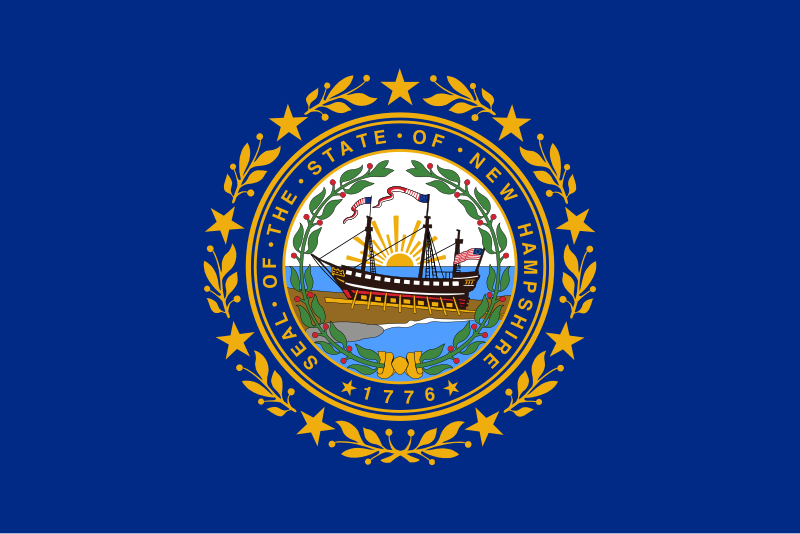
This New Hampshire Insurance Guide covers everything you need to know about auto insurance requirements, costs, and coverage options in New Hampshire. Whether you are a new driver getting your first policy, a long-time resident shopping for a better rate, or someone moving to New Hampshire from another state, understanding these requirements is essential. Driving without proper insurance can result in fines, license suspension, vehicle impoundment, and personal financial liability that could follow you for years.
This comprehensive New Hampshire Insurance Guide covers minimum coverage requirements, how the state’s insurance system works, penalties for non-compliance, average costs, and actionable strategies to lower your premiums. All information has been verified against official New Hampshire government sources as of March 2026.
In This New Hampshire Insurance Guide:
New Hampshire Minimum Liability Requirements
Every registered vehicle in New Hampshire must be covered by an auto insurance policy that meets or exceeds the following minimum limits:
| Bodily Injury (per person) | $25,000 |
| Bodily Injury (per accident) | $50,000 |
| Property Damage | $25,000 |
| Personal Injury Protection (PIP) | NO (MedPay required at 1000 per person if policy purchased) |
| Uninsured Motorist | 25000/50000 (only if policy purchased) |
| Underinsured Motorist | 25000/50000 (only if policy purchased) |
What do these numbers mean? The bodily injury limits (often written as 25000/50000) represent the maximum your insurance will pay per person and per accident for injuries you cause to others. The property damage limit covers damage you cause to another person’s vehicle, fence, building, or other property. These are liability limits only — they pay for the other party’s losses, not yours.
Most insurance experts and financial advisors strongly recommend purchasing coverage well above New Hampshire’s minimums. A single serious accident — especially one involving hospitalization, surgery, or multiple vehicles — can easily generate costs of $100,000 or more. If your liability limits are lower than the total damages, you are personally responsible for paying the difference out of pocket. A common recommendation is at least 100/300/100 coverage, or even higher if you have significant assets to protect.
Is New Hampshire an At-Fault or No-Fault State?
New Hampshire is an at-fault (tort) state. This means the driver who causes an accident is financially responsible for the other party’s injuries and property damage. After an accident in New Hampshire, you have three main options for recovering your losses: file a claim with the at-fault driver’s insurance company, file a claim through your own insurance and let them pursue the other driver’s insurer (subrogation), or file a personal injury lawsuit against the at-fault driver.
The at-fault system means that establishing who caused the accident is critical. Insurance adjusters will investigate the circumstances, review police reports, and determine fault percentages. In some cases, fault may be shared between drivers — New Hampshire follows specific rules about how shared fault affects your ability to recover damages. Understanding these rules can significantly impact your claim outcome.
One important thing to know about at-fault states: the at-fault driver’s liability insurance pays the other party’s damages, but only up to the policy limits. If the at-fault driver carries only the state minimum coverage and your damages exceed those limits, you may need to pursue the driver personally for the difference — which is one reason experts recommend carrying uninsured/underinsured motorist coverage even when it is not required by law.
Additional Coverage Requirements in New Hampshire
Medical Payments (MedPay) minimum 1000 per person if policy purchased
Special state rules: NH is the only state that does NOT require auto insurance. Operates under Financial Responsibility Law — drivers must prove ability to pay damages after an at-fault accident exceeding 1000 in damages or involving injury. If you choose to buy insurance, minimums of 25/50/25 plus MedPay and UM/UIM apply. Approximately 90 percent of NH drivers voluntarily carry insurance. Modified comparative negligence with 51 percent bar — cannot recover if 51 percent or more at fault. HB 1558 in 2026 attempted to require proof of financial responsibility at registration but was killed 16-0 in committee.
If you finance or lease your vehicle, your lender will almost certainly require you to carry comprehensive and collision coverage in addition to the state-mandated liability minimums. Comprehensive covers damage from events like theft, vandalism, hail, flooding, and animal strikes. Collision covers damage to your own vehicle in an accident regardless of fault. Even if you own your vehicle outright, these coverages are worth considering if the cost to replace your car would be a financial hardship.
What Coverage Should You Actually Buy in New Hampshire?
The state minimum exists to keep you legal, but it does not necessarily keep you financially safe. As part of this New Hampshire Insurance Guide, here is a practical framework for deciding how much coverage to carry:
| Budget-conscious | State minimums + uninsured motorist coverage. This is the bare minimum to protect yourself from uninsured drivers while keeping premiums as low as possible. |
| Recommended | 100/300/100 liability + uninsured/underinsured motorist + comprehensive and collision with a $500-$1,000 deductible. This provides solid protection for most drivers. |
| Maximum protection | 250/500/250 liability + umbrella policy + full comprehensive/collision + roadside assistance + rental reimbursement. Best for drivers with significant assets or new/expensive vehicles. |
Remember that higher coverage limits do not always mean dramatically higher premiums. The difference between minimum coverage and 100/300/100 is often only $20-$40 per month — a small price for significantly better financial protection.
📋 Get Free Insurance Guides
Free · No spam · Unsubscribe anytime
Penalties for Driving Without Insurance in New Hampshire
Driving without insurance in New Hampshire carries serious consequences that escalate with repeat offenses. Law enforcement can verify your insurance status during routine traffic stops, and many states now use electronic verification systems that automatically flag uninsured vehicles.
| First Offense | License and registration suspension until all damages paid if uninsured and at-fault in accident over 1000 in damages or involving injury |
| Repeat Offenses | Continued suspension until damages resolved plus extended SR-22 filing period |
| Other Consequences | SR-22 required for minimum 3 years after at-fault uninsured accident, must report accident to DMV within 15 days, DWI convictions require SR-22 for 3 or more years |
Beyond the legal penalties, the financial risk of driving uninsured is enormous. If you cause an accident without insurance, you are personally liable for all of the other party’s medical expenses, lost wages, property damage, and pain and suffering. A single serious accident can result in a judgment of $100,000 or more — and in most states, your wages can be garnished and your assets seized to satisfy the judgment. The cost of minimum insurance is almost always less than the cost of a single uninsured accident.
Average Cost of Car Insurance in New Hampshire
The average annual car insurance premium in New Hampshire is approximately $1,100. This is below national average of 1771 the national average of approximately $1,771 per year.
However, “average” premiums can be misleading because individual rates vary enormously based on personal factors. In New Hampshire, the factors that most affect your premium include:
- Age and driving experience: Drivers under 25 and over 75 typically pay the highest rates. A 19-year-old may pay two to three times more than a 40-year-old with the same coverage.
- Driving record: Even a single at-fault accident or speeding ticket can increase your rates by 20-40% for three to five years.
- Credit score: In most states, insurers use credit-based insurance scores as a rating factor. Drivers with poor credit may pay 40-100% more than those with excellent credit.
- ZIP code: Where you live in New Hampshire matters significantly. Urban areas with higher traffic density, theft rates, and accident frequency typically have higher premiums than rural areas.
- Vehicle type: Sports cars, luxury vehicles, and models with high theft rates or expensive repair costs are more expensive to insure than practical sedans or minivans.
Some of the most popular auto insurance providers in New Hampshire include:
- State Farm
- GEICO
- Progressive
- The Hanover
- Liberty Mutual
Each company prices policies differently based on their own risk models, so the cheapest option for one driver may not be the cheapest for another. The only way to find your best rate is to get quotes from at least three different insurers.
New Hampshire Insurance Guide: How to Save
Insurance rates in New Hampshire are not fixed — there are several proven strategies that can significantly reduce your premium without sacrificing the coverage you need:
- Multi-policy bundling discount — ask your insurer specifically about this discount, as many companies offer it but do not apply it automatically.
- good driver discount — ask your insurer specifically about this discount, as many companies offer it but do not apply it automatically.
- defensive driving course discount — ask your insurer specifically about this discount, as many companies offer it but do not apply it automatically.
- anti-theft device discount — ask your insurer specifically about this discount, as many companies offer it but do not apply it automatically.
- low mileage discount — ask your insurer specifically about this discount, as many companies offer it but do not apply it automatically.
The single most effective strategy is to compare quotes from at least three different insurers every time your policy renews. Insurance companies re-evaluate their pricing models regularly, and the cheapest option last year may not be the cheapest this year. Studies consistently show that drivers who shop around save an average of $300-$700 per year compared to those who auto-renew without comparing.
Compare New Hampshire Insurance Rates
Ready to see if you could be paying less for car insurance in New Hampshire? This New Hampshire Insurance Guide recommends comparing quotes from top insurers in your area using the link below.
(paid link)
Official Sources & Resources
We believe in transparency. Here are the official sources used to compile this guide — you can verify any information directly:
- New Hampshire DMV / Motor Vehicles: https://www.dmv.nh.gov/tickets-accidents-or-restorations/insurance-requirements-sr-22
- New Hampshire Department of Insurance: https://www.insurance.nh.gov/
- NAIC (National Association of Insurance Commissioners): naic.org
- Insurance Information Institute: iii.org
This New Hampshire Insurance Guide was last verified against official state sources in March 2026. If you notice any information that may be outdated, please contact us so we can update this page.