Table of Contents
Collision coverage explained simply: it pays to repair or replace your own car after a crash, no matter who caused it. If you hit a guardrail, rear-end another driver, or roll your car into a ditch, this coverage steps in. Many drivers assume their policy covers their own car automatically.
However, liability insurance only pays for damage you cause to other people. That gap surprises thousands of drivers every year. With collision coverage explained clearly, you can decide whether you need it, how much to pay, and which deductible fits your budget. This guide covers what it pays for, what it excludes, and what it costs.
Collision Coverage Explained: What It Actually Pays For
Collision coverage pays for physical damage to your vehicle from a collision. A collision means impact with another vehicle or an object. According to the Insurance Information Institute (III), it also covers a car that overturns. In most cases, fault does not matter. Your insurer pays first, then may seek repayment from the at-fault driver.
Here are the most common situations it covers:
- Crashing into another car, whether moving or parked
- Hitting a fixed object, such as a pole, fence, tree, or guardrail
- Single-car rollovers
- Damage from potholes or curbs, in most policies
- Hit-and-run damage, when you lack uninsured motorist property damage coverage
Your insurer typically pays the repair cost minus your deductible. For example, say repairs cost $4,200 and your deductible is $500. Your insurer pays $3,700. You pay the remaining $500 to the body shop.
If the car is a total loss, the payout works differently. Insurers pay the actual cash value (ACV) of the car. ACV is the market value right before the crash, minus your deductible. As a result, an older car may get a smaller check than you expect. Collision coverage explained this way shows why the age of your car matters so much.
What Collision Coverage Does Not Pay For
Knowing the limits is just as important. With collision coverage explained in full, the exclusions become clear. Collision insurance only covers damage to your own vehicle. It does not pay for injuries, medical bills, or the other driver’s car. Those costs fall under liability, medical payments, or personal injury protection coverage.
It also does not cover non-crash damage. That falls under comprehensive coverage instead. The NAIC lists these as typical comprehensive events:
- Theft and vandalism
- Hail, floods, and fire
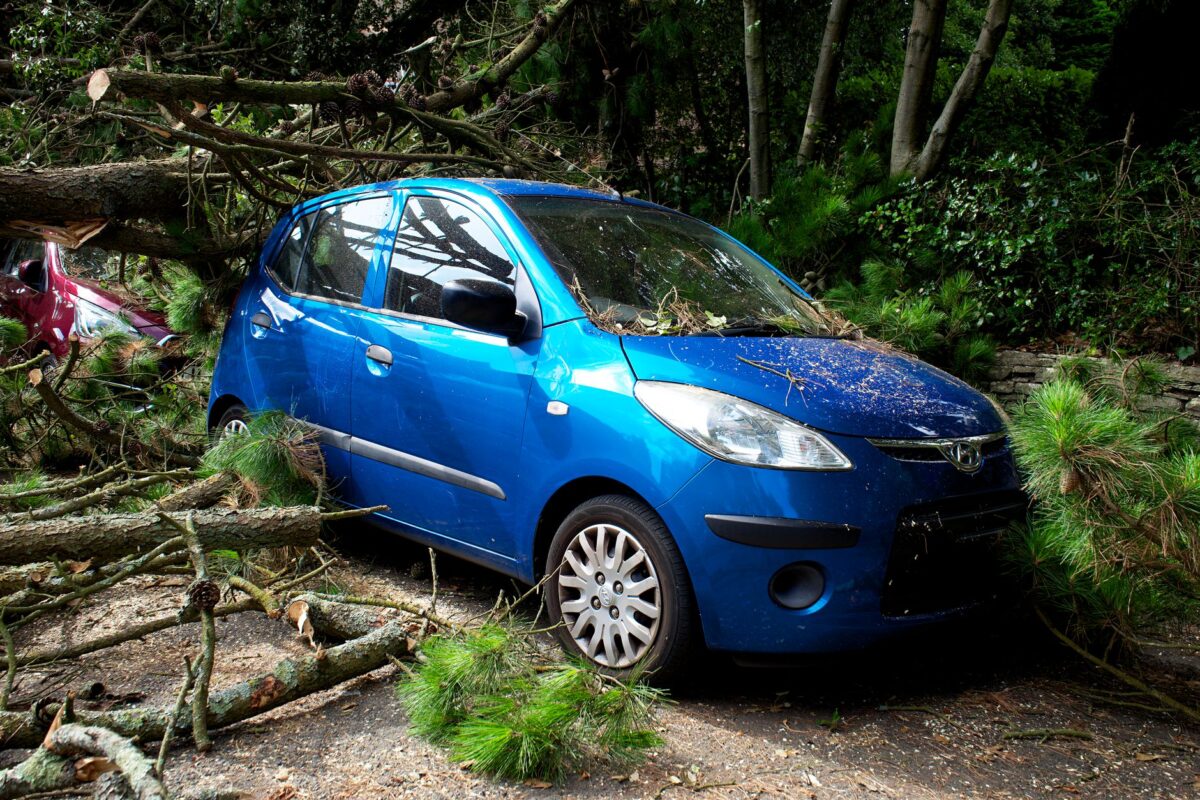
- Falling trees or branches
- Hitting a deer or other animal
The animal rule surprises many drivers. Hitting a deer is usually a comprehensive claim. However, swerving to miss a deer and hitting a tree is typically a collision claim. Other exclusions include mechanical breakdowns, normal wear and tear, and personal items stolen from the car. Custom parts may also be excluded unless you add special equipment coverage.
Collision Coverage Explained: Costs, Deductibles, and Payouts
No state requires collision coverage by law. However, if you lease or finance your car, your lender almost always requires it. Lenders want their collateral protected until the loan is paid off. Many also cap your deductible, often at $500 or $1,000.
Collision is usually the most expensive part of a full coverage policy. NAIC data shows the average collision premium has run roughly $350 to $450 per year in recent reports. Rates have climbed since then. Higher repair costs, pricier parts, and advanced safety sensors have all pushed premiums up. Your actual price depends on your car, location, driving record, and deductible.
Your deductible has a direct effect on your premium. The table below shows how typical deductible choices compare.
| Deductible | Typical Premium Impact | Out-of-Pocket Per Claim | Best For |
|---|---|---|---|
| $250 | Highest premium | $250 | Drivers with little savings |
| $500 | Moderate premium | $500 | Most financed cars |
| $1,000 | Often 15% to 30% lower than $250 | $1,000 | Drivers with an emergency fund |
| $2,000 | Lowest premium | $2,000 | Paid-off cars, safe drivers |
Total loss rules also affect your payout. Each state sets its own total loss threshold. These range from about 50% to 100% of the car’s value. For example, if repairs exceed 75% of the car’s value in a 75% state, the insurer declares a total loss. With collision coverage explained this way, you can see why gap insurance matters. If you owe more than the car is worth, collision only pays ACV. Gap coverage pays the difference to your lender.
How to Decide If You Need Collision Coverage
Start with your car’s value. Check its current price on Kelley Blue Book or NADA Guides. Then compare that value to your yearly collision premium plus your deductible.
A common rule of thumb is the 10% rule. If your annual collision premium is more than 10% of the car’s value, consider dropping it. For example, say your car is worth $3,500. Your collision premium is $480 per year, and your deductible is $500. In that case, your maximum payout is only $3,000. You would be paying nearly 14% of that amount every year for protection.
📋 Get Free Insurance Guides
Free · No spam · Unsubscribe anytime
With collision coverage explained in numbers, follow these steps:
- Check your loan or lease terms. If you still owe money, you likely cannot drop it.
- Review your savings. Could you replace your car without help? If not, keep the coverage.
- Raise your deductible. Moving from $500 to $1,000 often cuts the premium noticeably.
- Compare quotes. Collision rates vary widely between insurers for the same driver.
- Ask about discounts. Safe driver, bundling, and telematics programs can lower costs.
When filing a claim, act quickly. Take photos at the scene. Exchange information with other drivers. Then report the claim to your insurer within the timeframe in your policy. Typically, an adjuster will inspect the damage within a few days. You can usually choose your own repair shop. State laws in many places protect that right.
Frequently Asked Questions
Does collision coverage pay if the accident was my fault?
Yes. That is its main purpose. With collision coverage explained simply, fault does not change whether your own car gets repaired. However, an at-fault claim may raise your premium at renewal.
Is collision coverage the same as full coverage?
No. “Full coverage” is an informal term, not a policy type. It typically means liability plus collision plus comprehensive. As a result, collision is just one part of a full coverage policy.
Will collision pay for a rental car while mine is being repaired?
In most cases, no. Rental reimbursement is a separate add-on. It often costs only a few dollars per month. For example, a typical plan pays $30 to $50 per day for up to 30 days.
Should I keep collision coverage on an old car?
It depends on the car’s value and your savings. With collision coverage explained through the 10% rule, dropping it often makes sense for low-value cars. However, keep it if losing the car would cause financial hardship.
Compare Insurance Rates
Ready to see if you could be paying less? Compare quotes from top insurers in your area. Getting multiple quotes is the most effective way to find a better rate.
(paid link)
Official Sources & Resources
For verified information on auto insurance regulations and consumer protection:
- NAIC (National Association of Insurance Commissioners): naic.org
- Insurance Information Institute: iii.org
- Federal Trade Commission — Auto Insurance: consumer.ftc.gov
- USA.gov — Car Insurance: usa.gov/car-insurance
Content last reviewed November 2026. If you notice any outdated information, please contact us.