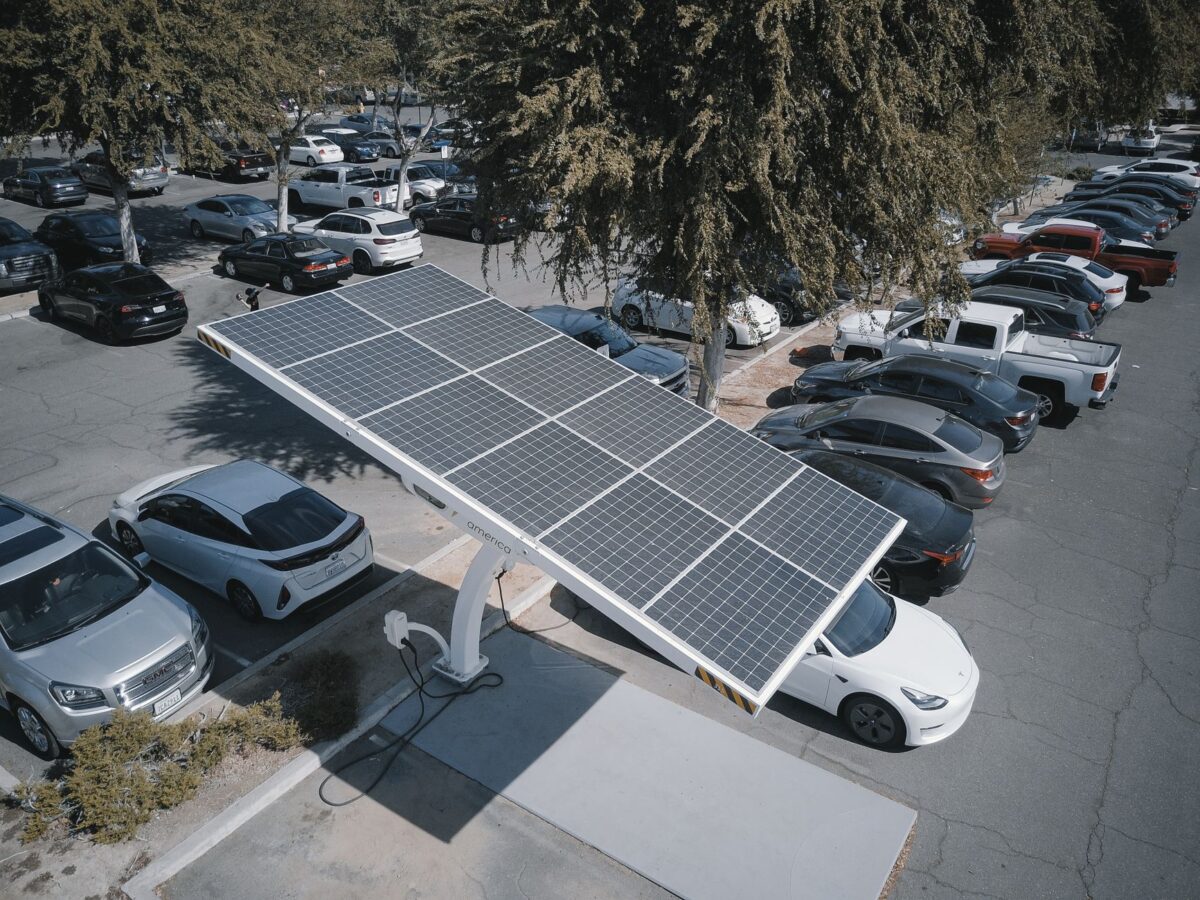
Solar charging means fueling your electric vehicle with electricity your own roof makes. It is not an insurance product or a carrier endorsement. It is an energy setup: panels, an inverter, often a battery, and a Level 2 charger that coordinates with all three. The appeal is straightforward. Home charging is already the cheapest way to fuel an EV, and solar charging pushes that cost toward zero. However, 2026 rewrote the math. The 30% federal residential solar credit under Section 25D expired December 31, 2025. The federal EV charger credit under Section 30C expired June 30, 2026. EV owners now pay closer to sticker price, so the payback numbers deserve a hard look before anyone signs.
What Solar Charging Actually Covers
A home solar array does not send power directly to your car. It feeds your main panel. Your house consumes what it needs, and the surplus either charges a battery, charges the EV, or exports to the grid. That last path matters most. Self-consumed solar offsets power at your full retail rate. Exported solar only earns whatever your utility pays. In California under NEM 3.0, export credits average roughly $0.05 per kWh, down from about $0.30 under NEM 2.0. As a result, charging the car at noon is worth far more than selling that same kilowatt-hour.
This is why solar-aware hardware exists. Chargers with excess-solar modes ramp amperage up and down to match live production. The Emporia Pro markets an Excess Solar Management feature. Wallbox Pulsar Plus units at 48 amps integrate with Enphase and SunPower systems. Tesla’s Universal Wall Connector offers Charge on Solar, though it requires a Powerwall. Enphase is launching a bidirectional IQ charger in 2026. Third-party apps such as ChargeHQ add solar tracking to chargers that lack it natively.
Insurance enters through your homeowners policy, not your auto policy. Roof-mounted panels are typically covered as a permanent attachment under Coverage A. In most cases that includes fire, wind, hail, lightning, theft, and falling objects. Ground-mounted arrays often fall under other structures coverage instead, which carries a lower limit.
What It Costs in 2026
Equipment prices are the easy part. A Level 2 charger runs $600 to $1,600, with installed cost typically $800 to $2,500. Enphase units sit around $750 to $900 before labor. A modest 6 to 8 kW array paired with a Level 2 charger and no storage generally lands between $12,000 and $25,000. Add a battery, a complex roof, or a service upgrade and full projects reach $40,000 to $60,000. Battery storage is no longer optional in low-export states, which is why California quotes skew high.
The savings side is smaller than most people expect. Home charging nationally costs roughly $35 to $60 per month, or about $10.47 for a full 60 kWh charge. Electricity rates run from about 10 cents per kWh in Washington to 40 cents in Hawaii. So solar charging saves a Hawaii driver several times what it saves a Washington driver. Rates and net-metering rules vary sharply by state, and there is no honest national payback figure. Check your state guide before trusting any calculator.
Homeowners insurance adds a real line item. Most owners report premium increases of $10 to $25 per month after adding panels. In hail-heavy states like Texas and Colorado, increases of $50 to $200 per month are common. You also need to raise your dwelling limit by the installed system cost, typically $25,000 to $35,000. That increase is not optional if you want a full rebuild paid.
Who Needs Solar Charging
The strongest candidates share three traits. They own their home, they drive 12,000 miles or more per year, and they pay above 20 cents per kWh. A daytime charging pattern helps enormously. Retirees, remote workers, and two-EV households capture the most self-consumption. For example, a work-from-home owner charging at 1 p.m. uses solar at full retail value instead of exporting it for pennies.
Anyone already planning solar should size for the car now. Under NEM 3.0, California permits system sizing up to 150% of historical annual usage when you are electrifying with an EV, heat pump, or induction range. Adding four panels during the original install costs far less than a second permit, second inspection, and second interconnection application two years later.
Plenty of EV owners should skip it. Renters and condo owners cannot justify the capital. Drivers in cheap-power states with strong overnight time-of-use rates already pay 7 to 9 cents per kWh at night, and solar charging cannot beat that meaningfully. Low-mileage drivers under 6,000 miles a year rarely clear the math either. Apartment dwellers relying on public charging get nothing from a rooftop array.
Common Exclusions and Mistakes
The claim-time surprises are consistent. Standard homeowners policies exclude flood, pests, wear and tear, and manufacturer defects. They also exclude equipment breakdown from internal causes, so a failed inverter or a dead optimizer is a warranty matter, not a claim. Several insurers in Texas and Colorado now exclude wind and hail on solar entirely, or cap it with a separate percentage deductible. A 2% hail deductible on a $500,000 home is $10,000 out of pocket.
The biggest mistake is silence. Owners install panels and never tell their carrier. The dwelling limit stays where it was, and a total loss leaves the array underinsured by tens of thousands. Get the confirmation in writing. Leased systems and power purchase agreements complicate this further, because the leasing company usually owns the hardware and carries its own coverage. Ask who insures what before signing.
📋 Get Free Insurance Guides
Free · No spam · Unsubscribe anytime
On the incentive side, people still quote the 30% federal solar credit. It is gone for cash and loan purchases as of January 1, 2026. Third-party-owned systems may still reflect commercial credit value in pricing, but that benefit belongs to the installer, not to you. Similarly, the 30C charger credit worth up to $1,000 stopped applying to installs after June 30, 2026.
How to Get the Best Rate
Start with your utility, not your installer. Many utilities still pay $250 to $500 rebates for a Level 2 charger, and some add bill credits for enrolling in managed charging. Time-of-use plans typically cut charging costs 30% to 50% on their own. A Provo-style TOU spread of 15 cents on-peak against 7 cents off-peak is common. Capture that discount first, then decide whether panels add enough on top.
Get three quotes and compare cost per watt installed, not total price. Ask each installer to price the array with and without storage, and to model self-consumption assuming EV charging. Confirm the charger supports excess-solar modulation before purchase; retrofitting a dumb charger wastes money. State incentives still range from roughly $1,000 to $7,500 for vehicles and vary widely for equipment, so verify current programs in your state guide.
Finally, shop homeowners insurance the same month you install. Carriers price solar very differently, and hail-state pricing spreads are dramatic. Ask specifically whether wind and hail on the array carry the same deductible as the roof. Request a replacement-cost endorsement rather than actual cash value. Panels lose value fast on paper, and depreciation turns a $30,000 array into a $14,000 check.
Frequently Asked Questions
How many panels does it take to charge an EV?
For a typical driver covering 12,000 miles a year, plan on roughly 3 to 4 kW of added capacity, or about eight to ten modern panels. That assumes average sun and 3.5 miles per kWh efficiency. Cold climates, heavy highway use, and larger trucks push the requirement higher. Size the array against your actual annual kWh, not against the car’s battery capacity.
Can I charge directly from panels during a blackout?
Usually not. Grid-tied inverters shut down during outages for lineworker safety, so the array stops producing. You need a battery with islanding capability or a hybrid inverter with a backup port. Without one, solar charging simply stops when the grid does. Some bidirectional chargers arriving in 2026 add vehicle-to-home backup, but they require compatible vehicles and a transfer switch.
Does an EV charger raise my homeowners premium?
Rarely by itself. A hardwired Level 2 charger is a permitted electrical fixture and typically causes no rate change. The panels drive the premium increase, not the charger. However, an unpermitted DIY install can void a fire claim entirely. Keep the permit and inspection paperwork, and tell your agent the work was done by a licensed electrician.
Is solar charging still worth it without the 30% credit?
It depends heavily on your rates. At 30 cents per kWh or more, payback often still lands inside 9 to 12 years. At 12 cents, it frequently never pays back. Losing the 25D credit added roughly three to five years to typical payback timelines. Run the numbers with current state incentives before assuming older estimates still hold.
Compare Ev Incentives And Ownership Costs Rates
Rates for EV incentives and ownership costs vary widely between carriers, and the specialists often beat the big
national names. Comparing several quotes is the single most reliable way to pay less.
(paid link)
Official Sources & Resources
For verified information relevant to EV owners and shoppers:
- U.S. Department of Energy – Alternative Fuels Data Center: afdc.energy.gov
- NAIC (National Association of Insurance Commissioners): naic.org
- Insurance Information Institute: iii.org
- AM Best – Insurer Financial Strength: ambest.com
Content last reviewed July 2026. If you notice any outdated information, please contact us.