Table of Contents
Hurricane car damage catches thousands of drivers off guard every year. Many assume their standard auto policy will pay for a flooded engine or a tree crushed onto the hood. However, that is only true if you carry the right coverage. Liability-only insurance pays nothing for storm losses.
Comprehensive coverage is what actually protects your vehicle. The stakes are high. Hurricane Ian alone damaged an estimated 358,000 vehicles in 2022, according to CARFAX data. Hurricane Helene damaged roughly 138,000 more in 2024. As a result, understanding how insurers handle hurricane car damage before a storm forms is one of the smartest moves a driver can make.
What Coverage Pays for Hurricane Car Damage
Comprehensive coverage is the only part of an auto policy that pays for hurricane car damage. It covers events outside your control that are not collisions. That includes flooding, wind, hail, falling trees, and flying debris. The Insurance Information Institute (III) confirms that flood damage to vehicles falls under comprehensive, not homeowners or flood insurance. In fact, the National Flood Insurance Program specifically excludes cars.
Comprehensive coverage is optional under state law. However, lenders almost always require it on financed or leased vehicles. According to the III, about 80% of insured drivers carry it. The cost is modest. The National Association of Insurance Commissioners (NAIC) reports the average comprehensive premium runs about $190 per year nationwide. That is roughly $16 per month for protection against storms, theft, fire, and vandalism combined.
Collision coverage, by contrast, only pays when your car hits another vehicle or object. Liability pays for damage you cause to others. Neither one responds to rising water or wind. For example, if a storm surge floods your parked sedan, a liability-only policy leaves you with the entire repair bill. In most cases, that bill is severe. Saltwater destroys wiring, computers, and upholstery quickly.
Hurricane Car Damage Costs and Common Claim Scenarios
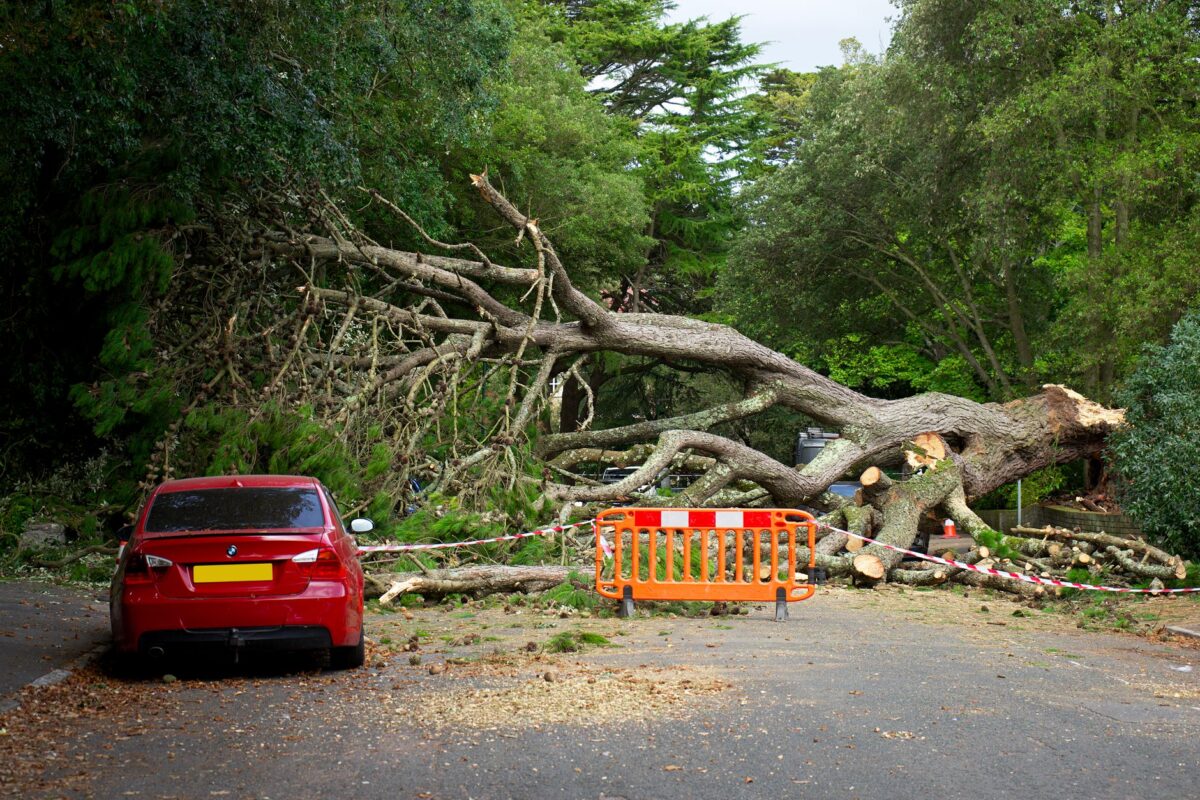
Hurricane car damage claims typically fall into three buckets: flood, wind, and debris. Flood claims are the most expensive. Water that reaches the dashboard usually means a total loss. In that case, the insurer pays the car’s actual cash value minus your deductible. Deductibles typically range from $250 to $1,000. Wind and debris claims are often smaller. A broken windshield may cost $300 to $500. A tree limb through the roof can run $5,000 or more.
Here is how the main coverage types respond to common storm scenarios:
| Storm Scenario | Coverage That Pays | Typical Cost Without Coverage |
|---|---|---|
| Flooded engine or interior | Comprehensive | $5,000 to total loss |
| Tree falls on parked car | Comprehensive | $2,000–$10,000+ |
| Windblown debris breaks glass | Comprehensive | $300–$1,500 |
| Hail dents body panels | Comprehensive | $4,000–$5,000 average |
| You crash while evacuating | Collision | Varies by damage |
| Storm damage with liability-only policy | Nothing | Full cost out of pocket |
Total losses dominate after major storms. Insurers declare a car totaled when repairs exceed a set percentage of its value, often 70% to 80% depending on the state. Flooded vehicles frequently cross that line. Saltwater flooding is almost always a total loss. As a result, insurers paid out billions in auto claims after Hurricanes Harvey, Ian, and Helene. Harvey alone ruined up to half a million vehicles in the Houston area in 2017.
One more cost matters: your future premium. A single comprehensive claim raises rates far less than an at-fault accident. However, it can still have an impact. Industry data from Insure.com shows some drivers see increases around 20% after a comprehensive claim, though many insurers apply little or no surcharge for weather losses. Typically, catastrophe claims are treated more leniently than collision claims.
Timing Rules: Why You Cannot Buy Coverage as a Storm Approaches
Timing is the trap that catches the most drivers. Insurers impose “binding restrictions” once the National Hurricane Center issues a hurricane watch or warning for your area. During a moratorium, companies stop selling new policies. They also block coverage upgrades on existing policies. For example, you cannot add comprehensive coverage on Tuesday for a hurricane making landfall on Thursday. The restriction usually lifts a few days after the storm passes.
This rule exists to prevent people from buying coverage only when a loss is certain. In most cases, moratoriums cover entire states or coastal regions, not just the projected landfall zone. Florida, Louisiana, Texas, and the Carolinas see them every season. The Atlantic hurricane season runs from June 1 through November 30. NOAA forecasters have predicted above-normal activity in recent seasons. Therefore, the only reliable strategy is carrying comprehensive coverage year-round if you live anywhere near the coast.
Drivers in inland states should not tune out either. Hurricane car damage regularly reaches hundreds of miles from the coast. Hurricane Helene flooded vehicles across western North Carolina, Tennessee, and Georgia in 2024. Remnant storms also spawn tornadoes and flash floods far inland. However, a comprehensive policy purchased before any watch or warning covers all of it.
How to File a Hurricane Car Damage Claim and Protect Yourself
Act quickly after the storm passes. First, document everything before touching the car. Take photos and video of the exterior, interior, engine bay, and the waterline if it flooded. Second, do not start a flooded vehicle. Cranking the engine can force water into the cylinders and multiply the damage. Third, contact your insurer or agent right away. Catastrophe claims are typically handled first-come, first-served, and adjusters get backlogged fast after major storms.
📋 Get Free Insurance Guides
Free · No spam · Unsubscribe anytime
Next, take reasonable steps to prevent further hurricane car damage. Cover broken windows with plastic. Move the car to higher ground if it is drivable and safe. Keep receipts for towing and temporary repairs, because most policies reimburse those costs. Then cooperate with the adjuster’s inspection. If the car is totaled, research its pre-storm market value using pricing guides. You can negotiate if the settlement offer seems low. State insurance departments and the NAIC consumer resources can help if a dispute stalls.
Finally, watch out for flood cars in the used market. After every major hurricane, thousands of water-damaged vehicles are cleaned up and resold across state lines. The National Insurance Crime Bureau offers a free VINCheck tool that flags flood-branded titles. Check any used car’s history before buying, especially in the six months after a big storm. For example, CARFAX estimated over 400,000 flood-damaged cars were already on U.S. roads before the 2024 storms added more.
Frequently Asked Questions
Does full coverage insurance pay for hurricane car damage?
Yes, in most cases. “Full coverage” usually means liability plus collision and comprehensive. The comprehensive portion pays for hurricane car damage from flooding, wind, hail, and falling objects. You only pay your deductible.
Can I add comprehensive coverage right before a hurricane hits?
No. Insurers freeze new policies and coverage changes once a hurricane watch or warning is issued. As a result, you must buy coverage before a storm is named and approaching. Plan ahead at the start of hurricane season.
Will my rates go up after a hurricane claim?
Sometimes, but the effect is usually small. Comprehensive claims from natural disasters typically carry little or no individual surcharge. However, insurers may raise base rates across an entire region after heavy catastrophe losses, which affects everyone regardless of claims.
Compare Insurance Rates
Ready to see if you could be paying less? Compare quotes from top insurers in your area. Getting multiple quotes is the most effective way to find a better rate.
(paid link)
Official Sources & Resources
For verified information on auto insurance regulations and consumer protection:
- NAIC (National Association of Insurance Commissioners): naic.org
- Insurance Information Institute: iii.org
- Federal Trade Commission — Auto Insurance: consumer.ftc.gov
- USA.gov — Car Insurance: usa.gov/car-insurance
Content last reviewed July 2026. If you notice any outdated information, please contact us.