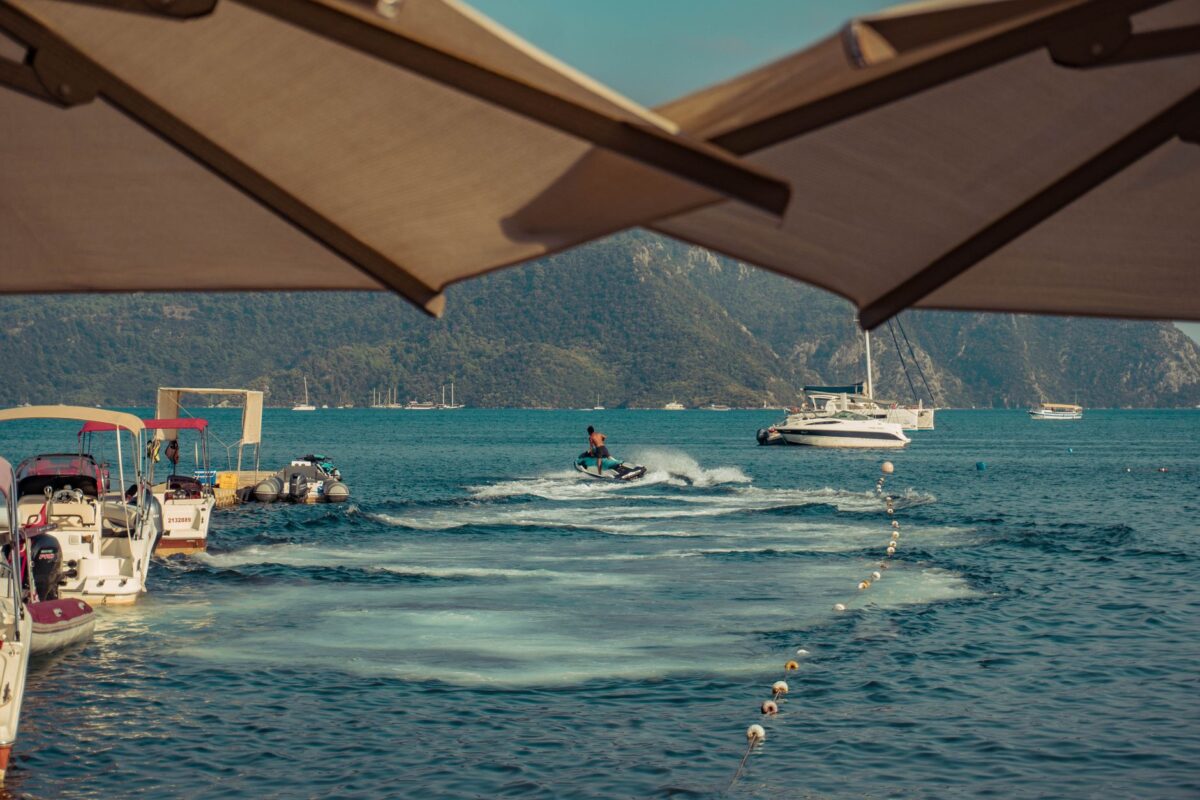
Jet ski insurance is a standalone marine policy that covers personal watercraft — Sea-Doos, WaveRunners, Jet Skis and similar craft — against liability, physical damage and injury costs. It matters more than most boat owners expect. Homeowners policies almost universally exclude personal watercraft, so a jet ski sitting in your garage has no liability coverage the moment it hits the water. PWCs also carry a disproportionate claim rate. They run fast, turn sharply, and lose steering control the instant the throttle is released. Industry premiums typically run 3% to 5% of the craft’s value annually, far higher than the ratio on a comparably priced fishing boat. For example, a $12,000 WaveRunner can cost as much to insure as a $40,000 center console. That gap is why a separate policy exists at all.
What Jet Ski Insurance Actually Covers
A standard PWC policy has four working parts. Bodily injury and property damage liability pays when you injure another rider or damage a dock, and limits commonly run $100,000 to $300,000, with $500,000 available. Physical damage covers your own craft on either an agreed-value or actual-cash-value basis. Medical payments typically run $1,000 to $25,000 per person. Uninsured boater coverage pays your injuries when the at-fault operator carries nothing — common on lakes where coverage is optional.
Agreed value is the detail worth paying attention to. Under actual cash value, a five-year-old Sea-Doo GTI depreciates hard, and a total loss might pay $4,500 on a craft you paid $11,000 for. Markel offers new replacement cost coverage on PWCs under three years old, which pays for a comparable new unit instead of a depreciated figure. Progressive offers similar total-loss replacement on newer craft. As a result, the coverage form matters more than the premium difference.
Several add-ons close real gaps. On-water towing is the most used: a disabled PWC three miles offshore is a $400 to $800 tow, and towing endorsements typically cost $15 to $40 a year. Trailer coverage is separate and often forgotten. Fuel-spill liability and wreckage removal are frequently sublimited, and wreck recovery on a sunken craft can run $10,000 or more. Personal effects coverage handles phones, coolers and safety gear.
What It Costs in 2026
Most owners pay $100 to $500 per year in 2026. Liability-only jet ski insurance starts near $100 annually with Progressive and Markel, but it pays nothing toward your own craft. Full coverage on an entry-level PWC typically runs $200 to $400. High-performance supercharged models — a Sea-Doo RXP-X or Yamaha FX SVHO — commonly land in the $350 to $800 range. Multi-craft households usually pay less per unit than these figures suggest.
Rate drivers are predictable. Horsepower and hull value dominate, followed by operator age. A 19-year-old rated operator can double a premium. Location matters heavily: coastal saltwater exposure, hurricane territory and high-traffic lakes price above inland freshwater use. Storage counts too — a garaged craft on a trailer rates better than one on a lift or moored slip. Claim history and boater safety certification round out the picture.
Deductibles on jet ski insurance usually run $250 to $1,000, and moving from $250 to $500 typically trims 10% to 15% off the physical damage portion. However, minimum-required limits vary by state, and only a minority of states mandate liability at all. Because those thresholds shift and some tie to horsepower, check your state guide rather than assuming a national figure applies. Layup-season credits also apply in northern states where the craft is stored October through April.
Who Needs Jet Ski Insurance
Anyone who finances a PWC needs it. Lenders require physical damage coverage with the lienholder listed, and typically demand it before releasing funds. Marina and launch-ramp operators are the second trigger. Many facilities require proof of liability — often $300,000 — before granting slip access or dry storage, regardless of whether state law demands coverage.
Boat owners who already carry a policy on a larger vessel should not assume the PWC rides along. Some marine policies extend to a dinghy or tender, but personal watercraft are named exclusions on the vast majority of them. For example, a 24-foot cuddy cabin policy will not follow the WaveRunner you tow behind it. In most cases you need a separate PWC endorsement or standalone policy, and adding a craft to an existing marine carrier is usually the cheaper route.
Owners who let others ride absolutely need jet ski insurance. Permissive-use claims — a friend, a nephew, a neighbor’s teenager — drive a large share of PWC liability losses. Roughly the only owners who can reasonably skip coverage are those on a paid-off, low-value craft used exclusively on private water with no guest riders. Even then, liability-only jet ski insurance at $100 a year is cheap protection against a six-figure injury claim.
Common Exclusions and Mistakes
Wear, tear and mechanical breakdown are excluded across the board. So are marring, denting, animal damage, manufacturer defects, ice and freezing. That last one catches northern owners who leave water in the pump housing. Markel’s consequential damage coverage is a notable exception: it pays when ordinary wear causes a fire, sinking, collision or stranding. Most carriers do not offer that.
Racing is excluded on nearly every standard PWC form, and so is any organized speed event. Operating under the influence voids coverage entirely. Commercial use is the mistake that surprises people most — renting your jet ski out through a peer-to-peer app converts it to a commercial exposure, and a personal policy will deny the claim outright. If you rent, you need a commercial marine policy.
📋 Get Free Insurance Guides
Free · No spam · Unsubscribe anytime
Navigational limits are the quiet gap. Many policies restrict use to inland waters or to a set distance offshore, commonly 25 to 75 miles. Cross that line and coverage stops. Trailering is another: some jet ski insurance policies cover the craft in transit, others require it to be scheduled on your auto policy. However, the most expensive mistake is undervaluing the craft on an actual-cash-value form, then discovering at total loss that the payout will not clear the loan balance.
How to Get the Best Rate on Jet Ski Insurance
Start with a state-approved boater safety course. Completion typically cuts 10% to 15% with most major carriers, and the course runs $30 or less online. Bundling matters more: pairing PWC coverage with home or auto commonly saves 15% to 25%. Multi-craft discounts apply when you insure two or more PWCs together, which is worth structuring deliberately if your household has a pair.
Compare carrier types, not just prices. Progressive writes the broadest PWC book and offers original-equipment-parts and total-loss replacement options. Markel is the specialist choice and typically the strongest on new replacement cost. BoatUS, underwritten by GEICO, writes in all 50 states and bundles unlimited on-water towing through its Unlimited Gold plan — genuinely valuable if you ride far from the ramp. Foremost rounds out the major writers.
Time the purchase well. Buy jet ski insurance before the season starts, not after the first warm weekend, since carriers price off the full annual term either way. Ask about lay-up credits if you store the craft in winter. Pay annually rather than monthly to avoid installment fees of $5 to $8 per payment. Finally, raise the deductible to $500, keep the liability limit at $300,000 or higher, and add towing. That combination buys the most real protection per dollar in jet ski insurance.
Frequently Asked Questions
Does my boat policy already cover the jet ski I tow behind it?
Almost never. Marine policies often extend to a dinghy or tender under a certain horsepower, but personal watercraft are specifically named exclusions on most forms. Your WaveRunner needs its own scheduled coverage or a separate policy. Call your carrier and ask them to confirm in writing, because verbal assurances do not survive a claim.
Am I covered when a friend borrows my jet ski?
Usually yes, if the policy includes permissive-use liability and the rider meets any age or certification restriction listed. However, some carriers exclude operators under 18 or 21 unless specifically named. Check the operator clause before handing over the lanyard. Permissive-use claims are one of the most common PWC liability losses carriers see.
Is jet ski insurance required by law?
It depends entirely on the state. Only a minority of states mandate PWC liability, and several tie the requirement to horsepower thresholds or to registration and launch access rather than to a blanket statute. Arkansas, for example, requires $50,000 in liability for engines of 50 horsepower or more. Check your state guide for current thresholds.
What happens if I rent my jet ski out on a peer-to-peer app?
Your personal policy will deny the claim. Renting the craft out for money is commercial use, which is excluded on every standard PWC form. You need a commercial marine policy or the rental platform’s own liability program. Some platforms provide limited coverage, but the limits are typically far below what a serious injury claim costs.
Compare Boat Insurance Rates
Rates for boat insurance vary widely between carriers, and the specialists often beat the big
national names. Comparing several quotes is the single most reliable way to pay less.
(paid link)
Official Sources & Resources
For verified information relevant to boat owners:
- U.S. Coast Guard Boating Safety Division: uscgboating.org
- NAIC (National Association of Insurance Commissioners): naic.org
- Insurance Information Institute: iii.org
- AM Best – Insurer Financial Strength: ambest.com
Content last reviewed July 2026. If you notice any outdated information, please contact us.