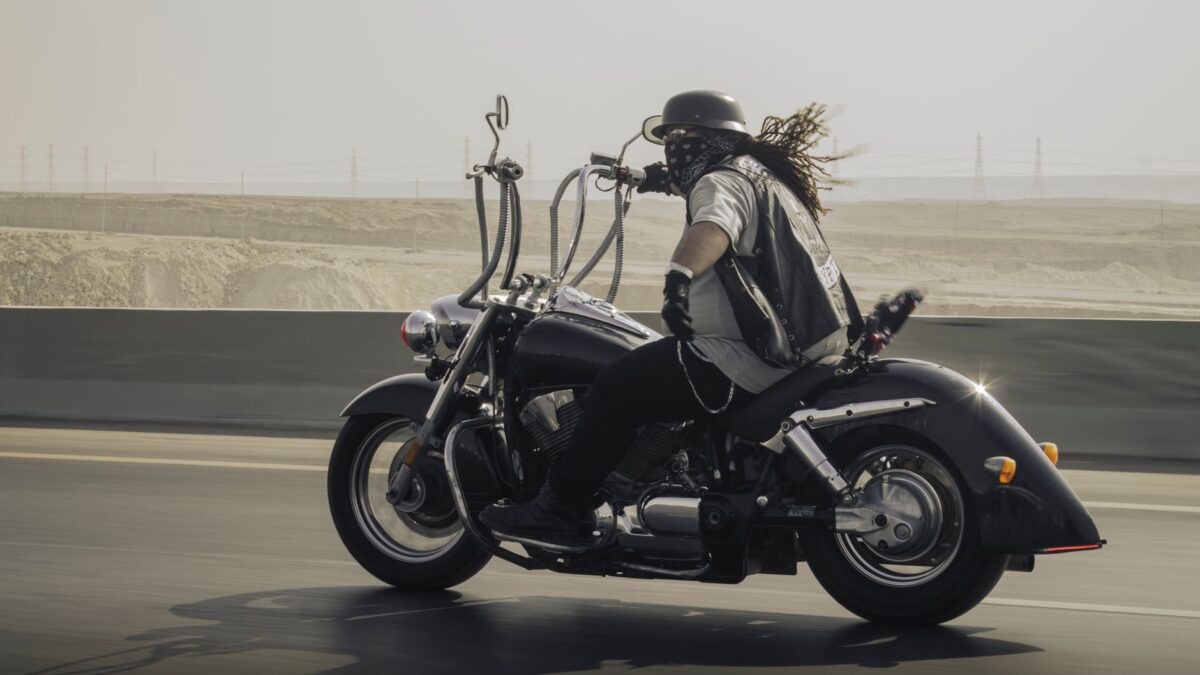
Custom parts coverage is the part of a motorcycle policy that pays for the gear you bolted on after you rode the bike home. Your standard comprehensive and collision coverage insures the machine as the factory built it. It does not automatically insure your $1,400 exhaust, your bagger fairing, your saddlebags, or your custom paint. That gap surprises riders every season. The average rider spends thousands on upgrades. However, most policies value the bike from a book number tied to the stock VIN. Custom parts coverage closes that difference. It is one of the cheapest endorsements on a motorcycle policy, and one of the most commonly skipped.
What Custom Parts Coverage Actually Covers
Insurers use the term custom parts and equipment, or CPE. It covers permanently attached, non-factory items. That means exhaust systems, engine guards, highway pegs, sissy bars, backrests, hard bags, windscreens, LED lighting, custom seats, chrome, and paint or vinyl work. Aftermarket audio, GPS mounts, and heated grips usually qualify too. In most cases, the part must be permanently installed. A tank bag you strap on is personal property, not CPE.
Progressive automatically includes $3,000 of accessory and custom parts coverage when you carry comprehensive, or comprehensive plus collision. You can buy up to $30,000 for most bike types. GEICO includes about $2,000 by default and lets you buy more. Foremost writes plans for vintage and custom builds with limits reaching $30,000. Dairyland sells it as optional special equipment coverage for permanent non-factory parts.
The claim math matters as much as the limit. Custom parts coverage pays out subject to your comprehensive or collision deductible. Progressive states it pays to return the bike to pre-accident condition or better, including new parts even when the damaged part had depreciated. Other carriers pay actual cash value and depreciate. For example, a three-year-old $900 exhaust may settle near $500. Ask which basis applies before you sign.
What It Costs in 2026
Custom parts coverage is inexpensive relative to what it protects. Typical pricing in 2026 runs about $50 to $150 per year for meaningful limits. Riders adding coverage in the $3,000 to $5,000 range often see the low end of that. Pushing toward a $20,000 or $30,000 limit on a full custom build can run several hundred dollars annually. As a result, the endorsement usually costs less per year than a single set of tires.
Context helps. Full-coverage motorcycle premiums average roughly $364 to $1,500 per year depending on the data source, bike type, and state. Insurify data puts full coverage nearer $179 per month for its sample. Sport bikes run far higher than cruisers, in some comparisons more than three and a half times as much. Against those numbers, custom parts coverage is a rounding error on the total bill.
Several things push the price up. Higher limits obviously cost more. Performance modifications raise it further, because they change how the bike gets ridden. Theft-prone models raise it, since bolt-on chrome and bags are easy targets. Rates also vary meaningfully by state, so a national figure will not match your quote. Check your state guide for local pricing before budgeting. Broader 2026 pressure is real too. Parts tariffs and higher repair labor are lifting motorcycle physical damage costs across the board.
Who Needs Custom Parts Coverage
The clearest case is the touring or bagger rider. A Road Glide or Gold Wing owner routinely carries $5,000 to $15,000 in bags, audio, lighting, and comfort upgrades. Stock limits will not cover that. The second clear case is the custom or chopper builder. If the frame, tank, and paint are all one-off, you need both custom parts coverage and an agreed value or stated value policy.
Adventure riders belong here as well. Crash bars, skid plates, aluminum panniers, auxiliary lights, and a bash plate add up fast on a big GS or Tenere. A $2,000 pannier system is common. Typically that alone eats a default limit. Cafe and bobber builders face the same math, since the parts that make the bike interesting are exactly the parts a stock valuation ignores.
Some riders can skip it. If you ride a bone-stock commuter and added only a phone mount, the included limit is plenty. If you carry liability only, custom parts coverage does not apply at all, because CPE rides on comprehensive and collision. And if your total add-ons come to $400, the endorsement is not worth the paperwork. Be honest about the real total, though. Riders consistently undercount.
Common Exclusions and Mistakes
The biggest mistake is never declaring the modifications. Insurers can deny a CPE claim or void coverage when the bike does not match their records. Call your agent after each significant upgrade. The second mistake is missing documentation. Receipts, invoices, and dated photos are usually required at claim time. Without them, adjusters default to a low estimate, or deny the item entirely.
Real exclusions catch people too. Racing and track-day damage is excluded under nearly every motorcycle policy. Some carriers exclude or surcharge high-risk performance work, including nitrous kits, turbos, and engine displacement changes. Non-permanent items are generally out, so a strapped-on tail bag or loose helmet may fall to homeowners or renters coverage instead. Riding apparel is inconsistent. Some policies fold gear into accessory coverage, while GEICO caps helmet replacement near $400.
📋 Get Free Insurance Guides
Free · No spam · Unsubscribe anytime
Depreciation is the last trap. Unless the policy pays replacement cost, that $800 jacket from three years ago may settle around $300. Also remember the deductible. On a $1,200 stolen-accessory claim with a $1,000 deductible, custom parts coverage returns very little. However, on a total loss with $12,000 in modifications, the endorsement is the difference between whole and wrecked.
How to Get the Best Rate
Start by building an actual inventory. List every part, the install date, and the price paid. Photograph the bike from every angle each spring. Store receipts in a cloud folder, not the garage. That inventory does two things. It lets you buy the correct limit instead of guessing, and it makes a claim move fast. Underinsuring by $5,000 is common and entirely avoidable.
Then shop the specialty carriers, not just the household names. Progressive, Dairyland, Foremost, Markel, and Harley-Davidson Insurance all write custom bike business and compete hard on custom parts coverage limits. Ask three specific questions of each. What limit is included at no charge? What is the maximum I can buy? Do you pay replacement cost or depreciated value on accessories?
Stack the standard discounts while you are there. Multi-bike, homeowner, paid-in-full, safety course completion, association membership, and anti-theft device credits all apply on motorcycle policies. Many carriers also give a meaningful discount for garaged storage. For example, a rider who completes an MSF course and bundles two bikes can often absorb the entire cost of custom parts coverage through those savings alone. Re-quote every renewal, since 2026 pricing has moved.
Frequently Asked Questions
Does custom parts coverage pay if my saddlebags are stolen off the bike overnight?
Yes, if the bags are permanently mounted and you carry comprehensive coverage. Theft of attached custom parts falls under comprehensive, subject to your deductible. Loose contents inside the bags typically do not. Those usually fall to homeowners or renters insurance. Keep the purchase receipt and a photo of the installed bags, because adjusters ask for both.
Do I need custom parts coverage if I only added a full exhaust and a windscreen?
Probably not a separate purchase. A slip-on or full system plus a screen often lands between $900 and $2,000. Progressive’s included $3,000 and GEICO’s included $2,000 usually absorb that. However, verify the included amount in writing. If you later add bags, lighting, and a seat, revisit the limit immediately.
Will declaring my modifications raise my premium?
Modestly, and it is worth it. Cosmetic and touring accessories move the rate very little. Performance modifications move it more, because they change the risk profile. In most cases the increase is far smaller than the uncovered loss you avoid. Undeclared modifications are the expensive option, since they can void the entire physical damage claim.
Is agreed value the same as custom parts coverage?
No, and full custom builds often need both. Custom parts coverage insures specific bolt-on items up to a dollar limit. Agreed value or stated value sets the payout for the whole motorcycle in advance, based on an appraisal and your invoices. A one-off chopper with a hand-built frame needs agreed value. A stock-frame bagger with upgrades usually needs only the CPE endorsement.
Compare Motorcycle Insurance Rates
Rates for motorcycle insurance vary widely between carriers, and the specialists often beat the big
national names. Comparing several quotes is the single most reliable way to pay less.
(paid link)
Official Sources & Resources
For verified information relevant to riders:
- Motorcycle Safety Foundation (MSF): msf-usa.org
- NAIC (National Association of Insurance Commissioners): naic.org
- Insurance Information Institute: iii.org
- AM Best – Insurer Financial Strength: ambest.com
Content last reviewed July 2026. If you notice any outdated information, please contact us.