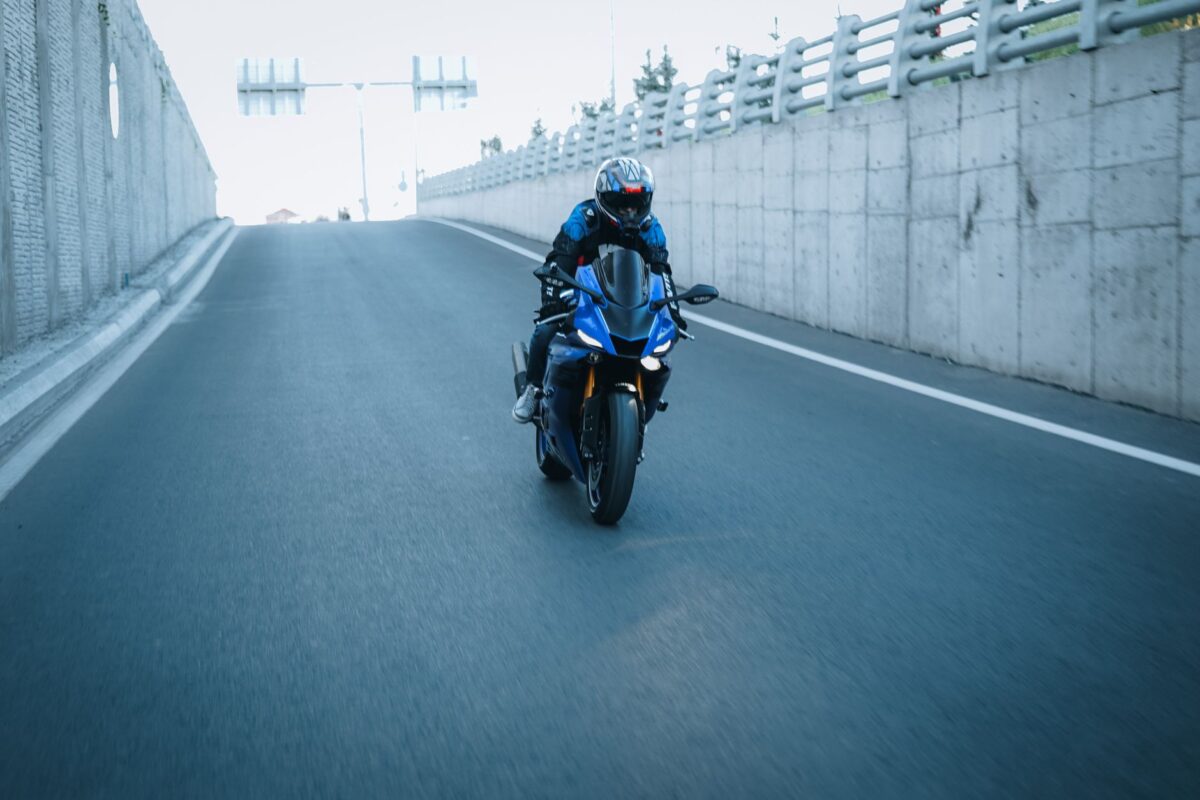
Motorcycle theft insurance is not a standalone product you buy off a shelf. It is the comprehensive portion of your motorcycle policy, and it is the only thing standing between you and a total loss when your bike disappears from a parking garage. Riders learn this the hard way. A liability-only policy pays nothing when a thief rolls your bike into a van at 3 a.m. Motorcycles are far easier to steal than cars. Two people can lift a 400-pound sportbike. No hotwiring required. As a result, understanding how motorcycle theft insurance pays out, what it excludes, and what it costs matters more for riders than for almost any other vehicle owner.
What Motorcycle Theft Insurance Actually Covers
Comprehensive coverage handles loss that happens when you are not riding. That includes theft, attempted theft, vandalism, fire, and stripped parts. If your bike is stolen and never recovered, motorcycle theft insurance pays the actual cash value at the moment of the loss, minus your deductible. For example, say you paid $12,000 for a Street Triple three years ago. It books at $8,000 today. With a $500 deductible, your check is roughly $7,500. Depreciation is not negotiable on a standard policy.
Partial theft is covered too, and it is more common than people expect. Thieves take exhausts, ECUs, catalytic converters, seats, and full fairing sets. Those claims run through the same comprehensive deductible. However, aftermarket parts are treated separately. Progressive automatically includes $3,000 of custom parts and equipment coverage when you carry comprehensive and collision, and you can buy up to $30,000. That accessory coverage does not depreciate the parts, which matters if you have $6,000 in chrome or a full Akrapovic system.
Agreed value policies work differently. You and the carrier lock in a number up front, typically after an appraisal. If the bike is stolen, that is the number you get. Agreed value is the standard approach for vintage bikes, restored Harleys, and heavily customized builds, and it is worth asking about specifically. In most cases, a stock late-model bike is fine on actual cash value. A one-off custom is not.
What It Costs in 2026
Average motorcycle insurance runs roughly $399 per year, or about $33 a month, for a basic policy. That figure is mostly liability. Adding comprehensive and collision is what turns it into real protection, and full coverage averages closer to $150 a month. Sportbike riders pay far more. Sportbike quotes in 2026 range from about $29 monthly for bare liability to $329 monthly for full coverage. Comprehensive alone is usually the cheaper half of that add-on.
Rates rose roughly 5% to 7% in 2026, driven by higher parts costs and claim frequency. Location drives motorcycle theft insurance pricing more than almost anything else. California reported 9,838 stolen motorcycles in a single recent NICB tally, about 30% of the national total. Riders in high-theft metros pay a meaningful surcharge on the comprehensive line. Top-stolen models carry their own loading, typically 10% to 20% on comprehensive. Honda and Yamaha together account for more than a third of stolen bikes nationally.
Because state law, garaging rules, and theft frequency vary so much, there is no honest national number for what motorcycle theft insurance adds to your bill. Check your state guide for local ranges. Your deductible is the biggest lever you control. Moving from $250 to $1,000 can cut the comprehensive premium substantially, but remember that deductible applies to a total loss, not a fender scuff.
Who Needs Motorcycle Theft Insurance
If you have a loan or a lease, the decision is made for you. Lenders require comprehensive and collision for the life of the note. Dropping it triggers force-placed coverage at punitive rates. Beyond financed bikes, motorcycle theft insurance is close to mandatory for anyone who parks on a street, in a shared apartment lot, at a university, or in an unattended commercial garage. Thieves target predictable overnight parking. Warm-weather months from May through October see the highest theft volume.
Riders with desirable machines should carry it regardless of storage. Late-model Hondas, Yamahas, and 600cc supersports are stolen at rates that dwarf touring bikes. Harley owners with visible custom work face a parts-stripping risk even when the bike itself stays put. For example, a stolen set of bags, a seat, and a exhaust can easily exceed $4,000 in a single night.
Some riders can reasonably skip it. If you own an older bike outright with a book value near $2,000 and you run a $1,000 deductible, motorcycle theft insurance may return only $1,000 on a total loss. That premium is often better spent on a chain and ground anchor. Typically, the break-even sits around a book value of three to four thousand dollars, assuming secure garaged storage.
Common Exclusions and Mistakes
The most damaging gap is unlisted modifications. Carriers pay based on the bike they insured. If you never declared the $5,000 in upgrades, the adjuster values a stock unit. Keep receipts and photos, and confirm your accessory limit in writing at every renewal. A second common gap is personal gear. Helmets, jackets, and luggage stolen off the bike are frequently excluded or capped low, and some carriers offer a separate riding-gear endorsement instead.
Voluntary transfer is excluded everywhere. If you hand over the keys to a buyer who vanishes with the bike, that is fraud or conversion, not theft, and motorcycle theft insurance will deny it. Theft by a family member or household resident is also typically excluded. So is loss during commercial use, including rental platforms and delivery work, unless you carry a rider that permits it.
📋 Get Free Insurance Guides
Free · No spam · Unsubscribe anytime
Procedure kills claims too. Most carriers require a police report, and many require it within 24 hours. File it immediately with the VIN, plate, and key count. Insurers ask how many keys existed and want all of them surrendered. A missing key invites a theft-fraud investigation. However, the biggest self-inflicted mistake is dropping comprehensive during winter storage. Bikes are stolen out of storage units constantly. Suspend liability instead, not theft protection.
How to Get the Best Rate
Ask about lay-up coverage first. Many carriers let you suspend liability and collision from November through March while keeping comprehensive active. Riders report annual savings of 30% to 40% on the suspended months. You stay protected against theft, fire, and vandalism through the off-season. Not every insurer writes lay-up policies, so raise it before renewal rather than after.
Anti-theft hardware helps, but be realistic about the discount. A GPS tracker like the Monimoto 9 runs about $169 plus a $49 annual subscription. Trackers do not automatically earn a premium credit, and any discount depends on the underwriter. Their real value is recovery speed. Factory alarms, disc locks, and garaged-address ratings tend to move the needle more reliably with carriers.
Shop specialty motorcycle carriers rather than bundling reflexively with your car insurer. Dairyland, Progressive, Harley-Davidson Insurance, and Markel price bike-specific risk more precisely, and several offer rider-training and association discounts worth 5% to 15%. Quote motorcycle theft insurance as a line item so you can see what comprehensive actually costs against your deductible options. As a result, you can compare three carriers on identical terms instead of guessing.
Frequently Asked Questions
Does motorcycle theft insurance cover the bike if it is stolen from a trailer?
Usually yes. Comprehensive follows the motorcycle, not the location, so theft from a trailer or truck bed is generally covered. However, the trailer itself is a separate item and needs its own coverage. If the bike was being transported commercially, the carrier may direct the claim to the hauler’s cargo policy first.
What happens if my stolen motorcycle is recovered after the claim is paid?
Once the insurer pays a total loss, it owns the bike. If police recover it, the carrier takes the salvage and keeps any proceeds. In most cases, you can offer to buy it back at the salvage value. The title will typically be branded, which permanently reduces resale value and may complicate future full coverage.
Will a GPS tracker lower my motorcycle theft insurance premium?
Sometimes, but not automatically. Discounts for trackers depend entirely on the underwriter and are often modest. The stronger financial case is recovery speed, since a bike found within hours often avoids a total loss and preserves your claims history. Ask your carrier directly whether a specific device qualifies before you buy it.
Are my helmet and riding gear covered when the bike is stolen?
Frequently not. Many motorcycle policies exclude or heavily cap personal riding apparel stolen with the bike. Some carriers sell a gear endorsement covering $1,000 to $3,000 in helmets, jackets, and boots. Your homeowners or renters policy may also respond, subject to its own deductible. Check both before assuming you are covered.
Compare Motorcycle Insurance Rates
Rates for motorcycle insurance vary widely between carriers, and the specialists often beat the big
national names. Comparing several quotes is the single most reliable way to pay less.
(paid link)
Official Sources & Resources
For verified information relevant to riders:
- Motorcycle Safety Foundation (MSF): msf-usa.org
- NAIC (National Association of Insurance Commissioners): naic.org
- Insurance Information Institute: iii.org
- AM Best – Insurer Financial Strength: ambest.com
Content last reviewed July 2026. If you notice any outdated information, please contact us.