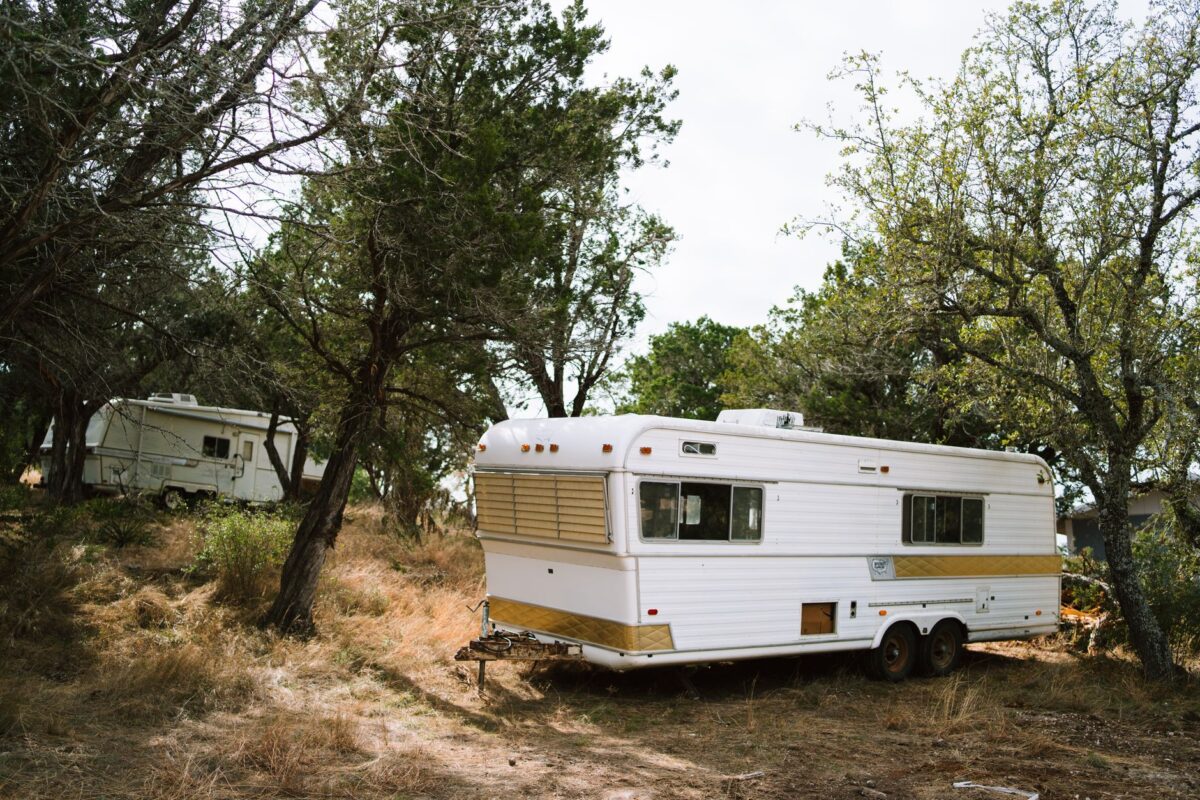
RV rental insurance is the coverage that protects your motorhome or travel trailer while a paying stranger is driving it, sleeping in it, and towing it down a mountain pass. It is not the same thing as the policy on your rig right now. Most standard RV policies contain a commercial-use exclusion that voids coverage the moment money changes hands. That means a single $40,000 collision claim could be denied outright. For example, an owner who lists a Class C on a peer-to-peer platform without telling their carrier risks both a denied claim and a canceled policy. If you rent your rig out — even twice a summer — this is the single most important insurance decision you will make.
What RV Rental Insurance Actually Covers
Rental-period coverage comes in two layers. The first layer is the platform’s protection package. Outdoorsy and RVshare both build this into the booking. Outdoorsy’s packages carry up to $1 million in third-party liability plus physical damage on the rig itself. RVshare’s plan, underwritten through Roamly, offers up to $1 million in owner liability and up to $300,000 in comprehensive and collision coverage based on the RV’s stated value. Both include 24/7 roadside assistance and towing.
The second layer is the one owners forget. You still need a personal policy that permits rental activity between bookings. Platform protection only runs from key handoff to key return. However, your rig sits in a driveway or storage lot the other 300 days a year. Hail, theft, and rodent damage during that window fall to your own policy. Outdoorsy explicitly requires hosts to maintain their own active insurance on the vehicle.
Carriers like Roamly built rv rental insurance products specifically to close this gap. A Roamly policy allows commercial rental without violating the contract. Traditional RV carriers — Progressive, Foremost, National General — generally do not. In most cases, they will non-renew you if a rental claim surfaces. Campsite liability, which covers injuries at the site itself, is a separate add-on; RVshare offers it up to $50,000.
What It Costs in 2026
Platform protection is priced per day and paid by the renter, not you. Standalone temporary rv rental insurance typically runs $15 to $30 per day. Outdoorsy’s three 2026 tiers land higher on motorized units. Basic runs roughly $20 to $30 per day with a $3,000 to $4,000 deductible. Standard runs about $28 to $40 per day with a $1,500 to $2,000 deductible. Premium runs roughly $34 to $50 per day and drops the deductible near $1,000. RVshare’s plan generally prices in the $35 to $45 per day range.
Your own annual policy is the cost that actually lands on your credit card. Travel trailer coverage averages around $594 per year nationally. Motorhome coverage averages closer to $1,052. A $100,000 Class A typically runs $1,200 to $1,800 annually. A $200,000 coach runs $1,800 to $2,500. Rental-permissive rv rental insurance usually adds a premium on top of those figures, because the carrier is accepting commercial exposure.
Rates moved sharply. The RV segment absorbed 12% to 25% increases industry-wide, driven by parts costs, higher rig values, and rising claim frequency. Premiums vary heavily by state — a Florida Class A and a Montana Class A are not close. Check your state guide rather than trusting a national average. Deductible choice, stated value, and rig age drive the rest.
Who Needs RV Rental Insurance
You need it if you list on Outdoorsy, RVshare, RVezy, or any peer-to-peer marketplace. You also need it if you rent privately to friends, coworkers, or Facebook group contacts for money. The commercial exclusion does not care whether a platform was involved. As a result, informal cash rentals are often the riskiest arrangement of all — no platform protection, no permissive policy, no documentation.
Owners with financed rigs have extra exposure. Lienholders require continuous comprehensive and collision. A denied rental claim on a $130,000 Class A leaves you paying a note on a wrecked coach. Full-time RVers who rent a second unit face the same math. Typically, anyone renting more than about 20 nights per year should be looking at a commercial or hybrid rv rental insurance structure rather than a consumer policy with an endorsement.
You can skip dedicated rv rental insurance if you genuinely never charge for use. Lending your travel trailer to your brother for free is usually a permissive-use situation covered by your existing policy. However, “gas money” and “wear and tear fees” can be treated as compensation by an adjuster. Get the answer in writing from your carrier before you assume you are covered.
Common Exclusions and Mistakes
The biggest surprise at claim time is the layering order. RVshare’s protection applies after the owner’s policy in many scenarios, while Outdoorsy’s protection is designed to act as the primary coverage during the trip. Owners assume both work identically. They do not. Read which policy pays first, because that determines whether your personal loss history takes the hit.
Interior and contents damage is the second gap. Physical damage coverage under rv rental insurance generally handles collision, not a renter who ruins the upholstery, cracks a countertop, or leaves the black tank fouled. Those losses run against the security deposit. Outdoorsy sets a $500 minimum deposit for most rigs and $1,500 for Class A units, precisely because deposits are meant to align with the deductible.
📋 Get Free Insurance Guides
Free · No spam · Unsubscribe anytime
Other frequent exclusions: driving on unpaved or prohibited roads, unauthorized additional drivers, Mexico travel, awning and tire damage, and freezing-related plumbing damage. Mechanical breakdown is almost never covered — that is a warranty issue, not an insurance issue. For example, a renter who blows a transmission at 6,000 feet is usually not a covered claim. Also, never skip the pre-trip and post-trip photo walkaround. Undocumented damage is contested damage.
How to Get the Best Rate on RV Rental Insurance
Start with a carrier that writes rental-permissive policies rather than trying to bolt an endorsement onto a traditional one. Roamly is the specialist here and was built around this exact problem. Independent agents who handle recreational vehicles can also place you with surplus-lines markets when your rental volume gets high. Getting three quotes is standard practice and typically moves the annual number meaningfully.
Raise your deductible if you have reserves. Moving from $500 to $1,000 on comprehensive and collision often cuts 10% to 15% off the premium. Then set your platform security deposit at or above your protection package deductible so the two align. Store the rig in a covered or gated facility — secured storage discounts are common. Install a GPS tracker; several rv rental insurance carriers discount for it.
Timing matters too. Quote your rv rental insurance 30 days before renewal instead of on the renewal date. Bundle the RV with home or auto where the carrier allows commercial use. Consider suspending liability during long off-season storage stretches if your state permits it, keeping only comprehensive. Finally, disclose your rental activity honestly at application. A cheap policy that gets rescinded at claim time is not a savings.
Frequently Asked Questions
Does the platform’s protection replace my own RV policy?
No. Platform coverage runs only during the active rental period. Outdoorsy requires hosts to keep a personal policy in force on the listed vehicle. Between bookings, your own policy handles hail, theft, fire, and storage-lot damage. Treat platform protection as trip coverage and your annual policy as the foundation underneath it.
Will my current carrier drop me if I rent my RV out?
Possibly. Most standard RV policies carry a commercial-use exclusion. If the carrier discovers rental activity — usually during a claim investigation — they can deny that claim and non-renew you. In most cases the safer path is switching to a rental-permissive carrier like Roamly before your first booking rather than after a loss.
Who pays the deductible when a renter damages my RV?
The renter’s security deposit is the first source, which is why deposits are set near the deductible amount. Outdoorsy uses a $500 minimum, or $1,500 for Class A rigs. If damage exceeds the deposit, the protection package pays above the deductible. Documented pre- and post-trip photos determine how smoothly that process goes.
Is renting out a travel trailer cheaper to insure than a motorhome?
Yes, substantially. Travel trailers average roughly $594 per year nationally versus about $1,052 for motorhomes. Trailers have no engine, no drivetrain liability, and lower stated values. Per-day rental protection is also lower on non-motorized units. Rates still vary widely by state, so check your state guide for local figures.
Compare Rv Insurance Rates
Rates for RV insurance vary widely between carriers, and the specialists often beat the big
national names. Comparing several quotes is the single most reliable way to pay less.
(paid link)
Official Sources & Resources
For verified information relevant to RV owners:
- Federal Motor Carrier Safety Administration (FMCSA): www.fmcsa.dot.gov
- NAIC (National Association of Insurance Commissioners): naic.org
- Insurance Information Institute: iii.org
- AM Best – Insurer Financial Strength: ambest.com
Content last reviewed July 2026. If you notice any outdated information, please contact us.