Table of Contents
Storm damage claim filings spike every year between spring and early fall. Hail alone accounts for roughly 12% of all comprehensive auto claims in the United States. In 2025, the country saw 142 days with damaging hail, well above the 20-year average.
As a result, millions of drivers face dented hoods, shattered glass, or flooded engines each season. Knowing how to handle a storm damage claim before disaster strikes can save you weeks of delay. It can also protect you from a denied payout. This guide walks through your coverage, the claims process, and the exact steps to take after the skies clear.
What Coverage Pays for Storm Damage
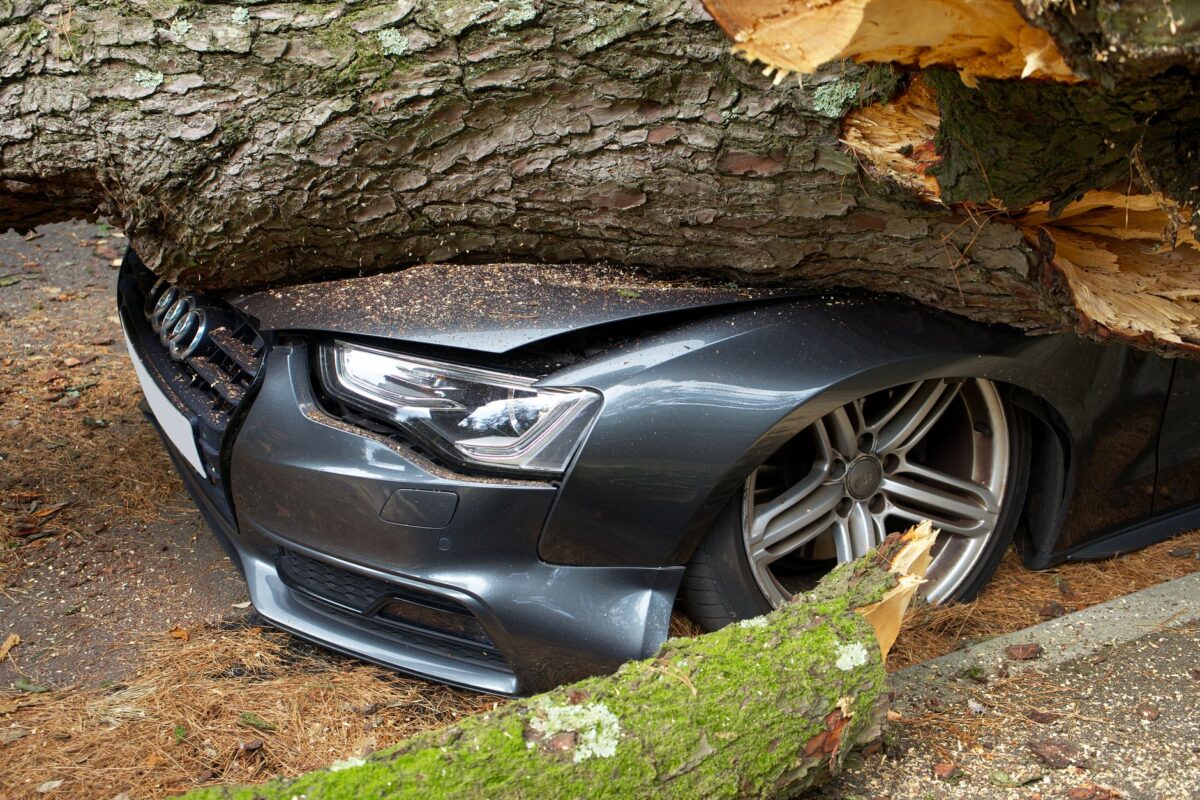
Storm damage to a parked or driven vehicle falls under comprehensive coverage, not collision. Comprehensive pays for events outside your control. That includes hail, flooding, wind, lightning, fire, and falling tree limbs. However, comprehensive coverage is optional in every state. Roughly one in five drivers carries liability-only insurance. Those drivers cannot file a storm damage claim at all. They must pay for repairs out of pocket.
The good news is that comprehensive coverage is affordable. It averages about $171 to $588 per year, depending on your vehicle and location. Compare that to typical repair bills. The average hail claim runs $4,000 to $5,000, according to State Farm data. Minor dents might cost only $750 to fix. However, damage across multiple panels can easily reach $4,000 to $8,000. Severe cases with broken glass can exceed $10,000.
Timing matters, too. Insurers freeze policy changes once a hurricane watch or warning is issued in your area. For example, drivers in Gulf Coast states should add comprehensive coverage before June 1. You cannot buy protection after the storm is already named. In most cases, a comprehensive storm damage claim will not raise your rates as much as an at-fault accident. Insurers treat weather events as no-fault claims.
How to File a Storm Damage Claim Step by Step
Start documenting as soon as it is safe to go outside. Photograph every dent, crack, and water line from multiple angles. Take video as well. Record the date, time, and details of the storm. Your insurer may cross-check your storm damage claim against weather service reports. Screenshots of local weather alerts help support your timeline. Do not wait, because damage evidence fades quickly.
Next, contact your insurer promptly. Most companies let you file through a mobile app in under 15 minutes. Many policies require “prompt notice,” typically within 30 to 60 days. However, filing within 24 to 48 hours puts you ahead of the post-storm claim surge. After a major hail event, adjusters can be booked out for two to three weeks. Early filers get inspected first. An adjuster will then examine the vehicle in person or through photo estimates.
The table below shows typical repair costs by damage type. Your payout equals the repair estimate minus your deductible. For example, a $4,500 hail repair with a $500 deductible pays you $4,000.
| Damage Type | Typical Repair Cost | Coverage That Applies |
|---|---|---|
| Light hail dents (paintless dent repair) | $750–$2,500 | Comprehensive |
| Moderate hail, multiple panels | $4,000–$8,000 | Comprehensive |
| Severe hail with broken glass | $10,000+ | Comprehensive |
| Fallen tree or limb | $2,000–$10,000 | Comprehensive |
| Flood water above the floorboards | Often a total loss | Comprehensive |
| Wind-blown debris while driving | $500–$3,000 | Comprehensive |
Flood damage deserves special caution. Comprehensive covers flooding whether your car was parked or driven through water. However, never start a flooded engine. Cranking a waterlogged motor can cause hydrolock and destroy it. That turns a repairable storm damage claim into a total loss. Insurers typically total a vehicle when water rises above the dashboard. They also total cars when repairs exceed 60% to 80% of the vehicle’s value, depending on state law.
Protecting Your Payout After You File
Your policy requires you to prevent further damage. This is called your “duty to mitigate.” For example, tape plastic sheeting over broken windows. Move the vehicle to covered parking if it runs safely. Keep receipts for tarps, towing, and temporary fixes. In most cases, insurers reimburse these reasonable expenses. However, skipping mitigation gives the company grounds to reduce your storm damage claim. The National Association of Insurance Commissioners notes that keeping your vehicle in good condition is your responsibility.
Do not authorize permanent repairs before the adjuster inspects the car. Repairing first can complicate or shrink your payout. Also, be wary of storm-chasing repair crews that appear after major weather events. They often demand cash and disappear. Instead, get written estimates from established body shops. You have the legal right to choose your own repair shop in every state. Insurers may suggest preferred shops, but they cannot force you to use one.
Review the settlement offer carefully before accepting. Compare the adjuster’s estimate against your independent shop quotes. If the numbers differ by hundreds of dollars, ask for a re-inspection. Most policies include an appraisal clause for disputes. As a result, you can hire an independent appraiser if negotiations stall. Your state insurance department also accepts complaints for free. Typically, straightforward claims pay out within 30 days of filing. Complex flood totals can take 45 to 60 days.
Smart Moves Before the Next Storm Hits
Preparation makes your next storm damage claim faster and cleaner. First, photograph your car now, while it is undamaged. Dated “before” photos prevent disputes over pre-existing dents. Store them in the cloud with your policy documents. Second, save your insurer’s claim app on your phone. Cell networks jam after major storms, so early digital filing helps.
📋 Get Free Insurance Guides
Free · No spam · Unsubscribe anytime
Third, review your deductible each renewal. A $1,000 deductible saves premium dollars but hurts on small claims. For example, a $1,500 dent repair yields only $500 after a $1,000 deductible. Many drivers in hail-prone states choose a $250 or $500 comprehensive deductible instead. Some insurers also offer separate wind and hail deductibles in high-risk regions. Read your declarations page so nothing surprises you.
Finally, watch the used-car market after big storms. Flood-totaled vehicles are sometimes cleaned up and resold across state lines. This practice is called title washing. Check any used car’s history through the National Insurance Crime Bureau’s free VINCheck tool. Musty odors, fogged headlights, and silt under the carpet are warning signs. Buying someone else’s flood car means inheriting problems no storm damage claim will ever cover.
Frequently Asked Questions
Will a storm damage claim raise my insurance rates?
Usually not by much, because comprehensive claims are treated as not-at-fault. However, filing several claims in three years can trigger a surcharge. Regional rates may still rise for everyone after a major weather disaster.
How long do I have to file a storm damage claim?
Most policies require prompt notice, and many insurers expect filing within 30 to 60 days. However, some states allow one year or more under contract law. File within 48 hours anyway, because early claims get inspected and paid first.
Is my car totaled if it flooded?
Not always, but water above the floorboards usually means a total loss. Insurers total a car when repairs exceed roughly 60% to 80% of its value. For example, saltwater flooding almost always results in a totaled vehicle because corrosion spreads.
Compare Insurance Rates
Ready to see if you could be paying less? Compare quotes from top insurers in your area. Getting multiple quotes is the most effective way to find a better rate.
(paid link)
Official Sources & Resources
For verified information on auto insurance regulations and consumer protection:
- NAIC (National Association of Insurance Commissioners): naic.org
- Insurance Information Institute: iii.org
- Federal Trade Commission — Auto Insurance: consumer.ftc.gov
- USA.gov — Car Insurance: usa.gov/car-insurance
Content last reviewed July 2026. If you notice any outdated information, please contact us.