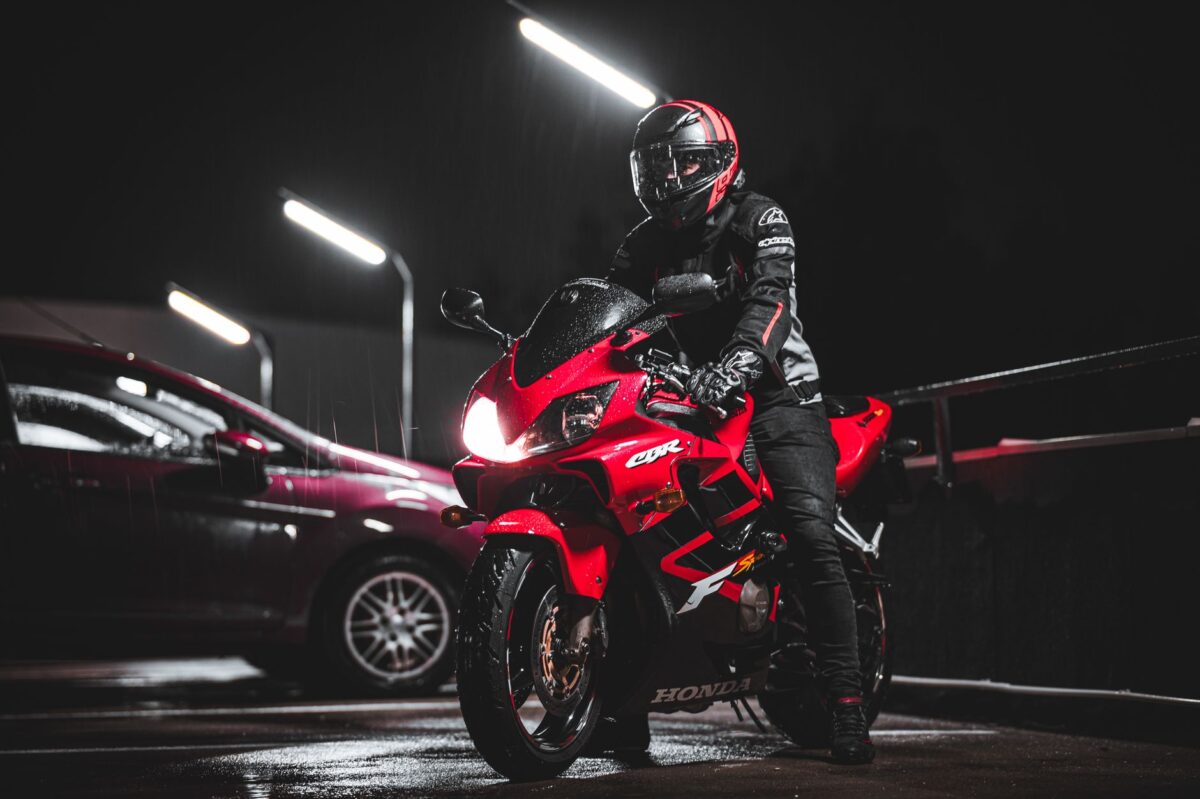
Uninsured motorist motorcycle coverage pays your bills when the driver who hits you cannot. It is the part of your policy that steps in after a car pulls out, breaks your leg, and turns out to carry no insurance at all. For riders, this is not a minor endorsement. It is often the single most important line on the declarations page. The Insurance Research Council estimates roughly one in seven U.S. drivers — about 14% — carries no coverage. Underinsured drivers push the real exposure much higher. When you are on two wheels, the injuries are severe and the medical bills arrive fast. This guide explains how uninsured motorist motorcycle coverage works in 2026.
What Uninsured Motorist Motorcycle Actually Covers
The coverage splits into two parts. Uninsured motorist bodily injury (UMBI) pays for your medical treatment, surgery, rehab and lost wages. It also covers pain and suffering, which health insurance never does. Uninsured motorist property damage (UMPD) pays to repair or replace the bike itself. Carriers including Progressive and Dairyland offer both on motorcycle policies, subject to state rules.
Underinsured motorist coverage is the quieter half. For example, a driver carrying a 25/50 liability limit hits you at an intersection. Your hospital stay runs $140,000. That driver’s policy pays $25,000 and stops. Your uninsured motorist motorcycle coverage picks up the remaining gap, up to your own limit. In most cases, this scenario is far more common than a truly uninsured driver.
The coverage follows you, not just the bike. Typically it applies whether you are riding, being struck as a pedestrian, or carrying a passenger. Passengers are usually covered under your limit as well. That matters, because a passenger’s injuries can consume your entire per-person limit on their own.
What It Costs in 2026
Adding uninsured motorist motorcycle coverage typically costs $50 to $150 per year. Against an average motorcycle premium near $399 annually, or roughly $33 a month, that is a small share for a large amount of protection. Higher limits cost more, but the price does not scale linearly. Moving from 25/50 to 100/300 often costs far less than four times as much.
Location drives the price hardest. States with high uninsured rates charge more. Washington, D.C. leads at roughly 25.2% uninsured, followed by New Mexico at 24.9%, Mississippi at 22.2%, Tennessee at 20.9% and Michigan at 19.6%. Wyoming, Maine and Idaho sit near 6%. Overall motorcycle premiums follow a similar spread — Iowa is consistently the cheapest state, and Michigan the most expensive. Because these figures shift by state and by carrier, check your state motorcycle insurance guide rather than trusting a national average.
Engine size, rider age and riding history all move the number. However, the uninsured motorist motorcycle portion is less sensitive to bike value than collision coverage. A sport bike inflates your comprehensive and collision premium sharply. It moves the UMBI line much less, because that coverage prices off injury risk and local uninsured rates.
Who Needs Uninsured Motorist Motorcycle Coverage
Nearly every rider does. The physics are unforgiving. NHTSA recorded 31.39 motorcyclist fatalities per 100 million vehicle miles traveled in 2023, against 1.13 for passenger car occupants — nearly 28 times higher. An estimated 82,564 motorcyclists were injured that year. A crash that dents a car door breaks a rider’s pelvis. Your exposure is a hospital bill, not a body shop invoice.
Twenty states and Washington, D.C. already require uninsured motorist coverage, and 14 require underinsured motorist coverage. If you live in one of the rest, the decision is yours. Riders with modest health insurance, high deductibles, or no long-term disability policy need uninsured motorist motorcycle coverage most. So do commuters, who log the most exposure to distracted drivers.
Who can reasonably skip it? Almost nobody. However, if you already carry a large auto policy with stacked UM limits, and your motorcycle sits on that same policy, you may have coverage without buying it twice. Verify that in writing. Do not assume your car policy protects you on the bike — it frequently does not.
Common Exclusions and Mistakes
The household vehicle exclusion catches the most riders. Here is the trap. You insure the bike on a separate motorcycle policy and reject uninsured motorist motorcycle coverage to save money. You also own a car with generous UM limits. After a crash on the bike, you file against the auto policy. The insurer denies it, citing the household vehicle exclusion. Pennsylvania’s Supreme Court has enforced exactly that outcome where the rider had waived UM/UIM on the policy covering the bike.
Phantom vehicle rules are the second surprise. A car drifts into your lane, you swerve, you go down, and the car never touches you. Many states require actual physical contact before uninsured motorist motorcycle benefits apply. Some states, such as Wisconsin, allow phantom vehicle claims under strict conditions, usually including prompt police reporting and independent corroboration. Riders often go down without contact, so this exclusion hits motorcyclists disproportionately.
📋 Get Free Insurance Guides
Free · No spam · Unsubscribe anytime
Other gaps trip people up at claim time. UMPD is only sold in about 25 states plus D.C., and it may carry a deductible — Maryland sets a statutory $250. Custom parts, aftermarket exhausts and paint are frequently excluded unless separately scheduled. Track days, racing and delivery use are almost universally excluded. As a result, food-delivery riders often have no coverage at all when they crash on a run.
How to Get the Best Rate
Buy the limit first, then hunt discounts. Raising your uninsured motorist motorcycle limit from state minimum to 100/300 is usually the cheapest meaningful upgrade on the policy. Match your UM limit to your liability limit — many carriers require it, and some states mandate it. New Jersey moved its minimum liability and UM/UIM limits to $35,000 per person and $70,000 per accident on January 1, 2026. California’s AB 1107 set 30/60/15 minimums for all vehicles, motorcycles included.
Motorcycle-specialist carriers usually beat generalists. Progressive, Dairyland and Harley-Davidson Insurance, which underwrites through Dairyland, all write motorcycle-specific uninsured motorist motorcycle coverage. Ask about rider training discounts for an MSF Basic RiderCourse, multi-bike discounts, association membership discounts, and transfer credit for prior insurance. Paying the annual premium in full typically saves 5% to 10%.
Time it deliberately. Quote in late winter, before spring riding season demand pushes rates up. Consider layup or seasonal billing if you store the bike in winter, but confirm your uninsured motorist motorcycle coverage stays active during layup months. Finally, get any waiver or rejection in writing. Most states now require written opt-out, and an unsigned rejection can sometimes be voided later.
Frequently Asked Questions
Does my car policy’s uninsured motorist coverage protect me on my motorcycle?
Usually not. Most auto policies contain a household vehicle exclusion that bars claims when you are riding a bike insured elsewhere. If you rejected uninsured motorist motorcycle coverage on the bike, courts have upheld those denials. Stacked auto policies sometimes respond, but the rules vary by state. Verify with your carrier in writing before you rely on it.
If a car swerves and I lay the bike down without contact, am I covered?
It depends on your state’s phantom vehicle rule. Many states require physical contact with the other vehicle before uninsured motorist benefits apply. Others allow no-contact claims if you report to police promptly and produce corroborating evidence, such as an independent witness. Riders go down without contact often, so ask your agent about this specific rule.
Does uninsured motorist coverage pay to fix my bike, or only my injuries?
Bodily injury coverage pays medical bills, lost wages and pain and suffering. Repairing the bike requires uninsured motorist property damage, which is only sold in roughly 25 states plus D.C. Where UMPD is unavailable, collision coverage handles the bike instead. Note that custom pipes, paint and accessories usually need a separate scheduled equipment endorsement.
Are my passengers covered under my uninsured motorist motorcycle limit?
Typically yes, passengers fall under your coverage when an uninsured driver causes the crash. However, they share your limits rather than getting their own. A seriously injured passenger can exhaust an entire 25/50 per-person limit alone, leaving nothing for you. Riders who carry passengers regularly should consider 100/300 limits or higher.
Compare Motorcycle Insurance Rates
Rates for motorcycle insurance vary widely between carriers, and the specialists often beat the big
national names. Comparing several quotes is the single most reliable way to pay less.
(paid link)
Official Sources & Resources
For verified information relevant to riders:
- Motorcycle Safety Foundation (MSF): msf-usa.org
- NAIC (National Association of Insurance Commissioners): naic.org
- Insurance Information Institute: iii.org
- AM Best – Insurer Financial Strength: ambest.com
Content last reviewed July 2026. If you notice any outdated information, please contact us.