Table of Contents
Hurricane damage insurance is not a separate policy you buy on its own. Instead, it comes from the comprehensive portion of your auto policy. Comprehensive coverage is the only part that pays for storm damage to your car. It covers wind, flying debris, fallen trees, and flooding.
When a named storm makes landfall, thousands of vehicles are ruined in hours. As a result, understanding how hurricane damage insurance works before a storm is critical. This guide explains what is covered, what it costs, and how to file a claim. It also covers total losses, deductibles, and the mistakes that leave drivers unpaid. With good hurricane damage insurance, a flooded car does not have to mean a financial disaster.
What Hurricane Damage Insurance Actually Covers
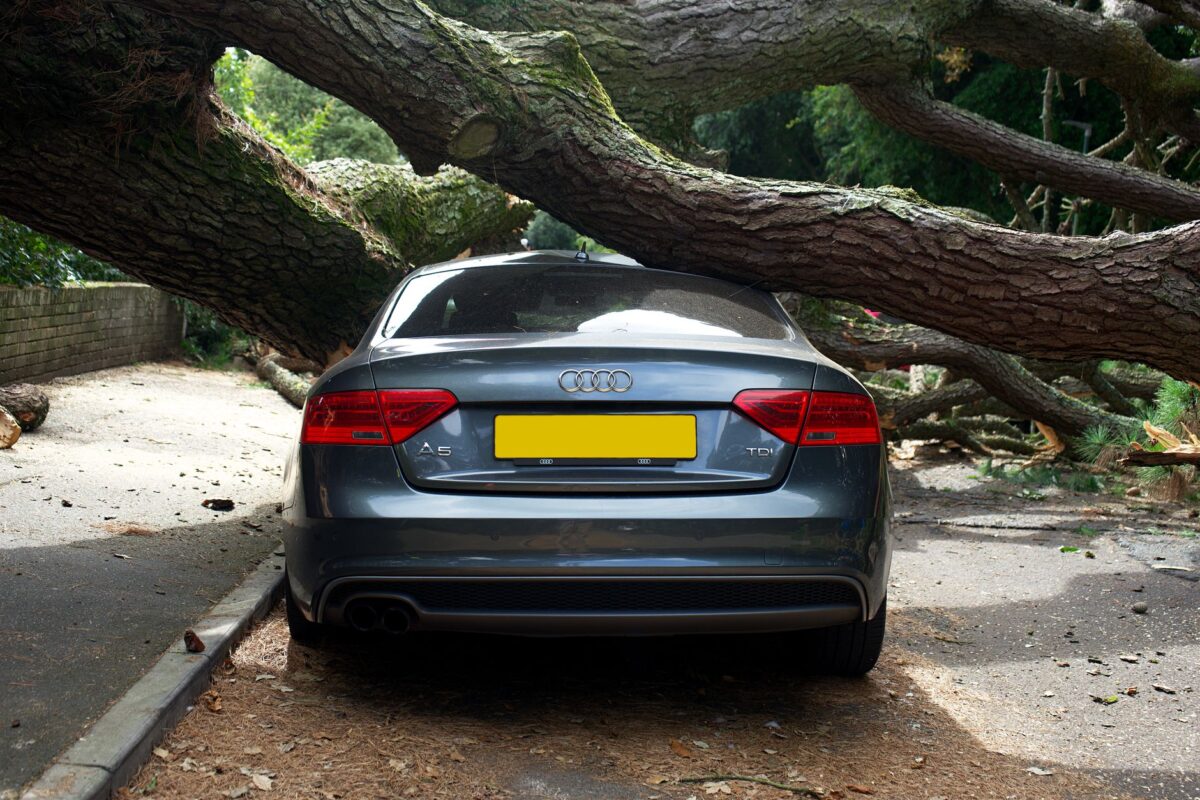
Comprehensive coverage handles “Acts of God” events. Hurricanes fall squarely into this category. Your hurricane damage insurance pays when rising water floods the interior. It also pays when wind hurls debris into your windshield. Fallen trees, hail, and submerged engines are all covered too. However, comprehensive is optional in most states. If you carry only liability, you have no protection for storm damage at all.
Many drivers assume flood insurance protects their vehicle. It does not. A standard National Flood Insurance Program policy covers your home and belongings only. It excludes cars entirely. For example, if six inches of water destroys your dashboard electronics, only your auto policy responds. Therefore, comprehensive coverage is the sole path to reimbursement for a flooded vehicle.
Timing matters greatly here. Insurers place binding restrictions once a storm is named. Typically, you cannot add comprehensive coverage when a hurricane is within a certain distance of the coast. As a result, buying hurricane damage insurance at the last minute is impossible. You must have the coverage in place well before the forecast turns serious.
How Hurricane Damage Insurance Costs and Deductibles Work
Comprehensive coverage is surprisingly affordable. On average, it costs about $451 per year, according to industry data. That works out to under $40 per month. For that price, your hurricane damage insurance covers flooding, hail, theft, and vandalism together. In most cases, it is the cheapest meaningful coverage on your policy.
Every comprehensive claim carries a deductible. This is the amount you pay before the insurer contributes. Typically, deductibles run $250, $500, or $1,000. There is no special “hurricane deductible” on most auto policies. The same comprehensive deductible applies whether a tree falls or a flood hits. However, a lower deductible means a higher yearly premium.
The table below shows how deductibles and payouts interact for a typical flooded car.
| Car’s Actual Cash Value | Deductible | Your Payout |
|---|---|---|
| $15,000 | $250 | $14,750 |
| $15,000 | $500 | $14,500 |
| $15,000 | $1,000 | $14,000 |
Filing a claim can affect your rate. On average, a comprehensive claim raises premiums by about 21%, or roughly $554 a year. However, many insurers treat weather claims as no-fault events. As a result, the increase is often smaller than it would be for an at-fault crash. Still, review your renewal notice carefully after any storm claim.
Filing Your Hurricane Damage Insurance Claim Step by Step
Speed and documentation decide how smoothly your claim goes. First, contact your insurer as soon as it is safe. Most experts recommend reporting within 24 to 48 hours. Early filers get adjusters and rental cars before the backlog builds. Therefore, do not wait for the water to fully recede before calling.
Next, document everything before you clean up. Take dozens of photos and videos from every angle. Capture the waterline inside the cabin, the engine bay, and the odometer. For example, a clear photo of mud on the seats proves flood depth. Do not start a waterlogged engine. Cranking it can cause more damage and complicate your hurricane damage insurance claim.
An adjuster then inspects the vehicle and estimates repair costs. If repairs exceed your state’s total loss threshold, the car is declared totaled. Thresholds vary widely. Florida uses 80% of actual cash value. Texas uses 100%, Colorado 80%, and Montana just 75%. When totaled, the insurer pays the actual cash value minus your deductible. In exchange, you sign the title over and the car gets a salvage brand.
Two extra coverages can save you here. Gap insurance covers the difference between your payout and your remaining loan balance. This protects drivers who owe more than the car is worth. Rental reimbursement, meanwhile, pays for a temporary car while yours is repaired or replaced. Check whether you carry both before hurricane season begins.
Protecting Yourself Before and After the Storm
Preparation beats reaction every time. Review your declarations page now and confirm comprehensive is listed. Snap “before” photos of your car in good condition. Store your policy number and claims phone number in your phone. For example, saving a photo of your VIN speeds up any future claim. These small steps make hurricane damage insurance claims far easier.
Move your car to higher ground when a storm approaches. A parking garage or inland lot can prevent flood damage entirely. Avoid driving through standing water, since just twelve inches can float a vehicle. After the storm, watch out for scams. Tens of thousands of flood-damaged cars enter the used market each year with hidden titles.
📋 Get Free Insurance Guides
Free · No spam · Unsubscribe anytime
If your insurer’s offer seems low, you can push back. Request the comparable vehicles used to calculate your actual cash value. You may hire an independent appraiser to challenge the number. State insurance departments and the Insurance Information Institute offer free guidance on disputes. Typically, a well-documented counteroffer with recent sale listings gets results.
Frequently Asked Questions
Does regular car insurance cover hurricane damage?
Only if you carry comprehensive coverage. Liability and collision do not pay for storm or flood damage. As a result, hurricane damage insurance depends entirely on having comprehensive on your policy before the storm.
Can I add coverage right before a hurricane hits?
In most cases, no. Insurers freeze new comprehensive coverage once a storm is named nearby. Therefore, you must buy hurricane damage insurance well ahead of any forecasted landfall.
Will filing a flood claim raise my rates?
It can, by about 21% on average. However, weather claims are often treated as no-fault events. As a result, the increase is typically smaller than after an at-fault accident.
Is a flooded car always declared a total loss?
Not always, but often. It depends on repair costs versus your state’s total loss threshold. For example, Florida totals a car once repairs exceed 80% of its actual cash value.
Compare Insurance Rates
Ready to see if you could be paying less? Compare quotes from top insurers in your area. Getting multiple quotes is the most effective way to find a better rate.
(paid link)
Official Sources & Resources
For verified information on auto insurance regulations and consumer protection:
- NAIC (National Association of Insurance Commissioners): naic.org
- Insurance Information Institute: iii.org
- Federal Trade Commission — Auto Insurance: consumer.ftc.gov
- USA.gov — Car Insurance: usa.gov/car-insurance
Content last reviewed July 2026. If you notice any outdated information, please contact us.