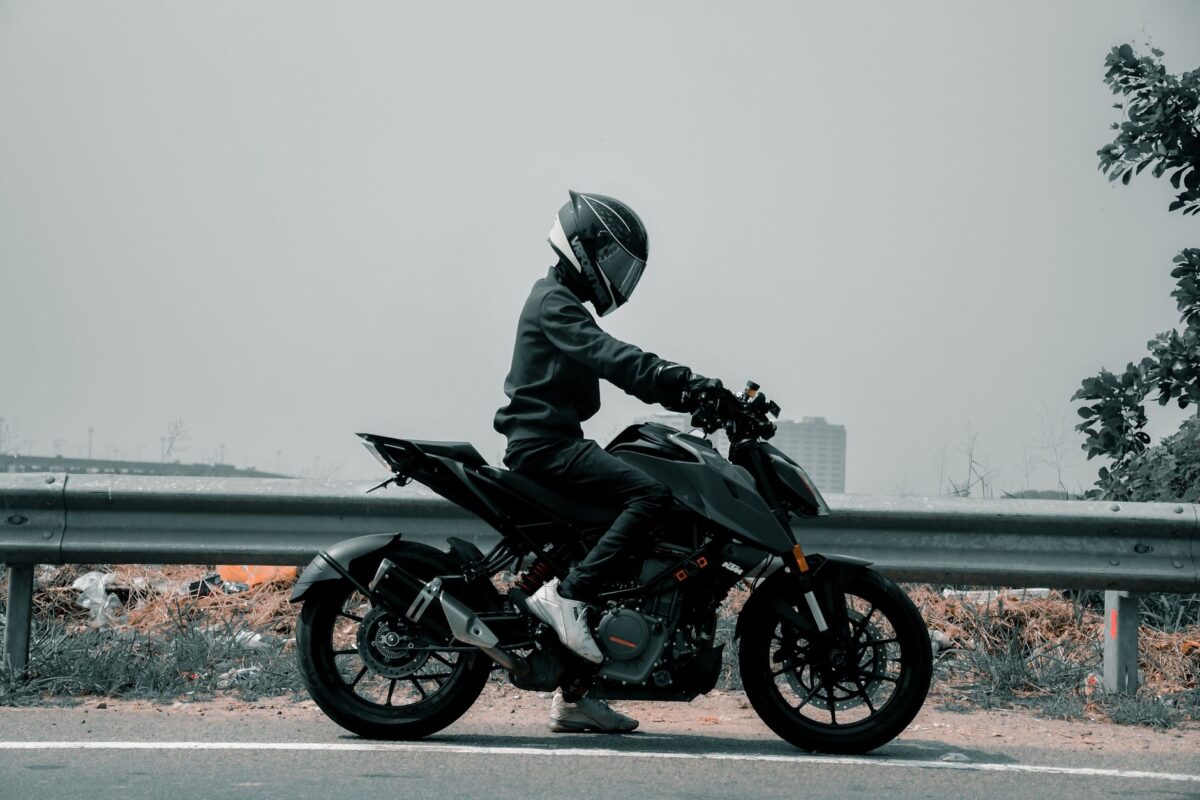
motorcycle gear coverage is the part of a motorcycle policy that pays to replace your helmet, jacket, gloves and boots after a covered loss. Most riders assume comprehensive and collision already handle this. In most cases, they do not. Those coverages pay for the bike. Your $600 helmet and $400 armored jacket sit in a separate bucket entirely. Carriers label that bucket safety riding apparel, helmet and safety apparel, or accessory coverage. The names differ by company. The function is the same. A complete protective kit runs $500 to $1,500 in 2026, and most riders land near $800 to $1,000. That is real money to replace out of pocket after a single low-side.
What Motorcycle Gear Coverage Actually Covers
The covered item list is narrower than riders expect. Foremost defines the category as clothing designed to minimize damage from an accident. That language captures helmets, goggles, face shields, armored jackets, riding pants, gloves, boots, rain suits and back protectors. Progressive’s safety riding apparel coverage pays for apparel damaged or destroyed in a covered collision. Street clothes worn under a jacket usually do not qualify. Neither does a tank bag full of tools. However, some carriers fold apparel into the broader custom parts and equipment endorsement, which also covers saddlebags, chrome, backrests and handlebars.
Limits vary sharply by carrier. Progressive automatically includes $3,000 of accessories and custom parts coverage when you carry comprehensive and collision, and sells up to $30,000. GEICO includes the first $2,000 of accessories depending on your state, plus up to $3,000 for gear stored on the covered motorcycle. Markel includes $1,000 and sells more in $1,000 increments to a $30,000 ceiling. Foremost bundles $500 of helmet and safety apparel coverage into its base package and $2,500 into its Elite package. Dairyland’s off-road comprehensive typically includes $2,000 of replacement cost safety apparel.
Two structural details matter more than the limit itself. First, most motorcycle gear coverage only triggers on a loss that also involves the bike. Gear shredded in a crash where the motorcycle escaped damage can fall outside the endorsement. Second, valuation differs. Progressive states that accessory coverage never depreciates customized parts. Other carriers pay actual cash value, which knocks years of wear off a five-year-old jacket. As a result, two policies with identical $2,000 limits can produce very different checks.
What It Costs in 2026
The endorsement itself is one of the cheapest lines on a motorcycle policy. Base amounts are often bundled at no visible charge once you carry comprehensive and collision. Additional limits are sold in blocks, typically $1,000 at a time. For context, average annual motorcycle premiums sit near $377 at Dairyland and slightly higher at Progressive for comparable coverage. Adding meaningful motorcycle gear coverage on top of that usually moves the annual premium by a modest amount rather than reshaping it. The exact per-increment charge is filed state by state, so your quote is the only reliable number.
Geography drives the spread more than anything else. Custom and modified bike coverage ranges from roughly $10 a month in Montana to about $87 a month in Washington, D.C. Apparel endorsements follow the same regional logic. Dense urban territories with high theft and claim frequency price higher. Rural states with short riding seasons price lower. Because rates are filed per state, we do not publish a single national figure for this endorsement. Check your state guide for local pricing before you budget.
Compare that premium against replacement reality. An entry DOT full-face helmet starts near $150, and premium lids climb past $800. A CE-armored textile jacket runs $150 to $200 at the low end. Gloves cost $50 to $80. Boots start around $80. One crash that destroys a helmet, jacket and gloves easily clears $500. For example, a rider carrying $2,000 of motorcycle gear coverage recovers a full kit for the price of a deductible. That math is why the endorsement rarely gets cut during a rate shop.
Who Needs Motorcycle Gear Coverage
The riders who benefit most are the ones who spent real money on protection. Sport and adventure riders in full Alpinestars or REV’IT kit routinely carry $2,000 to $4,000 on their bodies. Touring riders add heated liners, modular helmets with built-in comms and waterproof boots. Track day riders wear one-piece leathers that cost more than some used bikes. For these riders, base limits of $500 or $1,000 are not enough. Buying up to $3,000 or more is the correct call.
Commuters benefit for a different reason. Daily riders accumulate more exposure miles than weekend riders. They also crash in traffic, where gear absorbs the full loss. Riders carrying expensive Bluetooth communicators inside a helmet should confirm whether electronics count as apparel. In most cases, they do not, and a separate accessory limit is needed. Newer riders in their first season also lean on this coverage, since replacing a full kit twelve months after buying it hurts.
Some riders can genuinely skip it. If your entire kit is a $120 helmet and a $60 pair of gloves, the endorsement premium may exceed the recoverable value after a deductible. Riders carrying liability only cannot buy motorcycle gear coverage at all, because the endorsement attaches to comprehensive and collision. Anyone on a stored, non-operational project bike is in the same position. However, once your gear replacement cost passes roughly $1,000, the coverage generally earns its keep.
Common Exclusions and Mistakes
The biggest surprise at claim time is the location rule. Motorcycle gear coverage responds when gear is on the bike or on the rider during a covered loss. Gear stolen from your garage, closet or hotel room is usually a homeowners or renters claim instead. Renters personal property coverage does treat theft as a covered peril. However, that route carries its own deductible, often $500 or $1,000, and a paid theft claim can affect your property premium at renewal.
Deductibles surprise people too. Many carriers apply the motorcycle comprehensive or collision deductible to the apparel claim. With a $500 deductible and $2,000 of destroyed gear, you receive $1,500. Other exclusions to read for include wear and tear, gradual deterioration, mechanical failure of electronics, and helmets damaged without a crash. A helmet dropped in the driveway is typically excluded, even though manufacturers say to replace it. A handful of policies also exclude theft during months when the bike is listed as stored.
📋 Get Free Insurance Guides
Free · No spam · Unsubscribe anytime
The quiet mistake is limit drift. Riders buy motorcycle gear coverage at $1,000 during their first year, then upgrade to a $700 helmet and $900 jacket by year three. The limit never moves. As a result, a total loss of gear pays out at a fraction of replacement cost. Photograph your gear, keep receipts in a cloud folder, and revisit the limit every renewal. Carriers will not prompt you to raise it.
How to Get the Best Rate
Start with the structural requirement. You must carry comprehensive and collision on the motorcycle to attach apparel or accessory coverage. Riders who dropped physical damage coverage on an older bike lose access to the endorsement entirely. Next, compare specialty carriers against standard ones. Markel, Foremost, Dairyland and Harley-Davidson Insurance write motorcycle-first policies and tend to structure apparel limits more generously than carriers where motorcycles are a side product.
Stack the discounts that apply to the whole policy, since apparel premium scales with it. Motorcycle Safety Foundation course completion, multi-bike, multi-policy bundling, homeowner status, mature rider, transfer discounts and pay-in-full credits all reduce the base. Anti-theft devices and a locked garage help on the comprehensive side. Typically, an original-owner discount applies if you bought the bike new. Ask specifically whether the carrier waives the deductible on apparel claims, because that term is worth more than a few dollars of premium.
Timing matters in seasonal states. Quote in winter, when carriers compete for spring binders, rather than in May when everyone is shopping. For example, riders in northern states often see better renewal terms by re-shopping during layup. Finally, bring an itemized gear list to the quote. Agents can only right-size motorcycle gear coverage if they know your kit is worth $3,200, not $800. Because limits and pricing are filed by state, confirm the specifics in your state guide before binding.
Frequently Asked Questions
Does insurance replace my helmet after a crash even if it looks undamaged?
Usually yes, if the helmet was worn during a covered crash. Manufacturers consider a helmet compromised after any impact. Most carriers with helmet and safety apparel coverage accept that standard and pay replacement. However, a helmet dropped in the garage or damaged outside a covered accident is typically excluded. Document the crash and keep the helmet until the adjuster releases it.
Is motorcycle gear coverage the same as custom parts and equipment coverage?
Not always. Some carriers, including Progressive, fold riding apparel into the custom parts and equipment limit, so gear and chrome share the same $3,000 pool. Others, like Foremost, break out a dedicated helmet and safety apparel limit of $500 or $2,500. Sharing a pool is risky. A heavily accessorized bike can exhaust the limit before your gear is paid.
Will motorcycle gear coverage pay if my gear is stolen off the bike at a rest stop?
Often yes, but only with comprehensive coverage in force. GEICO, for example, extends up to $3,000 for gear stored on a covered motorcycle. Loose items in an unlocked saddlebag can still be disputed. Locked hard cases produce cleaner claims than bungee-corded duffels. Read the policy language on unattended property before relying on it.
Do I get replacement cost or depreciated value for a three-year-old jacket?
It depends entirely on the carrier. Progressive states accessory coverage does not depreciate customized parts. Dairyland’s off-road apparel coverage is written on a replacement cost basis. Many other policies pay actual cash value, which can cut a three-year-old jacket’s payout substantially. Ask for the valuation basis in writing. That single term often matters more than the limit.
Compare Motorcycle Insurance Rates
Rates for motorcycle insurance vary widely between carriers, and the specialists often beat the big
national names. Comparing several quotes is the single most reliable way to pay less.
(paid link)
Official Sources & Resources
For verified information relevant to riders:
- Motorcycle Safety Foundation (MSF): msf-usa.org
- NAIC (National Association of Insurance Commissioners): naic.org
- Insurance Information Institute: iii.org
- AM Best – Insurer Financial Strength: ambest.com
Content last reviewed July 2026. If you notice any outdated information, please contact us.