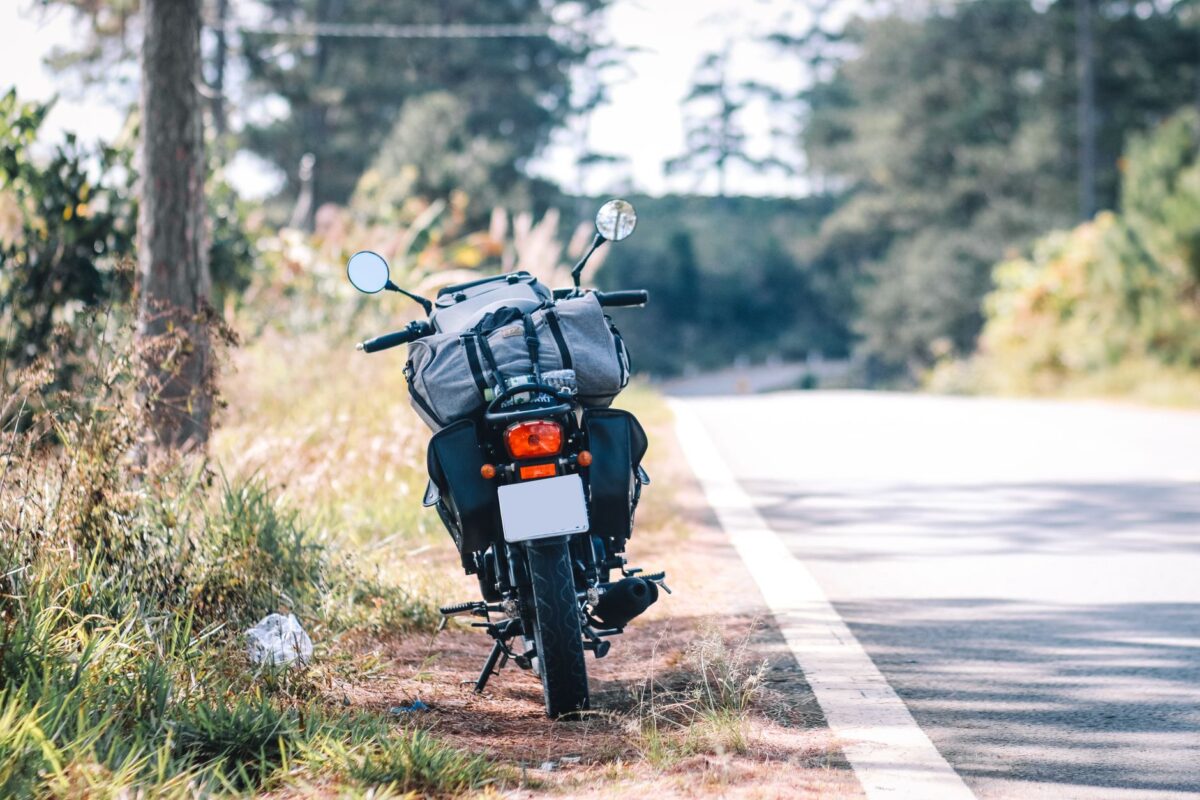
Touring bike insurance is coverage built around how long-distance riders actually use a motorcycle. A Gold Wing, Road Glide, K 1600 or Super Ténéré is not a weekend toy. It carries luggage, a passenger, farkles, and 8,000 miles a season. Standard motorcycle policies price and pay claims around short local rides. Touring bike insurance adds the pieces that matter 900 miles from your driveway: accessory coverage for saddlebags and audio, trip interruption for lodging and meals, and roadside assistance rated for a 900-pound bike. It matters because the gap between a bare liability policy and a real touring policy usually shows up at the worst moment, in a strange town, with a disabled bike.
What Touring Bike Insurance Actually Covers
The core is the same six-part stack every motorcycle policy uses. Bodily injury and property damage liability, uninsured/underinsured motorist, collision, comprehensive, and medical payments. However, the touring add-ons are where the money is. Progressive bundles $3,000 of custom parts and equipment coverage whenever you carry comprehensive and collision. That limit can be raised to $30,000. Foremost, which underwrites the AARP motorcycle program, also writes custom equipment up to $30,000 across its six plan tiers.
Trip interruption is the signature touring coverage. In most cases it triggers only when your bike is disabled by a covered loss more than 100 miles from home. Progressive pays up to $500 for lodging, food and transportation. AARP Foremost pays up to $100 per day for lodging, $50 per day for meals and $50 per day for transportation, capped at four days or $500. Dairyland and State Farm write similar benefits.
Two more matter for riders who trailer. Transport trailer coverage typically insures a motorcycle trailer valued up to $7,500. Roadside assistance on a touring policy should specify flatbed towing, because a hook tow can wreck a full-dress bagger. Ask the carrier to confirm it in writing before you need it.
What It Costs in 2026
Touring bikes are cheaper to insure than their price tags suggest. Industry data for 2026 puts touring motorcycles roughly 33% below sport bikes on premium, even though they cost far more to replace. The reason is claim behavior, not hardware. Touring riders are older, ride more predictably, and crash less. Repair severity is high because of the electronics, but frequency stays low.
Expect roughly $400 to $1,000 per year for a touring bike with real coverage in 2026. The broader motorcycle market runs $500 to $1,500 annually, with the national average near $399 for basic coverage. Full coverage on a mainstream mid-size bike averages $40 to $50 per month. State-minimum liability runs $15 to $25 per month, or as little as $6 monthly in the cheapest states. Those minimum numbers are not realistic for a $30,000 touring machine.
Rates for touring bike insurance vary enormously by state, and no national figure will predict your quote. Florida, Michigan and California riders pay multiples of what Iowa or Wyoming riders pay. Check your state guide rather than trusting an average. Beyond geography, the drivers are engine displacement, rider age, credit in states that allow it, garaging, annual mileage, and your accessory limit. Adding $20,000 of custom parts coverage typically adds real premium.
Who Needs Touring Bike Insurance
The clearest candidate rides multi-day trips. If you leave the state, sleep in hotels, and log 5,000-plus miles a year, touring bike insurance earns its keep. The trip interruption benefit alone can cover four nights of unplanned lodging. For example, a stator failure in rural Montana on day three of a two-week loop turns into hundreds of dollars in hotel, meals and rental costs that a bare policy ignores.
Riders with heavily accessorized bikes also need it. A GPS, comm system, driving lights, highway pegs, hard luggage, seat and exhaust can add $6,000 to $12,000 fast. Factory-installed equipment is usually covered under the bike’s value. Aftermarket parts typically are not, unless you carry accessory coverage and can document them. Two-up riders need it as well, since passenger medical exposure is real and some budget policies carry passenger or household exclusions.
Some riders can skip the full package. If your touring bike stays within 100 miles of home, trip interruption will rarely trigger. If it is stock and paid off, the accessory rider adds little. Riders who already hold a strong AMA, HOG or Good Sam roadside membership may not need duplicate towing. As a result, buy the touring add-ons selectively rather than as a bundle.
Common Exclusions and Mistakes
Track days are the biggest surprise. Racing, timed events, speed tests and any riding on a permanent or temporary racetrack or closed course are excluded outright by most carriers, including Progressive. Riders who take a touring bike to a track school assume their policy follows. It does not. Separate track day coverage exists and must be bought per event.
Mexico is the second trap. A U.S. or Canadian policy is not accepted as proof of liability insurance in Mexico. Mexican law requires liability from a Mexico-licensed insurer. Riders heading to Baja or Copper Canyon need a separate tourist policy, and many carriers will not write bikes older than 20 years. Canada is generally fine on a U.S. policy, but carry your insurance card and confirm limits first.
📋 Get Free Insurance Guides
Free · No spam · Unsubscribe anytime
Other gaps catch people at claim time. Commercial use, including delivery or paid tours, voids most personal policies. Undocumented accessories get denied because you cannot prove value; keep receipts and photos. Payouts are typically actual cash value, not what you paid, so depreciation on a five-year-old touring bike can be brutal. Finally, riders who suspend coverage in winter should buy a lay-up or storage policy instead, which keeps comprehensive active for fire and theft.
How to Get the Best Rate on Touring Bike Insurance
Start with carrier type. Specialty motorcycle writers such as Dairyland, Foremost, Rider and Harley-Davidson Insurance often beat generalists on touring bike insurance because they underwrite the class properly. However, bundling with a home or auto carrier can still win. Get three quotes minimum, and quote the same limits each time so the comparison is honest.
Then stack discounts. The common ones on touring bike insurance are a motorcycle safety course completion discount, homeowner discount, multi-bike, multi-policy, paid-in-full, transfer discount for prior coverage, and mature rider credits. Dairyland specifically discounts Harley Owners Group and other club membership. An MSF or state rider course typically cuts 5% to 10% and is worth taking regardless.
Time it well. Quote in late winter, before spring rate revisions land, and set your policy term so renewal falls outside riding season. Raise your deductible to $500 or $1,000 if you can absorb it, but never trim liability to save $40. Several states raised minimum liability limits in 2026, including California and Virginia, and carriers are repricing to match. Ask your agent whether your limits still comply, and confirm your accessory schedule is current before the first long ride.
Frequently Asked Questions
Does touring bike insurance cover my saddlebags and comm system?
Only if you carry accessory or custom parts coverage. Progressive includes $3,000 automatically with comprehensive and collision, and lets you buy up to $30,000. Foremost writes up to $30,000 as well. Factory equipment is generally included in the bike’s value. Aftermarket luggage, audio, lights and seats typically are not. Keep receipts and photos.
How far from home must I be for trip interruption to pay?
Usually 100 miles. Most carriers, including Progressive and AARP Foremost, require a covered loss such as a collision, breakdown or theft that occurs more than 100 miles from your garaging address. Benefits typically cap at $500 total, often broken into daily lodging, meal and transportation sublimits over about four days.
Will my policy cover a two-week ride into Mexico?
No. Mexico does not recognize U.S. or Canadian liability coverage. You must buy a policy from a Mexico-licensed insurer, available online or at border kiosks. Full tourist policies add physical damage, legal and bond assistance, medical and roadside. Many insurers will not cover motorcycles older than 20 years, so check before you plan the route.
Is a touring bike really cheaper to insure than a sport bike?
Yes, typically about 33% cheaper in 2026, despite higher replacement cost. Insurers price on claim frequency, not sticker price. Touring riders skew older, ride longer distances at steady speeds, and file fewer at-fault claims. Repair bills are higher when a claim happens, because of the electronics, but that does not offset the lower crash rate.
Compare Motorcycle Insurance Rates
Rates for motorcycle insurance vary widely between carriers, and the specialists often beat the big
national names. Comparing several quotes is the single most reliable way to pay less.
(paid link)
Official Sources & Resources
For verified information relevant to riders:
- Motorcycle Safety Foundation (MSF): msf-usa.org
- NAIC (National Association of Insurance Commissioners): naic.org
- Insurance Information Institute: iii.org
- AM Best – Insurer Financial Strength: ambest.com
Content last reviewed July 2026. If you notice any outdated information, please contact us.