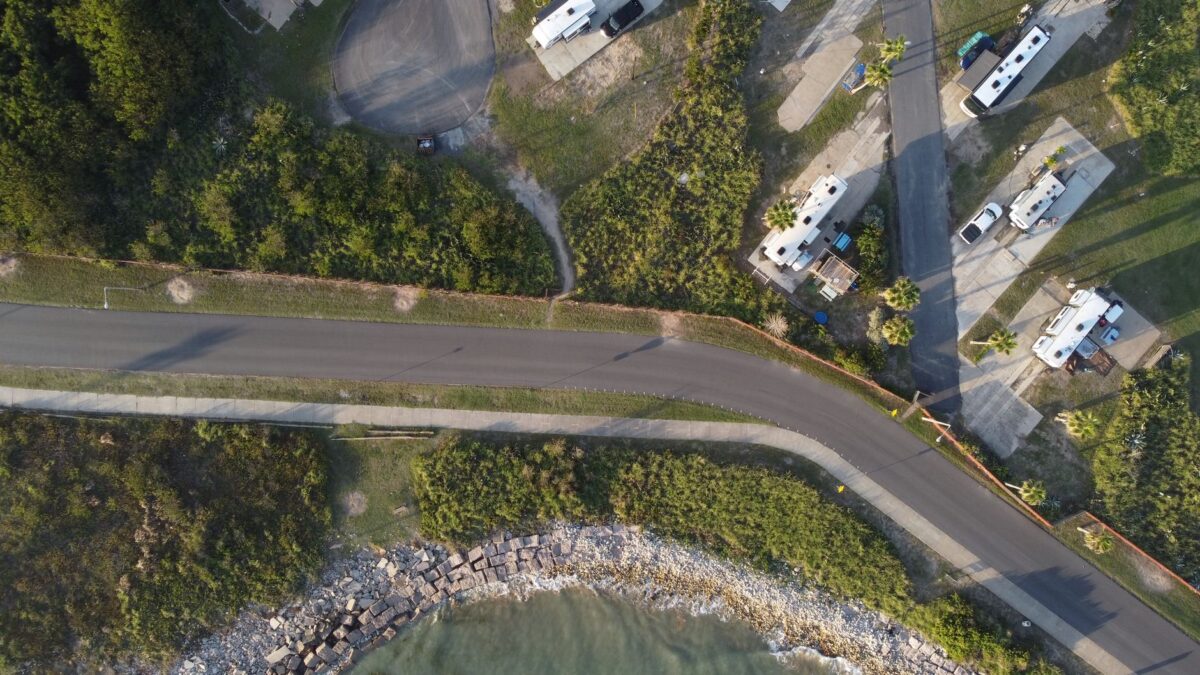
Vacation liability is the coverage that protects you when your RV is parked instead of moving. Your standard RV liability only responds while the rig is in motion on public roads. The moment you level the jacks and set up camp, that protection largely goes quiet. Vacation liability fills the gap. It pays for bodily injury and property damage you cause to other people at your campsite. Think of it as the liability half of a homeowners policy, attached to a campground pad. For example, a neighbor’s child trips over your leveling blocks and breaks an arm. Without vacation liability, that medical bill and any resulting lawsuit land on you personally.
What Vacation Liability Actually Covers
The coverage responds to third-party claims only. That means other people, not you and not members of your household. Typical campsite claims include a guest slipping on wet entry steps, someone cut by an awning arm, and burns from your fire ring. Property damage counts too. For example, your propane grill flares and scorches the tent next door. Vacation liability pays to replace it. In most cases, legal defense costs are paid in addition to your limit rather than out of it.
Carriers require the RV to be parked and used as a temporary residence. Progressive starts vacation liability at a $10,000 limit and allows increases up to $500,000. Roamly, which places policies with Allstate, Safeco, Foremost and National General, writes limits up to $300,000. Good Sam Insurance Agency and Foremost typically offer tiers such as $50,000, $100,000, $300,000 and $500,000. Some travel trailer policies include a small vacation liability limit automatically. Read the declarations page. A bundled $10,000 limit sounds reassuring but covers very little in a real injury claim.
Coverage usually extends beyond the RV shell itself. It typically applies to the immediate campsite area you occupy. That includes your awning, outdoor rug, picnic setup, generator and attached screen room. Many policies pair vacation liability with medical payments coverage of $500 to $5,000. That smaller bucket pays guest medical bills without any finding of fault. As a result, minor injuries get settled fast and never become lawsuits.
What It Costs in 2026
The add-on itself is cheap relative to what it does. Most carriers charge roughly $10 to $50 per year for vacation liability at moderate limits. Progressive describes moving from its $10,000 base limit up to $500,000 as a minimal premium increase. In most cases, jumping from $100,000 to $500,000 costs under $30 annually. That is one of the best value coverages on an RV policy.
The underlying policy is where the real money sits. In 2026, full RV policies run roughly $200 to $500 per year for travel trailers, $500 to $1,500 for Class C motorhomes, and $800 to $2,000 for Class A coaches. Full-timer policies run $1,500 to $4,000. However, rates vary sharply by state because of storm exposure, litigation climate and minimum liability rules. Check your state RV insurance guide rather than trusting a single national average.
Several factors push the price up. Higher limits, dog ownership, a seasonal site with an attached deck, and prior liability claims all add premium. Class A coaches cost more than pop-ups. Good news for 2026: after industry-wide increases of 12 to 25 percent in 2023 and 2024, RV premiums have largely stabilized. Forecasts point to roughly a 1 percent average increase this year.
Who Needs Vacation Liability
Weekend and seasonal RVers are the core audience. If you camp a dozen weekends a year and ever have visitors at your site, you need it. Snowbirds who spend three months at a Florida or Arizona park need it. So do Harvest Hosts and boondocking members who park on private land. Anyone traveling with a dog or with grandchildren should carry a limit well above the minimum.
Travel trailer and fifth-wheel owners are the most commonly exposed group. Many assume their tow vehicle’s auto liability follows the trailer everywhere. It does not. Auto liability extends to a towed trailer while in transit only. Once you unhitch at the site, that coverage stops. As a result, an unhitched trailer with no vacation liability leaves you fully self-insured for guest injuries.
Two groups can skip it. Full-time RVers should not buy vacation liability at all. They need a full-timer endorsement, which includes broader personal liability, higher personal effects limits of $25,000 to $50,000, and coverage for attached structures. It typically costs 25 to 50 percent more than a recreational policy. Owners who store an RV and never use it as lodging also gain little from the coverage.
Common Exclusions and Mistakes
The biggest surprise is the residency trigger. Vacation liability assumes temporary use. Many carriers restrict it once you occupy one site continuously for 30 to 90 days. Others cut it off if you live in the RV more than about 150 nights per year. Use the rig as your primary residence for six months or more and the coverage can be denied outright. Seasonal site holders get caught by this constantly. Tell your agent your real usage pattern.
Animal claims are the second trap. Many carriers exclude dog bites by default because of litigation frequency. However, most will add the exposure back through an animal liability endorsement or carve-back. Ask specifically. Other standard exclusions include damage to your own RV, injuries to you and your family, intentional acts, and business use. Renting the RV out on a peer-to-peer platform voids personal coverage entirely.
📋 Get Free Insurance Guides
Free · No spam · Unsubscribe anytime
Attached structures cause a third gap. Decks, sheds, screen rooms and skirting at a seasonal site often fall outside vacation liability. They usually require a separate endorsement or a park model policy. For example, a guest falls through a rotted deck board you built. Without that endorsement, the claim is yours alone. Finally, an umbrella policy will not respond unless the underlying limit meets its attachment point, typically $300,000 or $500,000.
How to Get the Best Rate
Buy through a specialty RV agency rather than a general auto agent. Good Sam Insurance Agency, RVInsurance.com and Roamly all place business with Foremost, National General and Safeco. These carriers understand campsite exposure and price it accurately. Generic auto agents frequently omit vacation liability entirely or leave it at the $10,000 default. Ask for the limit in writing on your declarations page.
Raise the limit at the time you bind. Increasing coverage mid-term often triggers a fee and a re-rate. Stack discounts aggressively: multi-policy bundling, paid-in-full, claim-free history, an RV safety or driving course, and association membership through Good Sam or FMCA. Many carriers also offer storage or lay-up months, which cut comprehensive-only periods by 40 to 60 percent while keeping vacation liability intact.
Shop roughly 30 to 45 days before renewal. Typically, that window produces the best quotes because carriers reward advance-shopping behavior. Ask three specific questions: what happens after 30 consecutive days on one site, is animal liability included, and does the limit cover attached structures. Then consider a $1 million personal umbrella, often $150 to $300 per year, layered above your vacation liability limit.
Frequently Asked Questions
Does vacation liability cover me while I am driving my motorhome?
No. The two coverages are deliberately separate. Your bodily injury and property damage liability handles crashes on the road. Vacation liability applies only when the RV is parked and used as a temporary residence. In most cases, coverage switches on once you are set up at the site and off once you hitch up and roll.
Do I still need it if I have homeowners insurance?
Usually yes. Many homeowners policies exclude liability arising from a recreational vehicle. Others cap off-premises coverage narrowly or refuse claims involving a motorized unit. Relying on your home policy for a campsite injury is a gamble you discover at claim time. For example, a guest injured by your generator is far more likely covered by vacation liability.
Will it pay if my dog bites another camper?
It depends on your carrier. Many insurers exclude animal liability by default, and some restrict specific breeds. However, most will restore the coverage through an animal liability endorsement for a modest premium. Ask your agent to confirm in writing. Dog bite claims routinely exceed $60,000, so a $10,000 default limit will not go far.
How long can I stay at one campsite before coverage stops?
Most policies restrict vacation liability once you occupy a single site for 30 to 90 consecutive days. Thresholds vary by carrier and by state. Snowbirds parking for a full winter season frequently cross that line. If you plan a stay longer than a month, ask about a seasonal endorsement or full-timer coverage instead.
Compare Rv Insurance Rates
Rates for RV insurance vary widely between carriers, and the specialists often beat the big
national names. Comparing several quotes is the single most reliable way to pay less.
(paid link)
Official Sources & Resources
For verified information relevant to RV owners:
- Federal Motor Carrier Safety Administration (FMCSA): www.fmcsa.dot.gov
- NAIC (National Association of Insurance Commissioners): naic.org
- Insurance Information Institute: iii.org
- AM Best – Insurer Financial Strength: ambest.com
Content last reviewed July 2026. If you notice any outdated information, please contact us.