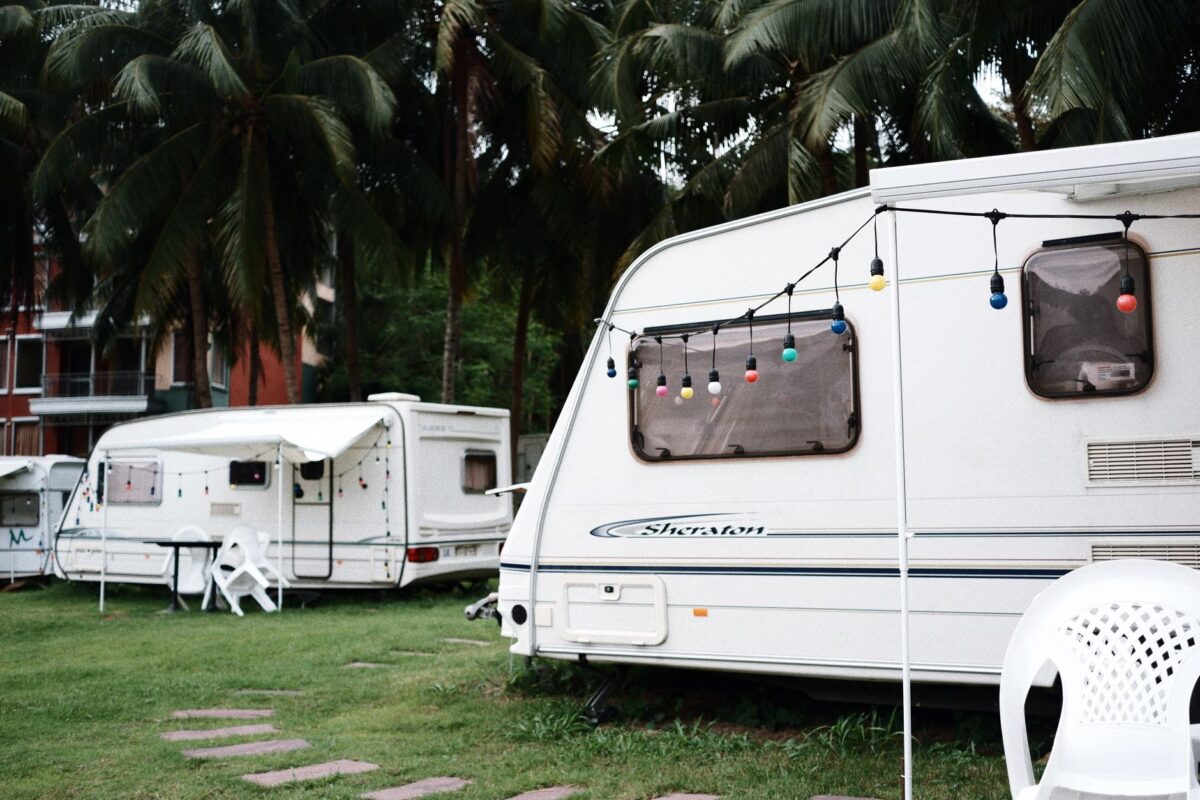
Travel trailer insurance is a specialty policy that covers a towable RV as property, not as a vehicle. That distinction matters more than most owners expect. Your truck’s auto policy already extends liability to the trailer while it is hitched and rolling. What it does not do is pay to repair or replace the trailer itself. A bumper-pull, a fifth wheel, a toy hauler, a pop-up — none of them are covered for physical damage by your tow vehicle’s policy. So a hailstorm, a jackknife, a campground tree fall, or a theft out of a storage lot lands entirely on you. Travel trailer insurance fills that gap, and in 2026 it is cheap relative to what a new trailer costs to replace.
What Travel Trailer Insurance Actually Covers
The core of a towable policy is comprehensive and collision on the trailer. Collision pays when you hit something or the trailer flips. Comprehensive pays for hail, wind, fire, theft, vandalism, and falling objects. Hail is the single most common comprehensive claim on towables, because trailer roofs are thin membrane over plywood. Deductibles typically run $250 to $1,000 per peril. Many carriers now write a separate, higher wind-and-hail deductible in Texas, Oklahoma, Colorado, and the Gulf states, sometimes as a percentage of insured value rather than a flat dollar amount.
Two liability add-ons are unique to towables. Vacation liability covers injuries at your campsite while the trailer is parked and unhitched — a guest tripping over a stabilizer jack, for example. Limits commonly run $10,000 to $500,000 and are often bundled free at low limits. However, vacation liability stops working if you are on the road, if you are parked outside a designated campsite, or if you live in the rig beyond the carrier’s night threshold. Progressive and several others draw that line around 150 nights per year.
Full-timer’s liability replaces vacation liability when the trailer is your primary residence. It functions much like homeowners liability and typically adds loss assessment and personal liability off-premises. Beyond that, most carriers sell personal effects coverage, usually $1,000 to $3,000 included with options up to $10,000 or more. Emergency expense coverage pays for lodging and transportation if a covered loss strands you more than 50 miles from home. Roadside assistance for towables is priced separately, because standard auto roadside will not tow a 34-foot fifth wheel.
What It Costs in 2026
Travel trailer insurance remains the cheapest RV coverage on the market. Most owners pay roughly $300 to $600 per year for full comprehensive and collision. Liability-only or storage-only policies start near $125 annually. Monthly, the typical range in 2026 is about $17 to $67. Progressive’s published data has averaged near $594 a year for travel trailers versus $1,052 for motorhomes. Recent industry figures put the national travel trailer average around $450. The gap versus motorhomes exists for one reason: there is no engine, so there is no owned-auto liability rating on the unit.
Rates did move in 2026. Carriers have pushed towable premiums up roughly 12% to 25% over the past two years, driven by higher parts costs, longer repair backlogs at RV service centers, and severe convective storm losses. Hail alone has reshaped pricing across the plains states. As a result, some owners in hail-exposed counties saw renewal increases far above the national average, and a few carriers stopped writing new towable business there entirely.
Price drivers are predictable. Insured value is the biggest one — a $12,000 used bumper-pull and a $95,000 luxury fifth wheel are not in the same tier. Full-time use adds roughly 20% to 30% because the unit is rated as a residence. Storage location matters: an enclosed or covered facility earns a real discount, an open lot near the coast does not. Garaging state matters enough that any national figure is only a starting point. Check your state guide before budgeting, because Florida, Texas, and Louisiana towable rates run well above the national midpoint while low-hail northern states run below it.
Who Needs Travel Trailer Insurance
If you financed the trailer, the decision is already made. Lenders require comprehensive and collision for the life of the loan, and most name themselves as lienholder. Let it lapse and the lender force-places coverage that protects only its interest, usually at two to three times the price. In most cases, the same requirement applies to fifth wheels and toy haulers financed through an RV dealer.
Travel trailer insurance also makes obvious sense for anyone whose trailer is worth more than they could absorb losing. That threshold is personal, but a 2023 or newer unit typically falls well past it. Full-timers need it without question — homeowners insurance does not follow you into an RV, and full-timer’s liability is the only realistic substitute. Owners who rent their trailer out through peer-to-peer platforms need it too, though they need a commercial-use endorsement, not a personal policy. Renting on a personal policy is a fast path to a denied claim.
Some owners can reasonably skip physical damage coverage. If you own a 20-year-old pop-up worth $2,500 outright, comprehensive and collision may cost more over five years than the trailer is worth. However, dropping to storage-only or liability-only is smarter than dropping everything, since it preserves vacation liability and personal effects protection for very little money. No state requires travel trailer insurance as a standalone mandate; the tow vehicle’s liability satisfies the legal requirement while hitched.
Common Exclusions and Mistakes
Water damage is where travel trailer insurance claims fail most often. Policies cover sudden and accidental water intrusion — hail cracks the roof, rain pours in, that is covered. They exclude gradual leaks through aging caulk, brittle roof seams, or failed window seals. Adjusters routinely deny claims when a roof has not been resealed in several years. Delayed reporting compounds it, since insurers argue the additional rot was preventable. Reseal annually and photograph the work; that documentation has saved more claims than any endorsement.
The second gap is valuation. Standard policies pay actual cash value, meaning depreciated value at the time of loss. Towable RVs depreciate roughly 20% the moment they leave the lot. On a financed unit, that produces a gap between the payout and the loan balance. Agreed value fixes the depreciation problem and generally requires a unit under about five years old. Total loss replacement gives you a comparable new trailer, but eligibility usually requires the unit be in its first model year. Neither is automatic; both must be requested at binding.
📋 Get Free Insurance Guides
Free · No spam · Unsubscribe anytime
Other frequent surprises: mold and pest damage are almost universally excluded. Manufacturer defects are excluded and belong on a warranty claim. Personal effects sublimits are low, so expensive tools, e-bikes, and camera gear often need scheduling. Permanently attached items like awnings, satellite domes, and solar arrays may need a permanent attachment endorsement. Finally, Mexico requires separate physical damage coverage; National General and Foremost write it, but standard US policies stop at the border.
How to Get the Best Rate
Shop specialty agencies rather than only direct carriers. Good Sam Insurance Agency, Roamly, and independent RV brokers quote across Progressive, Foremost, National General, and Safeco in one pass. These carriers rate towables very differently by state, so spread between the cheapest and priciest quote on the same trailer routinely reaches 40%. Progressive tends to win on price for mid-value units. National General and Foremost tend to win on agreed value and full-timer terms for higher-value fifth wheels.
Then stack the discounts that actually move the number. A storage or lay-up endorsement suspends collision during the months the trailer sits, typically cutting 15% to 25% off the annual premium. Bundling with your auto and home policies is usually the second largest saver. Paid-in-full, claims-free, original-owner, and safety-course discounts each add a few percent. Raising the deductible from $250 to $1,000 is the fastest single lever, provided you can cover it.
Timing helps too. Quote 30 days before renewal rather than on the renewal date, because most carriers price advance shoppers lower. Re-shop travel trailer insurance every two years at minimum, and immediately after any hail-driven increase. For example, an owner in a hail county may find one carrier applying a 2% percentage deductible while another still offers a flat $1,000. Finally, confirm your tow vehicle carries enough liability. That policy, not the trailer policy, answers for damage you cause while towing.
Frequently Asked Questions
Does my truck’s insurance already cover my travel trailer?
Only for liability while hitched. Your auto policy extends bodily injury and property damage liability to the trailer in tow. It does not pay to repair or replace the trailer itself. Hail, theft, fire, and rollover damage to the trailer all require separate travel trailer insurance with comprehensive and collision coverage on the unit.
Am I covered while the trailer is in storage all winter?
Yes, if you keep comprehensive in force. Storage-only or lay-up endorsements suspend collision while the unit is parked and keep comprehensive active for fire, theft, hail, and falling trees. That typically saves 15% to 25% annually. Canceling the policy outright leaves you exposed and can violate your lender’s requirements.
Will insurance pay if my roof leaks and the floor rots?
Usually not. Travel trailer insurance covers sudden, accidental water intrusion, such as hail puncturing the roof. Slow leaks through aged sealant, seams, or window gaskets fall under the wear-and-tear exclusion. Reseal the roof annually, keep receipts, and report any intrusion within days rather than weeks to preserve the claim.
Do I need full-timer’s coverage if I live in my fifth wheel?
Yes, once you exceed the carrier’s residency threshold, commonly around 150 nights per year. Vacation liability shuts off at that point and your homeowners policy no longer follows you. Full-timer’s liability restores personal liability, medical payments, and loss assessment. Expect roughly 20% to 30% more premium than a recreational-use policy.
Compare Rv Insurance Rates
Rates for RV insurance vary widely between carriers, and the specialists often beat the big
national names. Comparing several quotes is the single most reliable way to pay less.
(paid link)
Official Sources & Resources
For verified information relevant to RV owners:
- Federal Motor Carrier Safety Administration (FMCSA): www.fmcsa.dot.gov
- NAIC (National Association of Insurance Commissioners): naic.org
- Insurance Information Institute: iii.org
- AM Best – Insurer Financial Strength: ambest.com
Content last reviewed July 2026. If you notice any outdated information, please contact us.