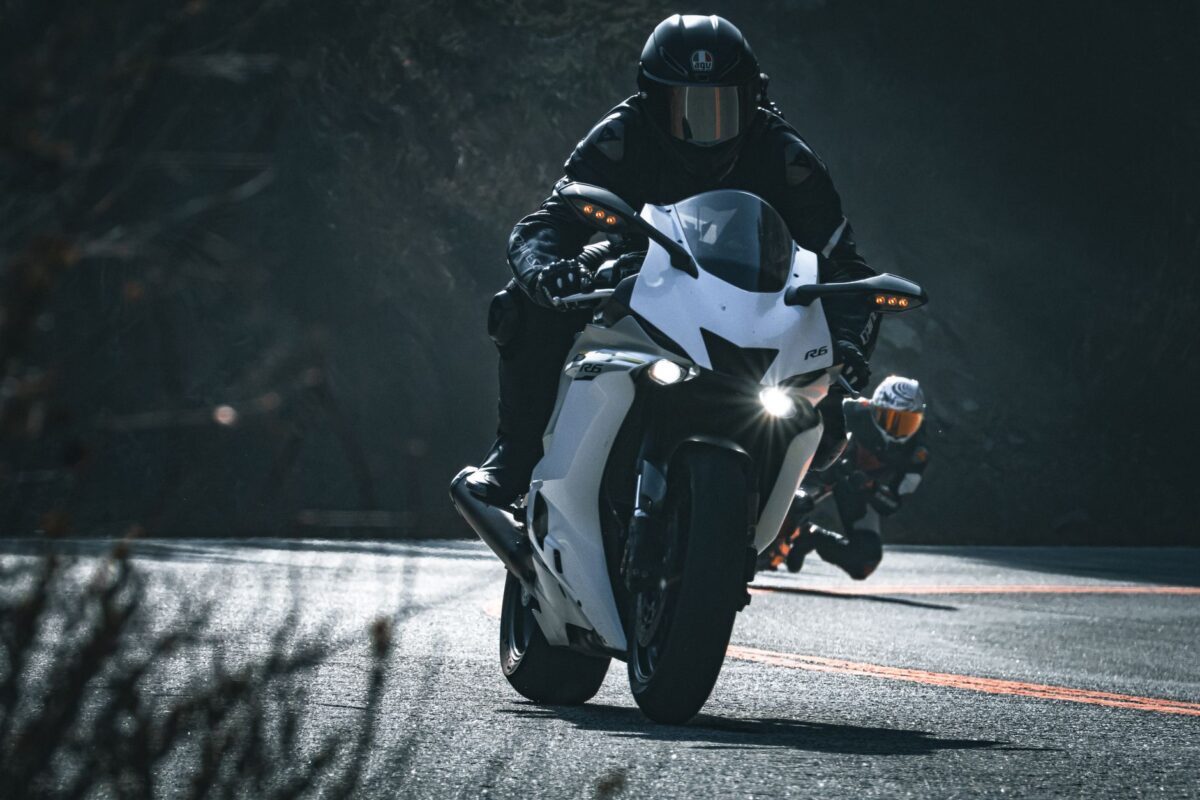
Sport bike insurance is the coverage riders buy for supersport and race-replica machines like the Yamaha YZF-R6, Honda CBR600RR, Kawasaki ZX-6R, Suzuki GSX-R1000 and Yamaha R1. Insurers do not treat these bikes like a cruiser or a dual-sport. They put them in a separate, higher-rated class. The Highway Loss Data Institute reports that supersports post the highest crash and fatality rates of any motorcycle class. They also lead every theft list. As a result, sport bike insurance premiums often run two to three times what a comparable-value cruiser costs. That gap surprises a lot of new owners. Understanding why it exists is the first step to shrinking it, and this guide walks through the rating logic, the 2026 numbers and the exclusions that bite at claim time.
What Sport Bike Insurance Actually Covers
Liability is the required piece in nearly every state. Most states use a split-limit minimum such as 25/50/25 — $25,000 bodily injury per person, $50,000 per crash, $25,000 property damage. Those minimums vary by state, so check your state guide rather than assuming a national figure. Florida is the notable outlier and handles motorcycle financial responsibility differently. However, minimum limits are thin protection on a bike capable of 160 mph. Property damage alone can blow past $25,000 if you go down in traffic.
Collision and comprehensive are where sport bike insurance gets expensive. Collision pays for your bike after a crash. Comprehensive covers theft, fire, vandalism and weather. Theft is the coverage supersport owners actually use. A one-liter bike can be picked up by two people and loaded into a van in under a minute. Typically, comprehensive costs less than collision on a cruiser. On a supersport, the two are often close, because theft frequency is so high.
Two add-ons matter most. Optional or custom parts and equipment coverage protects your exhaust, rearsets, frame sliders and bodywork. Progressive includes $3,000 of accessory coverage automatically once you carry comprehensive and collision, and higher limits are available. Some carriers write optional equipment limits up to $30,000. Uninsured and underinsured motorist coverage is the other one. In most cases, it is the only thing that pays your medical bills when an uninsured driver turns left in front of you.
What It Costs in 2026
Motorcycle insurance nationally averages roughly $500 to $1,500 per year in 2026. Sport bike insurance sits well above that band. Full coverage on a 600cc supersport commonly lands between $1,800 and $3,000 annually for a rider under 30. Liability-only can drop as low as $29 per month for an older rider with a clean record. Full coverage for a young rider on a liter bike can hit $329 per month, or nearly $4,000 a year. An 18-year-old with full coverage on a sport bike in California can exceed $3,000 easily.
Styling drives rating more than displacement does. That surprises people. Race-replica models like the GSX-R series can cost over 45% more to insure than sport-touring bikes with similar engines. For example, a 1000cc sport-tourer often insures cheaper than a 600cc supersport. Insurers rate horsepower-to-weight ratio, riding posture and loss history for that exact model. A high power-to-weight number can trigger automatic top-tier rating regardless of what you paid for the bike.
Age is the single largest multiplier. Riders under 25 routinely pay two to four times what a 40-year-old pays on the identical machine. Location matters nearly as much. Urban ZIP codes with high theft rates, no-helmet states and states with heavy litigation costs all push sport bike insurance higher. These swings are large and state-specific, so use your state guide for local numbers instead of a national average.
Who Needs Sport Bike Insurance
Anyone riding a supersport on public roads needs liability. That is not optional. If you financed the bike, your lender will require full coverage with a stated maximum deductible, usually $500 or $1,000. Drop the collision and your lender can force-place coverage that costs far more and protects only them.
Newer riders on liter bikes are the group that needs the broadest sport bike insurance. Typically, they have the highest crash odds and the least cushion. Medical payments or personal injury protection matters here. A single ambulance ride and an ER visit after a lowside can run $15,000 before surgery. Uninsured motorist coverage belongs on the same policy for the same reason.
Some riders can safely trim. If your bike is a 15-year-old 600 worth $2,800, and you can absorb that loss, dropping collision is defensible. Compare the annual collision premium against the actual cash value. However, keep comprehensive. Theft is the real risk on these models, and comprehensive is usually the cheaper half. Track-only bikes with no plates do not need road liability at all, though you still want storage and transit coverage.
Common Exclusions and Mistakes
Track days are the classic gap. Almost every standard policy excludes racing, timed events, speed contests and organized track use. That exclusion often extends to non-competitive HPDE days. Riders assume their street policy follows them onto the circuit. It does not. Specialty track-day policies exist through agencies like MotorcycleAgent and Hagerty, and they are written per-event or per-season. Buy one before your first track day, not after you crash.
Undeclared modifications are the second trap. Aftermarket exhausts, ECU flashes, big-bore kits and suspension work all change the risk. If you never told your carrier, a claims adjuster can reduce or deny the payout, and in some cases void the policy. A custom parts and equipment endorsement typically costs only $50 to $150 per year. Skipping it means your $4,000 in parts pays out as nothing after a total loss.
📋 Get Free Insurance Guides
Free · No spam · Unsubscribe anytime
Two more surprise people. First, mechanical failure is never covered. Blown motors, fried clutches and worn transmissions are maintenance, not claims. Second, gear coverage is limited. Helmets, leathers, boots and gloves usually fall under the accessory limit, and only if comprehensive and collision are in force. A full set of leathers plus a $900 helmet can exceed a low accessory limit fast. For example, a $3,000 limit disappears quickly once you add a race suit, back protector and airbag vest.
How to Get the Best Sport Bike Insurance Rate
Take an MSF Basic RiderCourse. Nearly every major carrier — Progressive, GEICO, Nationwide, Dairyland — discounts 5% to 15% for a completed safety course. Markel stacks discounts aggressively and advertises up to 35% total savings, including safe driver, safety course, anti-theft, anti-lock brake and diminishing-deductible credits. ABS credits are real, and most 2026 supersports have it standard. Make sure your carrier has it recorded.
Use a lay-up policy if you live north of the snow line. Lay-up suspends liability and collision during winter storage while keeping comprehensive alive for theft and fire. Riders in cold states cut annual premiums 30% to 40% this way. Add an anti-theft device too. Monitored GPS trackers and factory immobilizers both improve recovery odds, and carriers price that in.
Shop specialty carriers, not just national brands. Dairyland rates well for liability-only sport bike insurance. Rider Insurance writes sport and high-performance bikes in New Jersey and Pennsylvania. GEICO covers sport bikes in all 50 states. Get at least four quotes on the same limits and deductible, because supersport rating tables differ wildly between companies. Timing helps as well. Quote in January rather than April, when demand spikes. Finally, raise your deductible from $250 to $1,000 if you have the savings — on a high-theft bike, that change alone often cuts full-coverage sport bike insurance by 15% to 25%.
Frequently Asked Questions
Does a 600cc supersport really cost more to insure than a 1000cc sport-tourer?
Often, yes. Insurers rate power-to-weight ratio, riding position and model loss history, not just displacement. Race-replica models such as the GSX-R series can cost over 45% more than sport-touring bikes with larger engines. A CBR600RR carries supersport class rating. A comfortable 1000cc sport-tourer usually does not.
Will my street policy cover me at a track day?
No, in almost every case. Standard policies exclude racing, speed contests, timed events and organized track use, and many exclude non-competitive HPDE days too. You need a separate track-day policy, sold per-event or per-season by specialty agencies. Buy it before you ride. Crashing first and asking later leaves you paying out of pocket.
Is comprehensive worth keeping on an older sport bike?
Usually yes. Supersports lead national theft lists, and comprehensive is typically the cheaper half of full coverage. Even on a bike worth $3,000, comprehensive often runs well under the payout you would lose. Dropping collision on an older bike is more defensible than dropping comprehensive.
Do aftermarket parts raise my sport bike insurance premium?
Modifications can raise it slightly, but not declaring them is far worse. Undeclared exhausts, ECU flashes or big-bore kits can trigger a reduced payout or a voided policy at claim time. A custom parts and equipment endorsement typically costs $50 to $150 per year and protects the appraised value of your work.
Compare Motorcycle Insurance Rates
Rates for motorcycle insurance vary widely between carriers, and the specialists often beat the big
national names. Comparing several quotes is the single most reliable way to pay less.
(paid link)
Official Sources & Resources
For verified information relevant to riders:
- Motorcycle Safety Foundation (MSF): msf-usa.org
- NAIC (National Association of Insurance Commissioners): naic.org
- Insurance Information Institute: iii.org
- AM Best – Insurer Financial Strength: ambest.com
Content last reviewed July 2026. If you notice any outdated information, please contact us.