Table of Contents
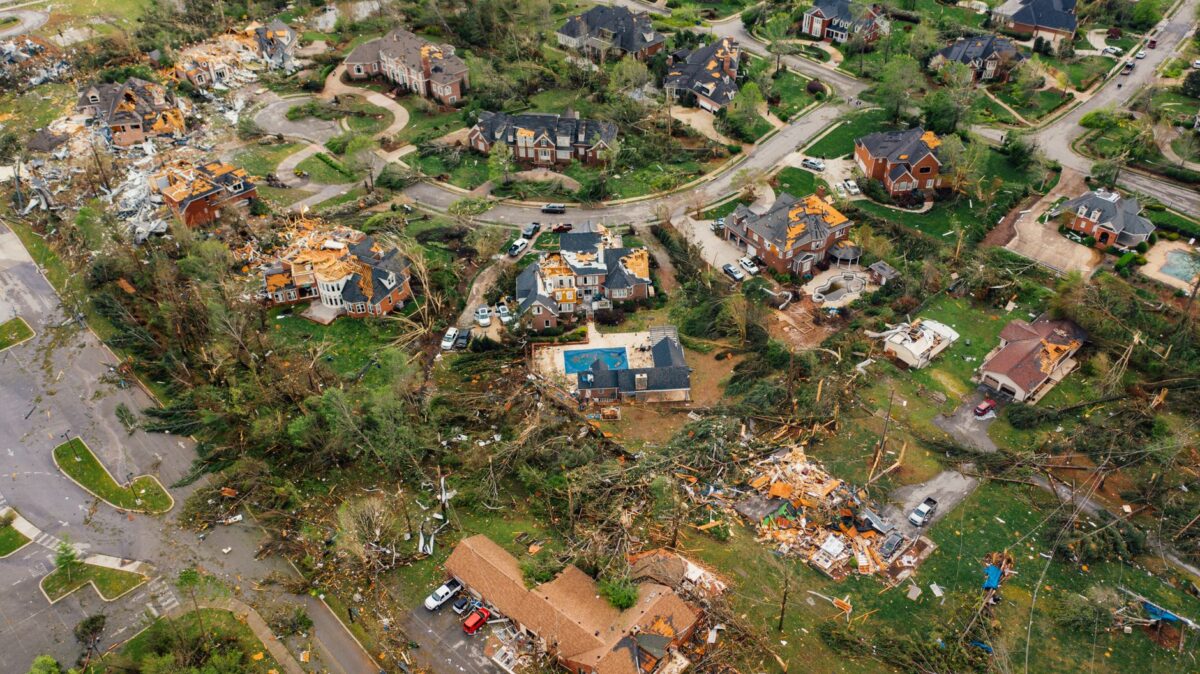
Tornado damage insurance is not a separate policy you can buy for your car. Instead, it is a specific part of your auto policy called comprehensive coverage. Every year, the United States averages roughly 1,225 tornadoes, according to NOAA data. In 2025, forecasters confirmed more than 1,280 twisters nationwide. Those storms flip vehicles, drive debris through windshields, and drop trees onto parked cars.
However, many drivers only learn how tornado damage insurance works after the sirens stop. The rules are simple once you know them. Liability coverage pays nothing toward your own vehicle. Collision coverage does not apply either. Only comprehensive coverage pays, and it is optional in every state. This guide explains exactly what tornado damage insurance pays, what it costs, and how to file.
What Tornado Damage Insurance Actually Covers
Comprehensive coverage handles losses that are not crashes. Insurers call these “other than collision” events. Tornado damage insurance sits squarely inside that category. For example, comprehensive pays when wind lifts your sedan and drops it in a ditch. It also pays when a neighbor’s roof shingles shred your paint. Falling trees, flying fence posts, shattered glass, and flood water from the same storm are all covered.
Typically, the payout covers repair costs up to your car’s actual cash value, minus your deductible. Actual cash value means market value on the day of the storm, not what you paid. In most cases, insurers use valuation reports from sources like J.D. Power or CCC to set that number.
Some things are not covered. Personal belongings inside the car fall under homeowners or renters insurance, not auto. Custom equipment usually needs a separate endorsement. Lost wages and hotel bills are not auto claims either. Rental reimbursement is a separate add-on that costs roughly $5 to $15 per month. As a result, drivers without that endorsement pay out of pocket for a loaner while repairs happen.
One more limit matters. You cannot add comprehensive coverage after a tornado is forecast and expect it to apply retroactively. Many carriers impose binding restrictions once the National Weather Service issues a watch for your county.
What Tornado Damage Insurance Costs
Comprehensive is one of the cheapest coverages on an auto policy. National average expenditure for comprehensive was about $207 per year, based on Insurance Information Institute analysis of NAIC data. Collision, by comparison, averaged about $422 per year. The NAIC put the national average for full coverage at roughly $1,668 annually, while minimum liability averaged about $644.
Roughly 80 percent of insured drivers carry comprehensive coverage, and about 77 percent carry collision. That means about one in five insured drivers has no tornado damage insurance at all. Those drivers absorb the entire loss themselves.
Deductibles drive your out-of-pocket cost. Here is how typical choices compare.
| Deductible | Typical annual comprehensive premium | You pay on a $6,000 tornado claim |
|---|---|---|
| $250 | ~$260 | $250 |
| $500 | ~$207 | $500 |
| $1,000 | ~$160 | $1,000 |
| No comprehensive | $0 | $6,000 |
Several states offer additional relief. Kansas, Oklahoma, Texas, and a handful of others allow zero-deductible or reduced-deductible glass coverage. That matters because windshields are the most common tornado damage insurance claim. A replacement windshield with ADAS camera recalibration now runs $800 to $1,800 on many 2020-and-newer vehicles.
How to File a Tornado Damage Insurance Claim
Move quickly, but stay safe first. Never approach a vehicle near downed power lines. Once the area is clear, follow these steps.
1. Document everything before moving the car. Take 20 to 30 photos from every angle. Capture the wide scene, the debris, and each dent or crack up close. Shoot a short video too. Photograph the odometer and VIN plate.
2. Report the claim the same day. Most carriers accept claims by app, phone, or web portal 24 hours a day. Filing early puts you ahead of the surge. After a major outbreak, a single carrier may receive thousands of tornado damage insurance claims in 48 hours.
3. Prevent further damage. Tape plastic over broken glass. Policies require you to mitigate additional loss. Keep receipts for tarps, towing, and storage, because those costs are usually reimbursable.
📋 Get Free Insurance Guides
Free · No spam · Unsubscribe anytime
4. Get an independent repair estimate. Do not rely only on the adjuster’s number. Your state insurance department can help if the offer seems low. Every state has a formal complaint process, and appraisal clauses exist in most policies for value disputes.
5. Understand total-loss math. Insurers usually declare a total loss when repairs exceed 70 to 80 percent of actual cash value. Thresholds vary by state law. If your loan balance exceeds that value, gap insurance covers the difference. Without gap coverage, you still owe the lender.
Finally, check your timing rules. Many policies require prompt notice, and some states set a two-year window for filing suit over a denied claim. Keep a written log of every call, adjuster name, and claim number.
Frequently Asked Questions
Will filing a tornado claim raise my rates?
Usually not the same way an at-fault crash does. Comprehensive claims are considered no-fault events, so insurers typically do not surcharge them. However, multiple claims in a short window can affect renewal eligibility, and regionwide storm losses often push rates up for everyone in the area.
Does tornado damage insurance cover a car parked in a collapsed garage?
Yes. The vehicle is covered by your auto policy’s comprehensive coverage, not by homeowners insurance. For example, if the garage roof crushes your hood, auto pays for the car and homeowners pays for the structure. In most cases, you will pay two separate deductibles.
What if I only have liability coverage?
Then you have no tornado damage insurance and must pay for repairs yourself. Liability only pays for damage you cause to other people. Federal disaster aid rarely replaces vehicles, and FEMA assistance for a car is limited and need-based. Adding comprehensive for roughly $17 per month is far cheaper than a total loss.
Compare Insurance Rates
Ready to see if you could be paying less? Compare quotes from top insurers in your area. Getting multiple quotes is the most effective way to find a better rate.
(paid link)
Official Sources & Resources
For verified information on auto insurance regulations and consumer protection:
- NAIC (National Association of Insurance Commissioners): naic.org
- Insurance Information Institute: iii.org
- Federal Trade Commission — Auto Insurance: consumer.ftc.gov
- USA.gov — Car Insurance: usa.gov/car-insurance
Content last reviewed July 2026. If you notice any outdated information, please contact us.